
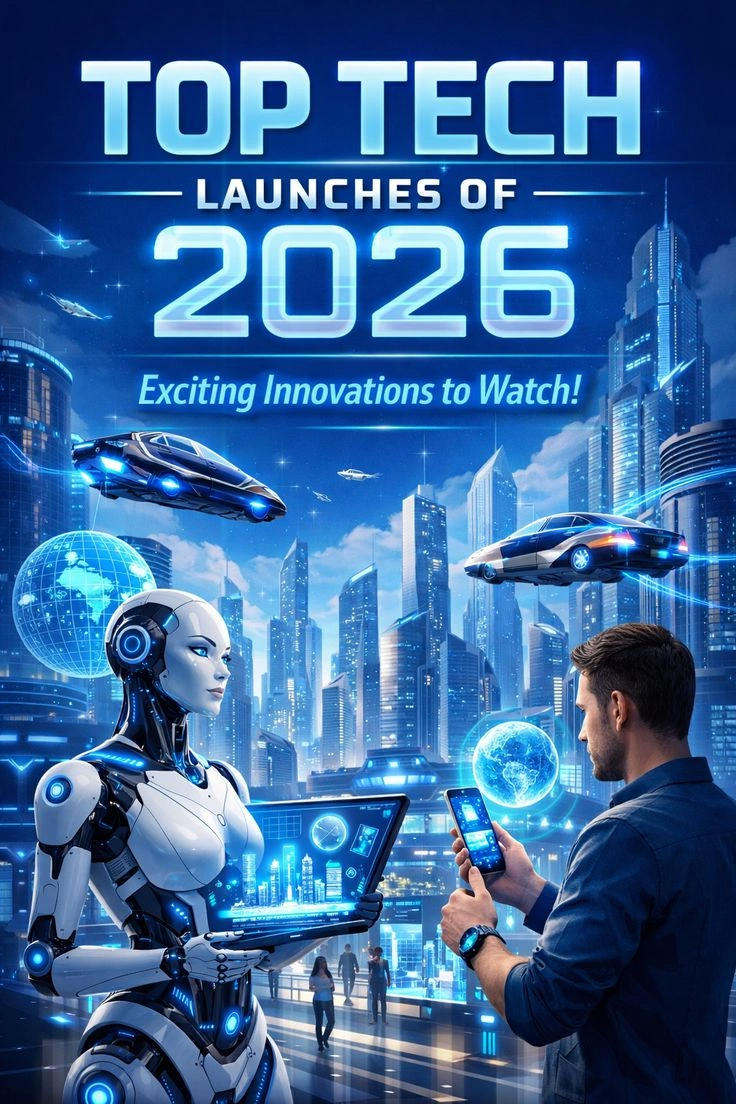
As we progress through 2026, artificial intelligence and emerging technologies are no longer experimental concepts but foundational elements reshaping industries, economies, and daily human experiences. This year marks a significant transition from hype to practical application, with technologies maturing rapidly and delivering measurable impact across sectors. From intelligent autonomous systems to breakthroughs in computing infrastructure, several key trends are defining the technological landscape and influencing how businesses operate and individuals live.
1. Agentic AI: From Assistants to Autonomous Agents
One of the most transformative trends in 2026 is the rise of agentic AI — systems that can independently plan, reason, and execute complex tasks toward specific goals. Unlike earlier chatbots that simply responded to prompts, agentic AI can break down objectives, use tools, make decisions, and adapt strategies in real time.
These multi-agent systems are being deployed in customer service, software development, supply chain management, and research. Companies are using coordinated teams of AI agents to handle entire workflows, from market research to content creation and project management. This shift is dramatically improving operational efficiency while raising important questions about oversight, accountability, and human-AI collaboration.
2. Physical AI and Robotics Convergence
AI is moving beyond digital interfaces into the physical world. Physical AI — the integration of advanced AI with robotics — is accelerating, enabling machines to perceive, understand, and interact with their environment more naturally. Humanoid robots and specialized robotic systems are being deployed in warehouses, healthcare, elder care, and manufacturing.
These systems combine computer vision, natural language understanding, and motor skills to perform complex tasks such as assisting in surgeries, providing companionship to seniors, or handling delicate assembly work. The convergence is creating new possibilities for automation while addressing labor shortages in various industries.
3. AI Infrastructure and the Inference Economy
The massive demand for AI inference (running trained models) is reshaping computing infrastructure. Organizations are optimizing their strategies around efficient inference rather than just training large models. This has led to innovations in specialized hardware, energy-efficient data centers, and edge computing solutions.
Cloud providers are offering more sophisticated AI infrastructure options, including sovereign cloud solutions that address data privacy and regulatory requirements. The focus has shifted toward sustainable AI, with companies investing in renewable energy sources and more efficient cooling technologies to manage the environmental impact of large-scale AI operations.
4. Quantum Computing Milestones
2026 is seeing meaningful progress toward practical quantum computing applications. While fully fault-tolerant quantum computers are still years away, early systems are being used for specific optimization problems, drug discovery, materials science, and financial modeling. Hybrid quantum-classical approaches are delivering value in areas where traditional computing struggles.
Industries are beginning to experiment with quantum communication and post-quantum cryptography to prepare for future security challenges. This dual-track development — practical applications alongside foundational research — is building momentum for broader quantum adoption in the coming years.
5. Advanced Cybersecurity and Trust Frameworks
As AI systems become more powerful, cybersecurity is evolving from reactive defense to proactive, AI-driven protection. Preemptive cybersecurity systems use AI to predict and neutralize threats before they materialize. Digital provenance technologies help verify the authenticity of content, addressing concerns around deepfakes and misinformation.
AI governance frameworks are becoming standard practice, with organizations implementing structured approaches to responsible AI development, bias mitigation, and ethical deployment. Transparency and explainability are no longer optional but essential requirements for enterprise AI adoption.

6. Immersive Technologies and Spatial Computing
Extended Reality (XR), including augmented reality (AR) and virtual reality (VR), is maturing into practical business and consumer tools. Spatial computing is enabling more natural interactions with digital information overlaid on the physical world. Applications range from remote collaboration and training to retail experiences and architectural visualization.
These technologies are particularly valuable in education, healthcare, and industrial settings, where they provide immersive learning and operational advantages that were previously impossible.
7. Sustainable Technology and Green Computing
Environmental consciousness is driving innovation in green computing. Companies are developing more energy-efficient AI models, optimizing data center operations, and creating hardware specifically designed for sustainability. Circular economy principles are being applied to technology manufacturing and disposal.
The focus on sustainable tech is not just about reducing environmental impact but also about building resilient systems that can operate efficiently in resource-constrained environments.
Societal and Economic Impact
These technological trends are creating both opportunities and challenges. On one hand, they drive productivity gains, create new industries, and solve complex global problems. On the other, they raise important questions about job displacement, privacy, inequality, and ethical governance.
Successful organizations and individuals are those who embrace these technologies thoughtfully — using them to augment human capabilities rather than replace them entirely. Continuous learning and adaptability have become essential skills in this rapidly evolving landscape.
Preparing for the Future
For businesses and professionals, staying ahead means investing in AI literacy, building flexible technology infrastructure, and developing ethical frameworks for technology deployment. Governments and educational institutions are adapting curricula to prepare the workforce for an AI-augmented future.
The year 2026 represents a pivotal moment where technology transitions from being a competitive advantage to an essential foundation for operations and innovation. Organizations and individuals who understand and leverage these trends thoughtfully will be best positioned to thrive in the coming years.
The integration of AI and emerging technologies into daily life is no longer a distant prospect — it is our present reality. By embracing these advancements responsibly and creatively, we can build a future that is more efficient, sustainable, and human-centered than ever before.
Read more – trendopr.com
 Martin