
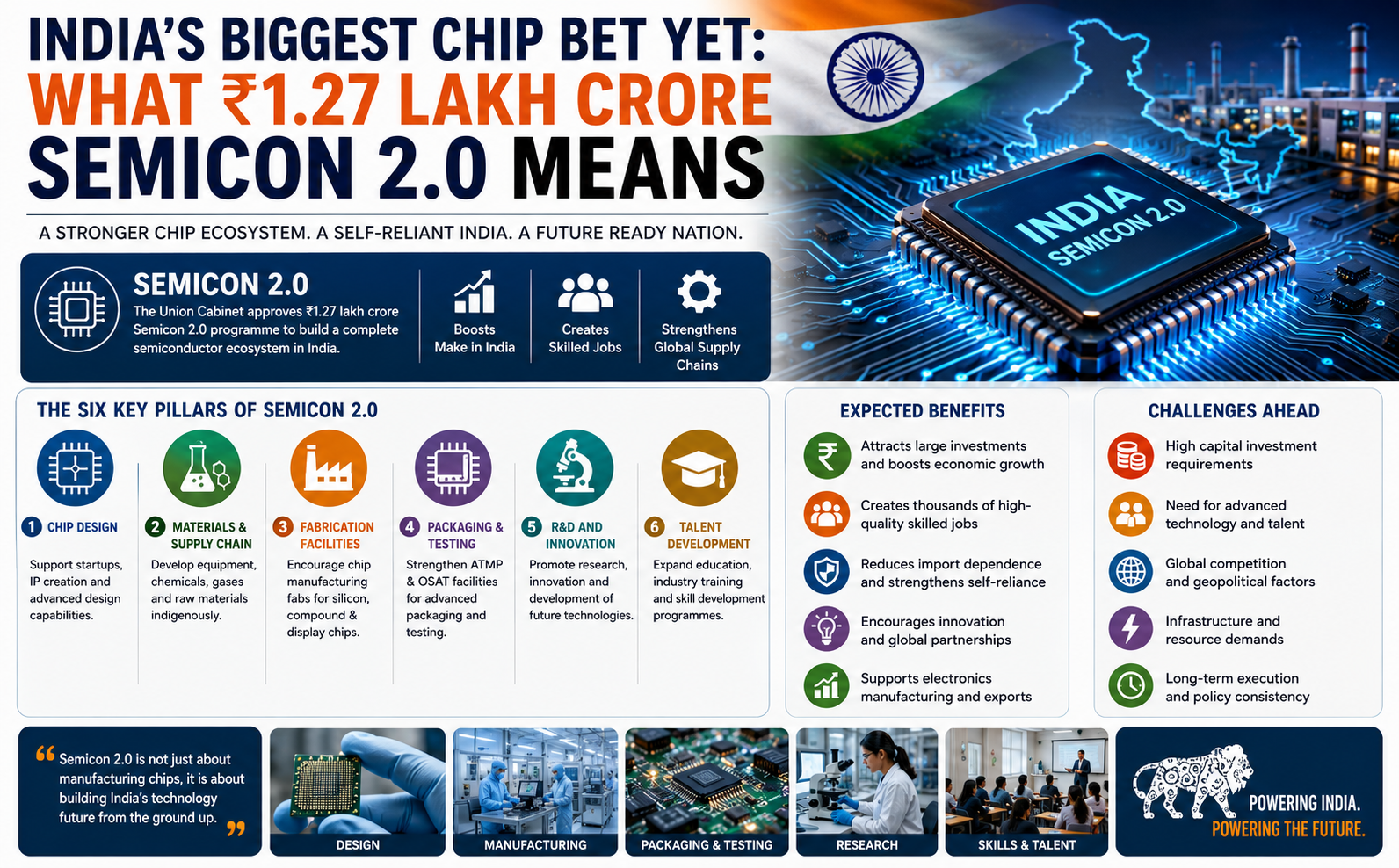
India has taken one of its biggest steps toward becoming a global semiconductor manufacturing hub with the approval of Semicon 2.0, a new semiconductor mission backed by an investment of ₹1.27 lakh crore. The initiative aims to strengthen the country’s semiconductor ecosystem, reduce dependence on imported chips, attract global investments, and support the growth of domestic manufacturing.
Semiconductors power nearly every modern electronic device, from smartphones and laptops to electric vehicles, medical equipment, defence systems, artificial intelligence (AI), and advanced telecommunications. As global demand for chips continues to rise, countries are investing heavily to secure reliable semiconductor supply chains.
Semicon 2.0 builds upon the progress made under India’s first semiconductor mission and represents a long-term strategy to develop a complete chip ecosystem—from design and research to manufacturing, packaging, materials, and skilled talent. The government believes this initiative will help position India as an important player in the global semiconductor industry while supporting economic growth and technological self-reliance.
What Is Semicon 2.0?
Semicon 2.0 is the second phase of the India Semiconductor Mission approved by the Union Cabinet with a total financial outlay of ₹1,27,500 crore. The programme provides long-term policy support for semiconductor manufacturing and related industries while expanding India’s capabilities beyond chip assembly into design, fabrication, research, and supply chain development.
Unlike the earlier phase, which primarily focused on attracting semiconductor manufacturing projects, Semicon 2.0 adopts a broader approach by supporting the complete semiconductor ecosystem. This includes chip design, fabrication plants, packaging facilities, semiconductor equipment, specialty materials, chemicals, gases, research, and workforce development.
Why Semiconductors Matter
Semiconductors are often described as the foundation of the modern digital economy because they serve as the brains of electronic devices.
Every smartphone, computer, smart television, automobile, industrial machine, data centre, and communication network depends on semiconductor chips. Emerging technologies such as artificial intelligence, cloud computing, electric mobility, robotics, and the Internet of Things also require increasingly advanced semiconductors.
Global chip shortages experienced in recent years demonstrated how dependent industries have become on a limited number of manufacturing locations. These disruptions highlighted the importance of developing diversified and resilient semiconductor supply chains.
Why India Launched Semicon 2.0
India currently imports a significant share of the semiconductor components used in electronics manufacturing. As electronics production continues to grow rapidly, domestic demand for chips is also increasing.
Semicon 2.0 aims to reduce this dependence by encouraging companies to manufacture more semiconductor products within India while strengthening the country’s role in global technology supply chains.
The mission also supports the government’s broader objectives of promoting advanced manufacturing, encouraging innovation, generating skilled employment, and enhancing technological capabilities.
The Six Key Pillars of Semicon 2.0
The programme is built around six major focus areas that together support a complete semiconductor ecosystem.
The first pillar focuses on strengthening India’s chip design ecosystem by supporting startups, intellectual property creation, and advanced electronic design capabilities. India already has more than 100 startups developing semiconductor designs under earlier initiatives, and the new programme seeks to expand these efforts further.
The second pillar supports semiconductor equipment, specialty chemicals, gases, and raw materials required for chip manufacturing. Building these supporting industries reduces dependence on imported inputs and creates a stronger domestic supply chain.
The third pillar encourages additional semiconductor fabrication facilities capable of producing silicon chips, compound semiconductors, and display technologies.
The fourth pillar strengthens advanced packaging and testing facilities, often referred to as ATMP and OSAT, which play an important role in preparing semiconductor chips for commercial use.
The fifth pillar focuses on research and development to encourage innovation in future semiconductor technologies.
The sixth pillar emphasizes talent development by expanding semiconductor education, industry training, and workforce development programmes needed to support a rapidly growing industry.
Building on the Success of Semicon 1.0
The first phase of India’s semiconductor mission laid the foundation for domestic manufacturing by approving multiple semiconductor and packaging projects with substantial planned investments.
According to official information, several approved manufacturing units have already begun commercial production, while additional projects remain under development. The government believes these early achievements created the momentum necessary for launching the larger and more comprehensive Semicon 2.0 programme.
Expected Benefits for India’s Economy
Semicon 2.0 is expected to generate benefits that extend well beyond semiconductor manufacturing.
Large-scale investments in fabrication facilities, packaging plants, research centres, and supporting industries can create significant employment opportunities for engineers, technicians, researchers, and manufacturing professionals.
The programme is also expected to stimulate investment in infrastructure, logistics, chemicals, precision engineering, automation, and advanced manufacturing technologies.
As India’s electronics manufacturing sector continues to expand, stronger domestic semiconductor production could improve supply chain reliability and increase value addition within the country.
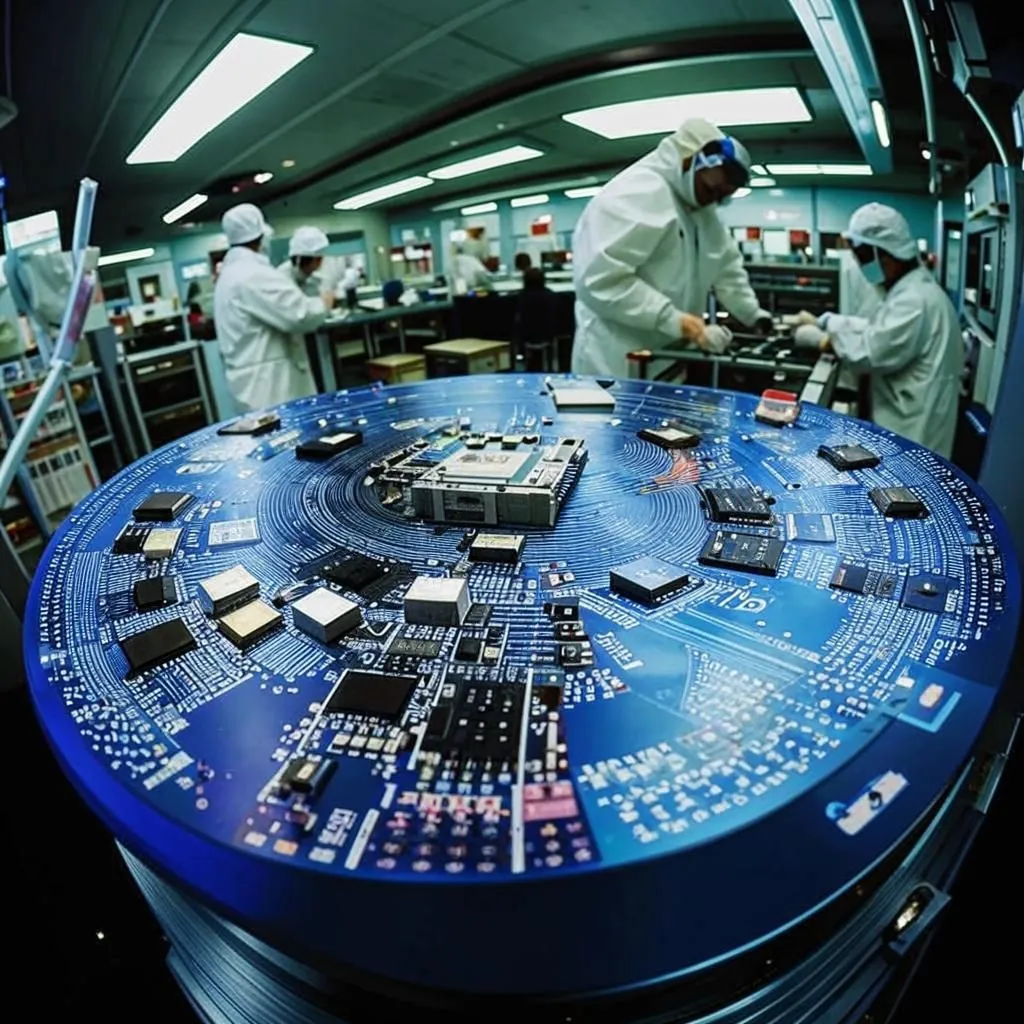
Opportunities for Startups and Innovation
One of the notable aspects of Semicon 2.0 is its emphasis on encouraging Indian innovation.
Chip design startups, research institutions, universities, and technology companies are expected to receive greater opportunities to develop indigenous semiconductor technologies.
By strengthening intellectual property development and advanced design capabilities, India hopes to become not only a manufacturing destination but also a centre for semiconductor innovation.
This approach supports long-term competitiveness in a rapidly evolving global technology market.
Challenges Ahead
Although Semicon 2.0 represents a major policy initiative, developing a globally competitive semiconductor ecosystem remains a complex task.
Semiconductor manufacturing requires enormous capital investments, advanced production equipment, highly skilled professionals, reliable electricity, high-quality water supplies, and sophisticated infrastructure.
Global competition is also intense, with several countries offering incentives to attract semiconductor manufacturers.
Maintaining consistent policy support, developing skilled talent, and ensuring efficient project execution will be important factors in achieving the programme’s long-term objectives.
India’s Position in the Global Semiconductor Industry
Many leading economies are investing heavily in semiconductor manufacturing due to growing geopolitical concerns and increasing demand for advanced chips.
India’s strategy differs by focusing on building an integrated ecosystem that combines design, manufacturing, packaging, materials, research, and workforce development.
If successfully implemented, Semicon 2.0 could strengthen India’s position as an important partner in the global semiconductor supply chain while supporting the country’s ambition of becoming a leading electronics manufacturing destination.
Frequently Asked Questions (FAQs)
What is Semicon 2.0?
Semicon 2.0 is India’s second-phase semiconductor mission with a total budget of ₹1.27 lakh crore aimed at strengthening semiconductor design, manufacturing, research, packaging, and the overall supply chain.
Why is the semiconductor industry important?
Semiconductors are essential components used in smartphones, computers, automobiles, medical equipment, telecommunications, artificial intelligence systems, and many other modern technologies.
How will Semicon 2.0 benefit India?
The programme aims to reduce import dependence, encourage domestic manufacturing, attract global investment, create skilled employment, strengthen supply chains, and promote technological innovation.
Conclusion
The approval of Semicon 2.0 marks one of India’s most ambitious technology and manufacturing initiatives. With an investment of ₹1.27 lakh crore, the programme seeks to build a complete semiconductor ecosystem that supports design, fabrication, packaging, research, materials, and workforce development.
Rather than focusing only on manufacturing chips, the mission aims to strengthen every stage of the semiconductor value chain. This comprehensive approach could help India reduce import dependence, improve technological capabilities, attract global companies, and generate long-term economic growth.
While significant challenges remain, Semicon 2.0 demonstrates India’s commitment to becoming a stronger participant in the global semiconductor industry. If implemented successfully, the initiative could play a transformative role in shaping the country’s future as a major technology and electronics manufacturing hub.
 Martin