
Introduction
After relying exclusively on mobile phone numbers for more than a decade, WhatsApp is preparing one of the biggest identity changes in its history by introducing usernames. The feature will allow users to connect without necessarily revealing their phone numbers, bringing WhatsApp closer to platforms such as Telegram, Signal, Instagram and X.
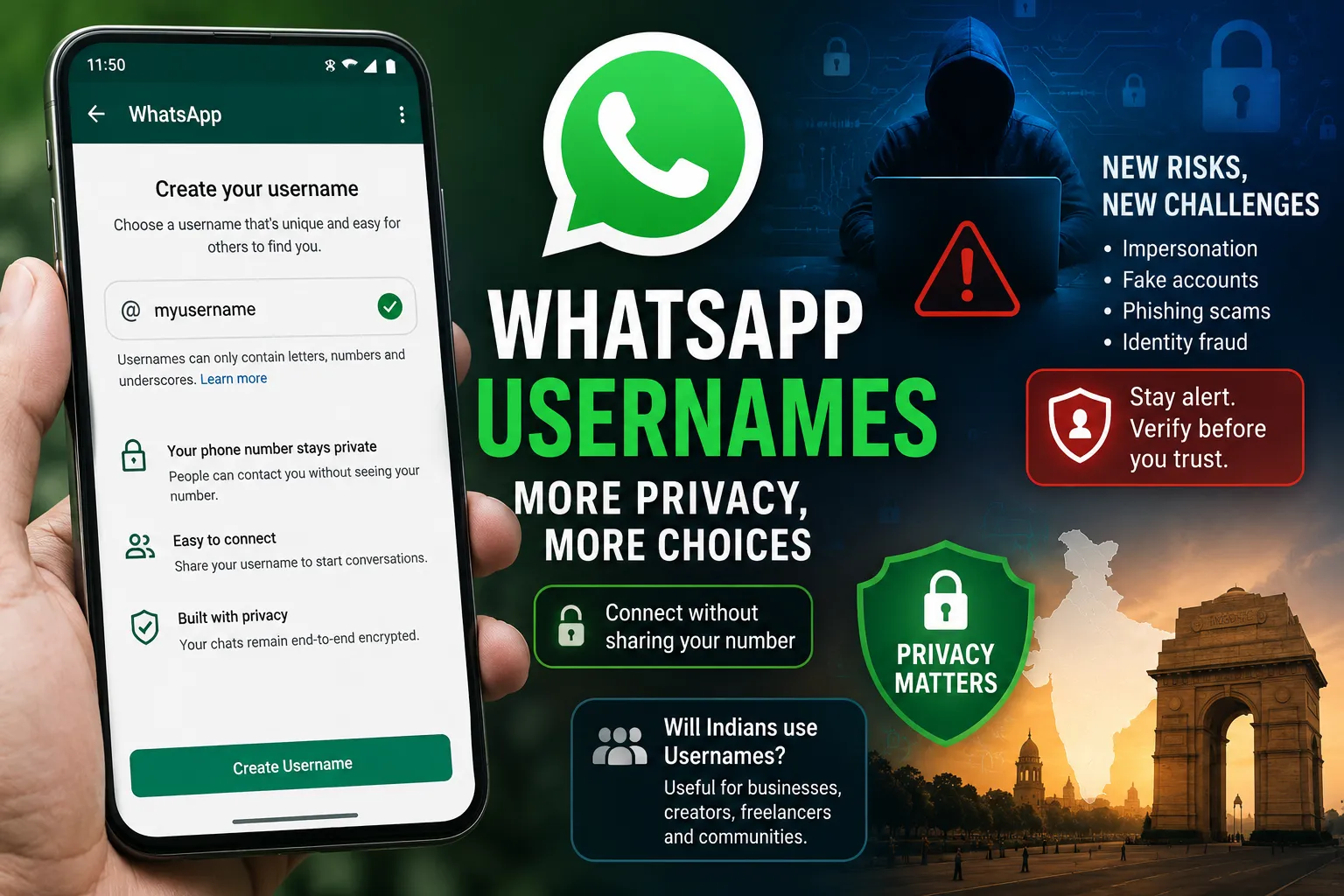
At first glance, the change appears to be a significant privacy upgrade. Many users have long wanted a way to chat with businesses, online sellers, communities or new contacts without exposing their personal phone numbers. However, cybersecurity experts, policymakers and digital rights observers have also raised concerns that usernames could make impersonation scams more sophisticated if not implemented with strong safeguards.
The debate has become particularly significant in India, WhatsApp’s largest market with hundreds of millions of users. The Indian government has sought explanations from Meta over the feature and asked the company to address concerns related to fraud, phishing and digital impersonation before a wider rollout.
So, are usernames a major privacy breakthrough or a new opportunity for cybercriminals? The answer lies somewhere in between.
What Are WhatsApp Usernames?
Currently, every WhatsApp account is tied directly to a mobile phone number. Anyone who wants to contact another person generally needs access to that number.
With the upcoming update, users will be able to create a unique username that can be shared instead of a phone number. Similar to usernames on social media platforms, people can connect using that identifier rather than exchanging personal contact details.
Meta says the feature has been designed primarily to improve privacy by reducing the need to reveal phone numbers, especially while interacting with people who are not already saved in a user’s contacts.
The company has also indicated that usernames will be optional rather than mandatory.
Why Is WhatsApp Introducing Usernames?
Digital communication has changed dramatically over the past decade. Today, people use WhatsApp for much more than chatting with family members.
Users increasingly communicate with:
-
Businesses
-
Freelancers
-
Online marketplaces
-
Educational communities
-
Customer support teams
-
Event organizers
-
Temporary professional contacts
In many such situations, sharing a personal phone number may not always be desirable.
A username allows someone to maintain communication while keeping their primary phone number private.
For users who frequently interact with strangers for work or business purposes, this represents an additional layer of personal privacy.
The Biggest Privacy Advantage
The strongest argument in favour of usernames is that they reduce unnecessary exposure of phone numbers.
A phone number today serves multiple purposes. It is linked to:
-
Banking services
-
UPI payments
-
OTP verification
-
Government services
-
Social media accounts
-
Professional communication
Because of this, exposing a phone number publicly can increase risks such as spam calls, marketing messages, phishing attempts and identity-based attacks.
Cybersecurity professionals argue that limiting the situations where a phone number must be shared can reduce these risks.
For many users, especially creators, freelancers and small business owners, usernames could become a safer public identity.
Why Cybersecurity Experts Are Concerned
Despite the privacy benefits, experts believe usernames introduce an entirely new category of cyber threats.
The biggest concern is impersonation.
Unlike phone numbers, usernames can often resemble one another very closely.
Examples include:
-
company_support
-
companysupport1
-
company_help
To an unsuspecting user, these accounts may appear genuine.
Cybercriminals have successfully used similar techniques for years on email platforms and social media.
If users begin trusting usernames without verifying identity, fraudsters may find new opportunities to launch scams.
What Safeguards Has WhatsApp Announced?
Meta has stated that the username system is being built with multiple security protections.
According to the company, these include:
-
Usernames will be optional.
-
There will not be a public searchable username directory.
-
People generally need to know the exact username to initiate contact.
-
High-profile usernames are expected to receive additional protection to reduce impersonation.
-
Anti-abuse systems will monitor suspicious behaviour.
-
Existing end-to-end encryption for chats will remain unchanged.
These measures are intended to balance privacy with security.
However, many cybersecurity experts believe real-world effectiveness will only become clear after large-scale adoption.
Why the Indian Government Is Watching Closely
India represents WhatsApp’s largest user base, making any platform-wide change particularly significant.
Government officials have expressed concerns that usernames could make online fraud more difficult to investigate if criminals exploit anonymous identities.
Authorities have reportedly asked Meta to explain how the platform will prevent:
-
Identity impersonation
-
Financial fraud
-
Digital arrest scams
-
Fake customer care accounts
-
Phishing attacks
The government has indicated that user safety should remain a priority before the feature becomes widely available in India.
This reflects the broader challenge regulators worldwide face in balancing stronger user privacy with effective cybercrime prevention.
Will Indians Actually Use Usernames?
Whether usernames become popular in India remains uncertain.
Unlike platforms such as Instagram or Telegram, WhatsApp has always functioned as a phone-number-based messaging service.
Many Indian users already save contacts before initiating conversations.
Families, workplaces and friend circles are deeply accustomed to identifying people through mobile numbers.
As a result, everyday users may continue using phone numbers for personal communication.
However, usernames could become particularly useful for:
-
Small businesses
-
Online sellers
-
Content creators
-
Consultants
-
Freelancers
-
Educational communities
-
Customer support services
These groups frequently communicate with people they do not know personally and may prefer not to reveal their primary phone numbers.
How Users Can Stay Safe
Even with additional security features, user awareness will remain the strongest defence.
Experts recommend following these precautions:
-
Never trust a username simply because it looks official.
-
Verify suspicious accounts through official websites or verified contact details.
-
Do not share OTPs or banking information in chats.
-
Enable WhatsApp’s two-step verification.
-
Be cautious when receiving unexpected links or payment requests.
-
Report fake or suspicious accounts immediately.
Cybersecurity is ultimately a combination of platform safeguards and informed user behaviour.
Privacy Versus Trust
Interestingly, usernames improve one aspect of privacy while potentially complicating another.
A phone number naturally acts as an identity anchor because it is relatively difficult to obtain and maintain.
Usernames, on the other hand, are easier to create and may require stronger verification systems to establish trust.
This means the future success of the feature will depend not only on privacy protections but also on how effectively WhatsApp prevents fake identities from spreading.
If the company can maintain both privacy and trust, usernames may become one of its most valuable updates.
Conclusion
WhatsApp’s move toward usernames represents a major evolution in how people identify themselves on one of the world’s most popular messaging platforms. By allowing users to communicate without revealing their phone numbers, the feature promises stronger privacy, greater flexibility and safer interactions with unfamiliar contacts.
At the same time, it introduces legitimate cybersecurity challenges. Impersonation, phishing and identity fraud remain real risks that will require robust platform safeguards, effective moderation and greater digital awareness among users.
For India, where WhatsApp plays a central role in daily communication, business and digital payments, the rollout will likely receive closer regulatory scrutiny than in many other countries. Whether usernames become widely adopted will depend on how well WhatsApp balances convenience, privacy and security.
If implemented responsibly, usernames could mark an important step toward giving users greater control over their digital identity. But like every major technological change, their success will ultimately depend on trust, careful design and responsible use by both the platform and its users.
 Martin