
The rise of remote and hybrid work has transformed how we operate, offering flexibility and work-life balance. However, it has also expanded the attack surface for cybercriminals. In 2026, with sophisticated threats like ransomware, phishing, and AI-powered attacks on the rise, remote workers face unique vulnerabilities. Home networks, personal devices, and public Wi-Fi create risks that organizations and individuals must address proactively.
This guide offers practical, actionable cybersecurity tips tailored for remote professionals. Implementing these measures can significantly reduce your risk and protect sensitive company and personal data.
1. Secure Your Internet Connection
Always use a Virtual Private Network (VPN) when connecting to the internet, especially on public or home Wi-Fi. A reliable VPN encrypts your data traffic, making it difficult for attackers to intercept information. Choose enterprise-grade solutions provided by your employer or trusted consumer options with no-logs policies and strong encryption protocols.
Avoid using unsecured public Wi-Fi for work-related tasks. If unavoidable, limit activities to non-sensitive ones and disconnect immediately after use. Ensure your home router is secure by changing the default administrator password, enabling WPA3 encryption, and disabling WPS. Regularly update router firmware to patch known vulnerabilities.
2. Strengthen Passwords and Authentication
Weak or reused passwords remain one of the biggest entry points for breaches. Use unique, complex passwords for every account. A password manager is essential for generating and securely storing strong credentials.
Enable Multi-Factor Authentication (MFA) or Passkeys wherever possible, particularly for email, cloud services, and company portals. MFA adds a critical second layer of defense even if passwords are compromised. Prefer app-based authenticators or hardware keys over SMS-based codes, which are more vulnerable to SIM swapping attacks.
3. Keep Devices and Software Updated
Regular software updates are one of the most effective defenses against cyber threats. Enable automatic updates for your operating system, applications, browsers, and plugins. This includes mobile devices used for work.
Use endpoint protection solutions recommended by your organization. Antivirus alone is no longer sufficient — opt for comprehensive Endpoint Detection and Response (EDR) tools that provide real-time monitoring and threat intelligence.
4. Be Vigilant Against Phishing and Social Engineering
Phishing attacks have become more sophisticated, often personalized using publicly available information. Always verify the sender’s email address, avoid clicking suspicious links, and never download attachments from unknown sources. When in doubt, contact the sender through a verified channel.
Be cautious with video calls and messaging apps. Verify identities before sharing sensitive information. Train yourself to recognize urgency tactics or unusual requests that pressure you to act quickly.
5. Practice Safe Data Handling
Treat company data with the same care as your own. Use encrypted cloud storage solutions approved by your organization. Avoid storing sensitive files on personal devices or unsecured drives. When sharing documents, use secure links with expiration dates and password protection.
Implement a clear desk policy at home — never leave devices or physical documents unattended. Use screen locks with strong PINs or biometrics on all work devices. Back up important data regularly following the 3-2-1 rule: three copies, on two different types of media, with one offsite.
6. Secure Your Home Office Environment
Physical security is as important as digital protection. Position your workspace to prevent shoulder surfing. Use privacy screens on laptops when working in shared spaces. Secure smart home devices (cameras, voice assistants) as they can be entry points if compromised.
Separate work and personal devices when possible. If using a single device, maintain clear boundaries with separate user profiles. Log out of work accounts when not in use and avoid mixing personal and professional activities on the same browser session.
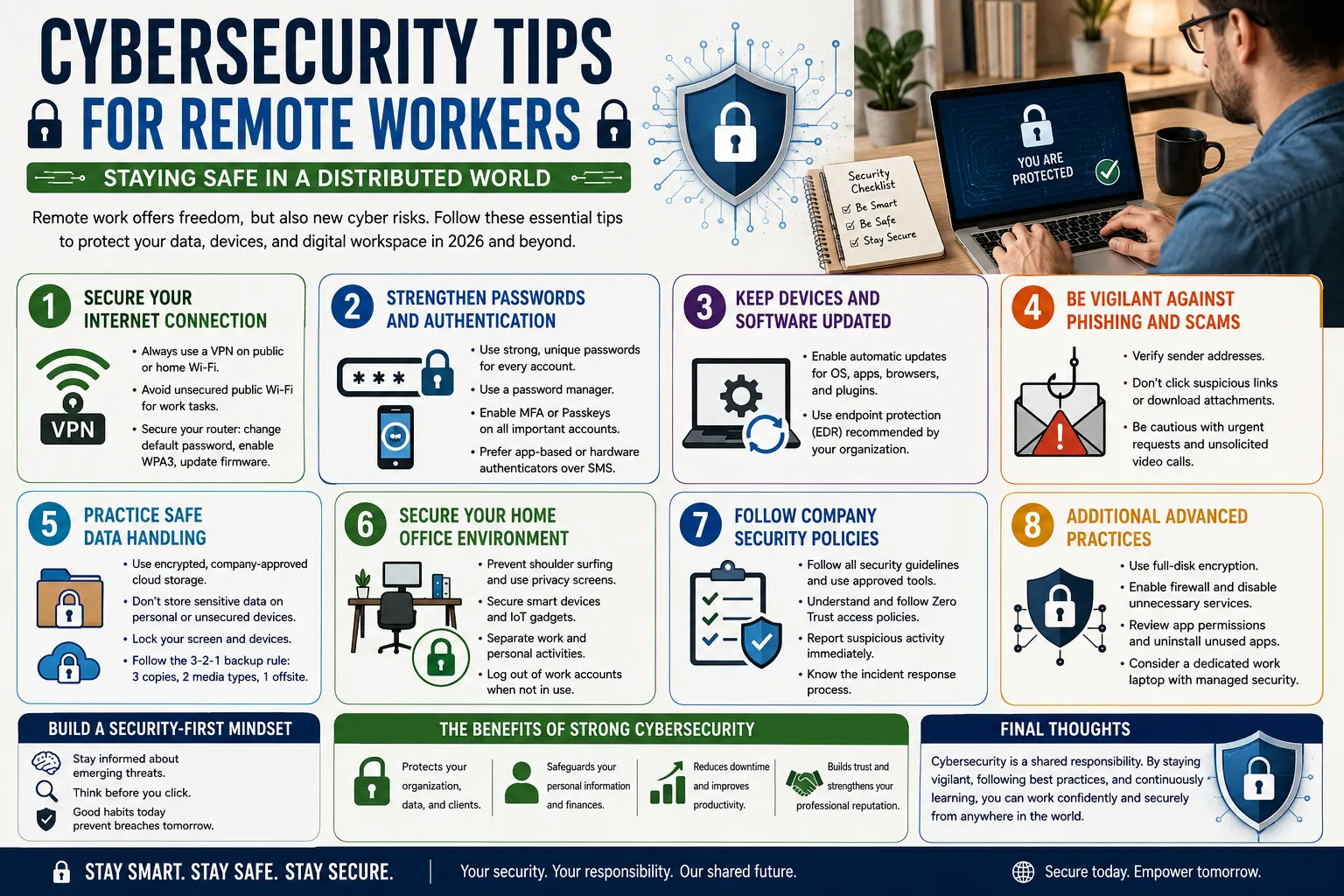
7. Follow Company Security Policies
Adhere strictly to your organization’s remote work security guidelines. This includes using only approved tools and applications. Many companies now implement Zero Trust security models that verify every access request regardless of location.
Participate in regular security awareness training. Report any suspicious activity immediately to your IT security team. Understand incident response procedures for lost or stolen devices.
8. Additional Advanced Practices
-
Use full-disk encryption on all work devices.
-
Enable firewall and disable unnecessary services.
-
Be mindful of IoT devices connected to your home network.
-
Review app permissions regularly and uninstall unused applications.
-
Consider using a dedicated work laptop with managed security settings.
Building a Security-First Mindset
Cybersecurity in remote work is a shared responsibility. While organizations provide tools and policies, individual vigilance makes the biggest difference. Treat every login attempt, email, and link with healthy skepticism.
Stay informed about emerging threats by following credible cybersecurity updates. Simple habits like pausing before clicking, verifying sources, and maintaining good digital hygiene go a long way in preventing incidents.
The Benefits of Strong Cybersecurity Habits
Implementing these practices not only protects your organization but also safeguards your personal information, reputation, and financial security. A single breach can lead to identity theft, financial loss, or career damage. Proactive security enhances productivity by reducing downtime from incidents and builds trust with employers.
Final Thoughts
Remote work is here to stay, and so are the associated cybersecurity challenges. By adopting these practical tips — from using VPNs and strong authentication to maintaining vigilance against phishing and securing your physical workspace — you can significantly strengthen your defenses.
Cybersecurity is not about fear but empowerment. Every remote worker who takes responsibility for their digital safety contributes to a more secure overall ecosystem. Start by implementing three to four tips immediately and gradually build comprehensive habits.
In 2026 and beyond, the most successful remote professionals will be those who combine productivity with strong security awareness. Protect your digital workspace as diligently as you would your physical office. Your future self — and your organization — will thank you for it.
 Martin