
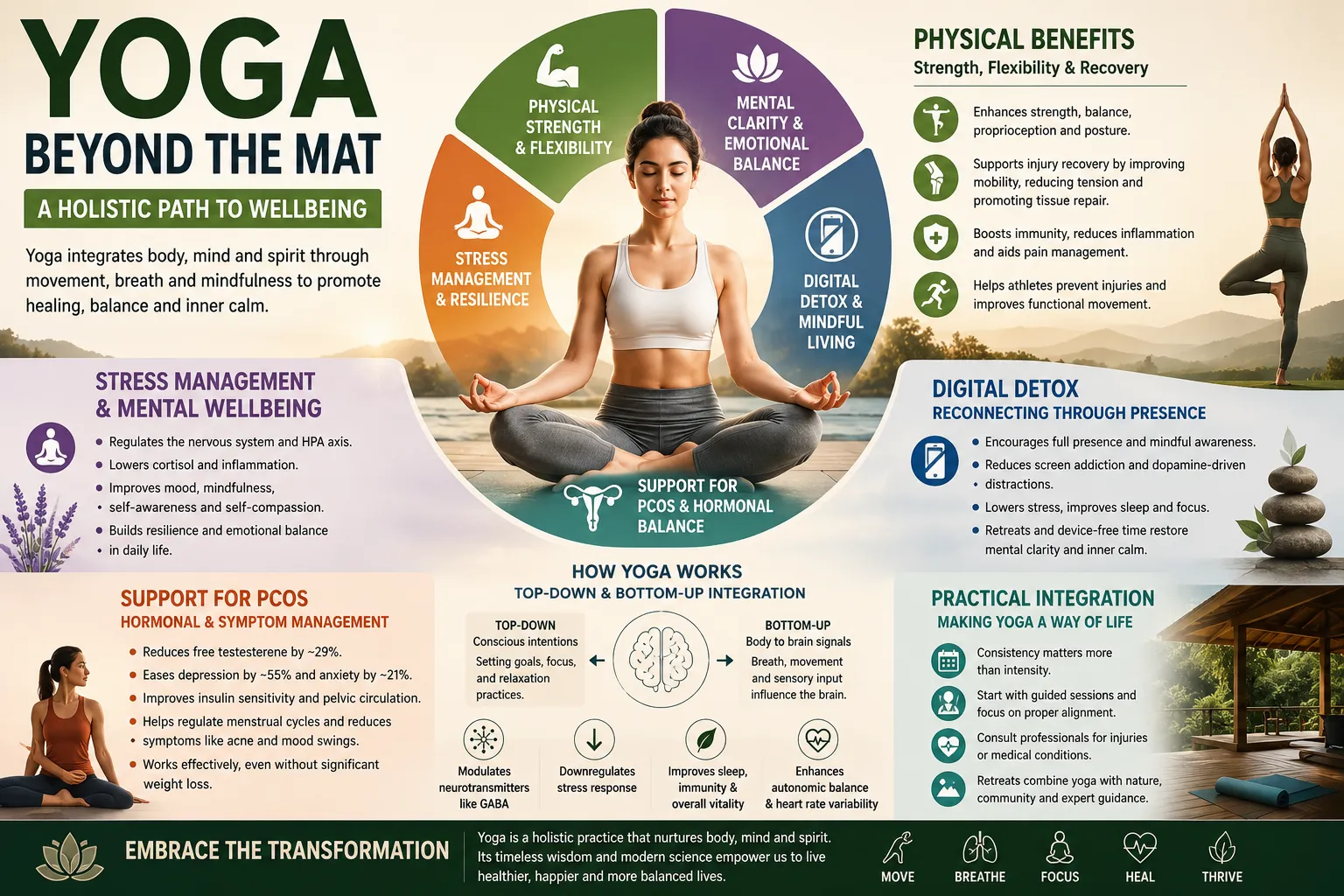
Yoga is far more than a series of stretches or flexibility exercises. It is an ancient, comprehensive discipline that integrates physical postures (asanas), breath control (pranayama), meditation, and mindfulness to foster balance across body, mind, and spirit. Experts and practitioners emphasize its role in promoting overall wellbeing, extending well beyond the mat. From supporting injury recovery to facilitating digital detox, managing stress, and aiding conditions like Polycystic Ovary Syndrome (PCOS), yoga offers evidence-based tools for physical restoration and mental resilience.
This holistic approach addresses interconnected aspects of health, uniting movement with breath and awareness to regulate physiological systems and cultivate inner calm.
Physical Benefits: Strength, Flexibility, and Recovery
While improved flexibility is a visible outcome, yoga’s deeper physical impacts include enhanced strength, balance, and proprioception. These qualities are particularly valuable in injury prevention and rehabilitation. Research indicates that yoga enhances muscle activation patterns, corrects postural imbalances, and supports neuroplasticity, helping the brain relearn movement after trauma.
In injury recovery, yoga promotes improved mobility, better posture awareness, and reduced muscle tension. Gentle practices lower inflammation by decreasing stress hormones and boost immunity through better oxygenation and detoxification via specific postures. It also aids in pain management by calming the nervous system and improving functional mobility.
For athletes and active individuals, integrating yoga into rehabilitation addresses both physical and psychological recovery facets. It reduces the risk of overuse injuries by strengthening stabilizing muscles and promoting mindful movement that prevents compensatory patterns leading to further strain.
Practitioners at wellness centers, including those in Bengaluru retreats, often highlight how tailored yoga sequences support tissue repair by enhancing blood flow and reducing oxidative stress, making it a complementary tool alongside conventional therapies.
Mental and Emotional Wellbeing: Stress Management and Beyond
One of yoga’s most researched benefits is its capacity for stress reduction. It regulates the autonomic nervous system and hypothalamic-pituitary-adrenal (HPA) axis, key players in the body’s stress response. Regular practice lowers cortisol levels—the primary stress hormone—along with inflammatory markers, while improving heart rate variability.
This physiological shift counters chronic “fight, flight, or freeze” states, fostering resilience. Psychological benefits include increased positive affect, mindfulness, self-awareness, and self-compassion, which mediate reductions in perceived stress.
In high-pressure environments, yoga serves as an effective stress management strategy, promoting relaxation and emotional regulation. Bengaluru yoga retreat practitioners note its role in helping individuals disconnect from daily pressures, enhancing mental clarity and emotional balance.
Digital Detox: Reconnecting Through Presence
In our screen-saturated world, yoga naturally supports digital detox by encouraging full presence. Disconnecting from devices during practice amplifies mindfulness, allowing deeper engagement with breath and body sensations. This combination reduces dopamine-driven distractions, lowers cortisol, and improves sleep quality.
Yoga retreats often incorporate device-free environments, facilitating mental reset. Participants report heightened self-awareness, reduced anxiety from constant connectivity, and better focus. By pairing asanas and meditation with intentional unplugging, yoga helps restore balance, countering the overstimulation of digital life and promoting restorative rest.
Support for PCOS: Hormonal and Symptom Management
Yoga shows promising results in managing Polycystic Ovary Syndrome (PCOS), a common hormonal disorder. Studies demonstrate that regular mindful yoga practice, such as one-hour sessions three times a week over three months, can reduce free testosterone levels by approximately 29%, ease depression symptoms by 55%, and lower anxiety by 21%. These improvements often occur independently of significant weight loss.
Mechanisms include reduced stress and cortisol, improved insulin sensitivity, better pelvic circulation, and balanced neurohormonal profiles. Yoga aids in regularizing menstrual cycles, reducing ovarian morphology issues, and alleviating associated symptoms like acne and mood disturbances.
Specific poses target the pelvic area, promoting relaxation and hormonal regulation. Combined with lifestyle modifications, yoga serves as a supportive, non-pharmacological intervention, enhancing quality of life for women with PCOS.
Experts in holistic wellness settings, such as those in Bengaluru, integrate yoga with Ayurveda and naturopathy for comprehensive PCOS care, emphasizing its role in mitigating oxidative stress and inflammation.
Mechanisms of Action: Top-Down and Bottom-Up Integration
Yoga operates through bidirectional pathways: top-down (conscious intentions like setting relaxation goals) and bottom-up (sensory inputs from muscles, breath, and posture influencing the brain). This integration modulates neurotransmitters like GABA and downregulates stress responses, leading to measurable changes in cortisol, cytokines, and autonomic function.
Breathwork and meditation enhance parasympathetic activity, promoting healing and recovery. These practices also improve sleep, immunity, and overall vitality, making yoga a versatile tool for diverse populations.
Practical Integration and Considerations
To maximize benefits, consistency matters more than intensity. Beginners should start with guided sessions focusing on proper alignment to avoid strain. Those with injuries or medical conditions benefit from consulting professionals for modified practices.
Retreat experiences in places like Bengaluru combine yoga with immersive environments, amplifying effects through community, nature, and expert guidance. Daily incorporation— even 20-30 minutes—can yield cumulative improvements in flexibility, mood, and resilience.
Conclusion: Embracing Yoga’s Full Potential
Yoga transcends physical stretching to nurture holistic health. Its benefits for injury recovery, digital detox, stress management, and PCOS support underscore its value as a complementary practice grounded in both tradition and science. By fostering harmony between body and mind, yoga empowers individuals to navigate modern challenges with greater ease and vitality.
Whether in a retreat setting or at home, embracing yoga invites profound transformation. Its accessible yet powerful tools continue to offer pathways to sustained wellbeing for practitioners worldwide.
 Streamline