
For a long time, lung cancer was widely regarded as a disease primarily linked to smoking. Doctors routinely inquired about a patient’s tobacco history because cigarettes were understood to be the dominant cause. That understanding remains valid. Tobacco is still the single strongest preventable risk factor. At the same time, a concerning pattern is becoming clearer in India and elsewhere: a growing number of people who have never smoked are being diagnosed with lung cancer. This shift has drawn attention to long-term exposure to polluted air as an important contributing factor.
Smoking Remains the Leading Risk
Tobacco smoke contains thousands of chemicals, many of which directly damage the cells lining the lungs. Repeated injury can produce genetic changes that eventually lead to cancer. The concentration of harmful substances inhaled while smoking is far higher than what most people encounter through outdoor air pollution. For this reason, experts continue to emphasise that quitting tobacco, or never starting, is the most effective step an individual can take to lower personal risk.
Why Air Pollution Is Receiving Greater Attention
Although air pollution is less harmful on an individual level than active smoking, its impact on public health is substantial because exposure is nearly universal. Fine particulate matter known as PM2.5, along with various toxic gases, can penetrate deep into the lungs. Over years of continuous exposure, these pollutants promote chronic inflammation, oxidative stress, and cellular damage. Such long-term injury increases the likelihood of cancer developing.
India’s urban environments present multiple sources of pollution: vehicle emissions, industrial activity, construction dust, crop residue burning, and, in many households, the use of biomass fuels such as wood, coal, or dung for cooking. Millions of people breathe this mixture of outdoor and indoor pollutants every day. Unlike smoking, which affects only those who choose to smoke or are exposed to second-hand smoke, ambient air pollution reaches entire communities.
The health consequences often appear only after years or decades, making the link less immediately obvious than the connection with tobacco.
Rising Cases Among Never-Smokers
Oncologists report seeing more lung cancer diagnoses in people who have never smoked, including a noticeable proportion of women and younger adults. Several factors are believed to contribute. Outdoor air pollution is one. Indoor smoke from traditional cooking fuels is another, particularly in households that have not switched to cleaner energy sources. Passive smoking, occupational exposure to dust and chemicals, and cumulative environmental pollutants all play roles.
The increase demonstrates that lung cancer is no longer confined to smokers. Because polluted air affects large populations, even a modest elevation in individual risk can translate into a significant number of additional cases at the national level.
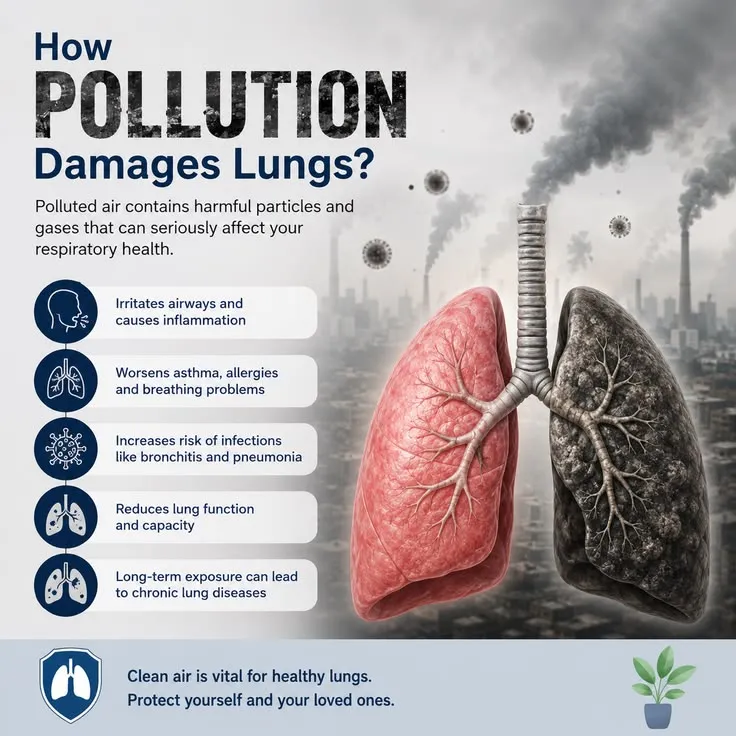
Air Pollution Is Not Equivalent to Tobacco—But It Is a Serious Threat
Experts caution against equating air pollution with smoking. Tobacco remains several times more dangerous for any single person and accounts for the majority of preventable lung cancer cases. However, the widespread nature of air pollution means its overall contribution to disease burden is rising. Improving air quality has therefore become an important public health priority alongside continued efforts to reduce tobacco use.
Cleaner air would be expected to prevent many future cases, especially among people who have never smoked.
Practical Steps to Reduce Risk
Individuals cannot eliminate exposure to polluted air entirely, yet several measures can lower overall risk. Never starting to smoke, or quitting if already smoking, remains the highest-impact personal action. Avoiding second-hand smoke is equally important. Switching from biomass fuels to cleaner cooking options reduces indoor pollution. During periods of severe outdoor pollution, limiting time outside and using well-fitted masks when exposure is unavoidable can help. Improving ventilation inside homes and following local air quality information allow people to adjust daily activities when levels are high. Supporting broader pollution-control measures also contributes to long-term improvement.
Symptoms That Require Attention
Lung cancer frequently produces few obvious symptoms in its early stages, which is why many cases are detected only after the disease has progressed. Warning signs that should prompt medical consultation include a cough lasting more than three weeks, coughing up blood, unexplained weight loss, persistent chest pain, shortness of breath, or repeated chest infections. These symptoms are often dismissed as ordinary infections or seasonal problems. Persistent or unexplained symptoms warrant proper evaluation.
The Need for Both Personal and Collective Action
India’s lung cancer profile is changing. Smoking continues to be the dominant and most preventable cause, yet air pollution is emerging as a meaningful contributor, particularly for never-smokers. Protecting lung health therefore requires action on two fronts. At the individual level, avoiding tobacco and reducing avoidable exposure to polluted air remain essential. At the societal level, sustained efforts to improve outdoor air quality, expand access to clean cooking fuels, and raise public awareness will determine how many future cases can be prevented.
The monsoon season often brings temporary relief from the highest pollution levels, yet the underlying sources of dirty air persist year-round. Recognising air pollution as a serious long-term risk to lung health, while continuing to prioritise tobacco control, offers the clearest path toward reducing the burden of lung cancer in the years ahead. Early attention to symptoms and consistent preventive habits further strengthen the chances of better outcomes for those affected.
Read more – thewhipp.com
 Martin