
Heatwaves have always been part of Earth’s climate system, but what the world is experiencing today is fundamentally different. Across continents, temperatures are reaching record-breaking levels, humidity is climbing, nights are becoming hotter, and millions of people are finding it increasingly difficult to cope with extreme weather conditions.
In many regions, heat is no longer simply uncomfortable—it is becoming dangerous. Health experts, climate scientists, and public health officials are warning that modern heatwaves are pushing the boundaries of what the human body can safely tolerate.
At the same time, conversations about heat-related health risks have highlighted the importance of understanding how environmental conditions affect human well-being. Health experts continue to emphasize that factors such as sunlight exposure, circadian rhythm regulation, hydration, sleep quality, and urban design all play a role in determining how effectively people can cope with extreme temperatures.
The growing severity of heatwaves raises an important question: Why are today’s heatwaves becoming so difficult for humans to endure?
Understanding Human Heat Tolerance
The human body is remarkably effective at maintaining a stable internal temperature.Under normal conditions, the body regulates heat through several mechanisms. Blood vessels near the skin expand to release heat, while sweat evaporates from the skin’s surface, creating a cooling effect.This natural cooling system allows humans to function in a wide range of climates.However, these mechanisms have limits.
When environmental temperatures become extremely high, particularly when combined with high humidity, the body’s ability to release excess heat begins to decline. If heat accumulates faster than it can be removed, internal body temperature rises, placing enormous stress on vital organs.This is when heat-related illnesses begin to occur.
The Dangerous Role of Humidity
Many people focus only on air temperature when assessing heat risk, but humidity is often equally important.
Sweating cools the body because moisture evaporates from the skin. However, when humidity levels are high, the air already contains significant amounts of moisture. This reduces evaporation and makes sweating far less effective.
As a result, people may continue sweating heavily while receiving little cooling benefit.This combination of heat and humidity creates what experts call heat stress.
In severe cases, even healthy individuals can struggle to regulate their body temperature. Vulnerable groups such as older adults, children, pregnant women, and people with chronic illnesses face even greater risks.
Humidity is one of the primary reasons some modern heatwaves are becoming more deadly than similar temperature events in the past.
Why Warmer Nights Make Heatwaves More Dangerous
Many people assume that the danger passes once the sun sets.
Unfortunately, that is increasingly no longer true.Across many parts of the world, nighttime temperatures are rising faster than daytime temperatures. These warmer nights prevent the body from recovering after prolonged heat exposure.
Normally, cooler nighttime temperatures allow body temperature, heart rate, and stress levels to return to normal.
When nights remain excessively warm, the body continues working to dissipate heat even during sleep.
Poor recovery increases fatigue, dehydration, cardiovascular strain, and cumulative heat stress over multiple days.
Research shows that a sequence of hot days followed by unusually warm nights can be significantly more dangerous than a single day of extreme heat.
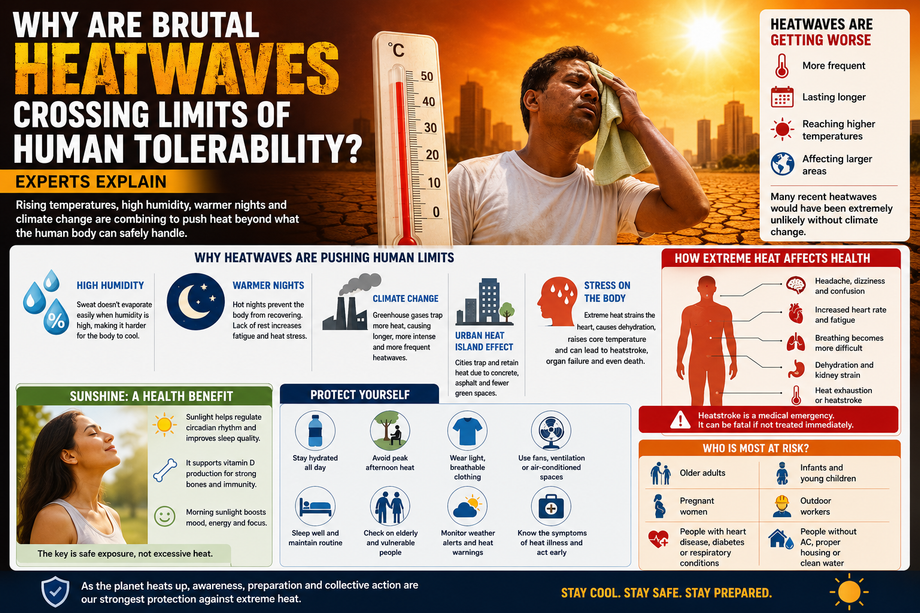
Climate Change and the Intensification of Heatwaves
One of the most significant drivers behind worsening heatwaves is global climate change.
As greenhouse gas concentrations increase, the Earth’s atmosphere traps more heat. This additional warming affects weather patterns, ocean temperatures, and atmospheric circulation.The result is a growing frequency of prolonged heat events.
Scientists have observed that many recent heatwaves would have been extremely unlikely without human-induced climate change.
Heatwaves are now:
-
Occurring more frequently
-
Lasting longer
-
Reaching higher temperatures
-
Affecting larger geographic areas
This trend means that communities are facing heat conditions that were once considered rare or exceptional.
As average temperatures rise, extreme heat becomes increasingly common.
The Urban Heat Island Effect
Cities often experience significantly higher temperatures than surrounding rural areas.This phenomenon is known as the urban heat island effect.Concrete, asphalt, glass, and steel absorb and retain large amounts of heat throughout the day. At night, these surfaces slowly release stored heat back into the environment.
The result is a city that remains warmer than nearby regions long after sunset.Reduced green spaces, declining tree cover, heavy traffic, and dense construction further amplify the problem.
For millions of urban residents, heatwaves become even more intense because city environments trap and concentrate heat.Experts increasingly view urban planning as a critical component of heatwave adaptation.
How Extreme Heat Affects the Human Body
Heat affects nearly every organ system.
As temperatures rise, the heart works harder to pump blood toward the skin for cooling. Sweating leads to fluid loss and dehydration.
Without adequate hydration, blood volume decreases, forcing the cardiovascular system to work even harder.
Severe heat exposure can cause:
-
Heat cramps
-
Heat exhaustion
-
Heatstroke
-
Kidney injury
-
Cardiovascular complications
-
Respiratory distress
-
Neurological symptoms
Heatstroke represents the most serious outcome.
It occurs when the body’s internal temperature rises to dangerous levels and cooling mechanisms fail entirely. Without immediate medical treatment, heatstroke can cause organ failure and death.
Sunshine: A Health Benefit Often Overlooked
While excessive heat creates serious health risks, experts emphasize that sunlight itself remains beneficial when experienced safely.
Sunlight helps regulate the body’s circadian rhythm, which controls sleep-wake cycles, hormone production, metabolism, and overall biological timing.
Morning sunlight exposure can improve sleep quality, support mental well-being, and enhance daytime alertness.
Sunlight also stimulates vitamin D production, which plays a vital role in bone health, immune function, and overall wellness.
The challenge lies in balancing healthy sun exposure with protection from excessive heat and harmful ultraviolet radiation.
Understanding this distinction is important because sunlight and extreme heat are not the same thing.
Why Sleep Is Becoming a Heatwave Casualty
One of the less discussed consequences of extreme heat is its impact on sleep.
The human body naturally lowers its core temperature before sleep.
When environmental temperatures remain high, this process becomes more difficult.
People often experience:
-
Difficulty falling asleep
-
Frequent awakenings
-
Reduced sleep quality
-
Morning fatigue
-
Increased irritability
Poor sleep affects cognitive performance, mood regulation, immune function, and cardiovascular health.
As heatwaves intensify, sleep disruption is emerging as a significant public health concern.
Who Faces the Greatest Risk?
Although extreme heat affects everyone, certain groups are especially vulnerable.
These include:
-
Older adults
-
Infants and young children
-
Pregnant women
-
Outdoor workers
-
Athletes
-
People with heart disease
-
Individuals with diabetes
-
Those with respiratory conditions
Socioeconomic factors also play a role.
People without access to air conditioning, adequate housing, clean water, or healthcare face higher risks during prolonged heat events.
Heat-related illness is therefore both a medical and social challenge.
How People Can Protect Themselves
While long-term solutions require climate adaptation and environmental policy changes, individuals can take several steps to reduce risk.
Experts recommend:
-
Staying hydrated throughout the day
-
Avoiding strenuous outdoor activity during peak heat
-
Wearing lightweight clothing
-
Seeking shaded or air-conditioned spaces
-
Checking on elderly family members
-
Maintaining proper sleep habits
-
Using fans and ventilation effectively
-
Monitoring weather alerts
Early recognition of heat-related symptoms can prevent medical emergencies.
Conclusion
Today’s heatwaves are becoming more dangerous because multiple factors are converging at the same time. Rising global temperatures, increasing humidity, hotter nights, urban heat islands, and climate change are combining to push heat exposure closer to the limits of human tolerability.
While the human body possesses remarkable cooling mechanisms, those systems are not unlimited. As extreme heat events become more frequent and intense, understanding how heat affects health has never been more important.
At the same time, experts remind us that environmental health is not only about avoiding danger. Safe sunlight exposure, proper sleep, hydration, and awareness of the body’s natural rhythms remain essential components of overall well-being.
The challenge facing modern societies is learning how to adapt to a hotter world while protecting both public health and quality of life.
 Martin