
Bone health is a cornerstone of overall well-being, influencing mobility, posture, and resilience against fractures as we age. Peak bone mass is typically achieved by the late 20s, after which gradual decline can occur, accelerated by factors like hormonal changes, poor nutrition, and sedentary lifestyles. The good news is that natural approaches—rooted in diet, exercise, and lifestyle habits—can significantly support bone density and strength throughout life. These methods emphasize nutrient-rich foods, physical activity, and balanced routines that promote bone remodeling without relying solely on medications.
This guide explores practical, natural ways to enhance bone health, drawing on established nutritional and physiological principles. By adopting these strategies consistently, individuals of all ages can reduce risks associated with conditions like osteoporosis and maintain an active, independent lifestyle.
The Foundations: Nutrition for Bone Strength
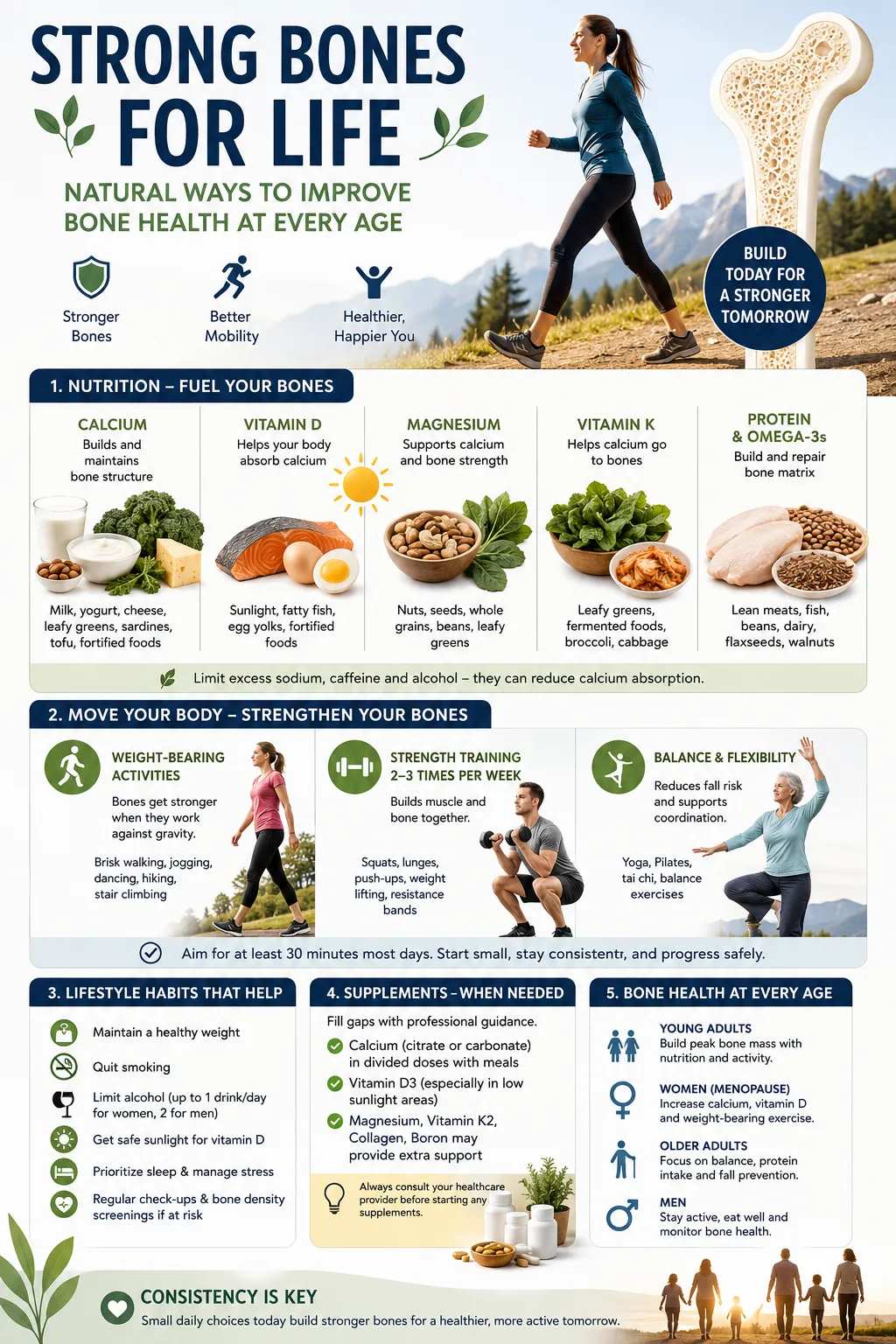
A nutrient-dense diet forms the bedrock of natural bone support. Calcium and vitamin D are essential, as calcium builds bone structure while vitamin D facilitates its absorption. Adults aged 19-50 and men up to 70 typically need about 1,000 mg of calcium daily, increasing to 1,200 mg for women over 50 and men over 70. Excellent dietary sources include dairy products like milk, yogurt, and cheese, as well as fortified plant-based alternatives, dark leafy greens such as kale and collards, canned fish with bones (sardines, salmon), and tofu.
Vitamin D, often called the “sunshine vitamin,” supports calcium utilization. Aim for 600-800 IU daily through sunlight exposure (10-30 minutes several times a week, depending on skin tone and location), fatty fish, egg yolks, and fortified foods. Magnesium, found in nuts, seeds, whole grains, and leafy greens, works synergistically with calcium to maintain bone integrity, while vitamin K (abundant in greens and fermented foods) helps direct calcium to bones rather than soft tissues.
Protein is another critical component, comprising about half of bone structure. Include lean sources like poultry, fish, beans, and dairy to support bone matrix formation. Emerging research also highlights the benefits of omega-3 fatty acids from fish or flaxseeds and antioxidants in colorful produce, which may help combat inflammation that erodes bone tissue. A balanced plate with these elements, combined with moderation in sodium, caffeine, and alcohol (which can interfere with calcium absorption), creates an environment conducive to bone maintenance.
Weight-Bearing and Strength Exercises: Mechanical Stimulation
Physical activity, particularly exercises that load bones, stimulates osteoblasts—the cells responsible for building new bone tissue. Weight-bearing activities, where bones work against gravity, are highly effective. Brisk walking, jogging, dancing, stair climbing, and hiking provide accessible options that improve density in the hips, spine, and legs. Aim for at least 30 minutes most days, gradually increasing intensity for better results.
Strength or resistance training complements this by targeting muscles and bones together. Exercises like squats, lunges, push-ups, and weight lifting (using body weight, dumbbells, or resistance bands) two to three times weekly enhance overall skeletal strength. For older adults or those with joint concerns, low-impact variations such as yoga, Pilates, or elliptical training still offer benefits while minimizing injury risk. Balance exercises, including tai chi, further reduce fall risks that could lead to fractures.
Consistency matters more than intensity for beginners. Starting with short sessions and progressing safely ensures long-term adherence and cumulative gains in bone health.
Lifestyle Habits That Support Bone Vitality
Beyond diet and exercise, daily habits profoundly influence bone health. Maintaining a healthy body weight prevents excessive stress on joints while avoiding underweight conditions that accelerate bone loss. Quitting smoking is crucial, as tobacco interferes with calcium absorption and estrogen production, both vital for bones. Limiting alcohol to moderate levels (up to one drink daily for women, two for men) helps preserve bone density.
Sunlight exposure, as mentioned, boosts vitamin D naturally, but safe practices (with sunscreen after initial exposure) are key. Adequate sleep and stress management also play roles, as chronic cortisol elevation can promote bone breakdown. Regular health check-ups, including bone density screenings for those at higher risk, allow early intervention through natural means.
Supplements When Needed: Filling Nutritional Gaps
While whole foods are ideal, supplements can help bridge deficiencies under professional guidance. Calcium citrate or carbonate formulations are common, best taken in divided doses with meals for absorption. Vitamin D3 supplements are widely recommended in low-sunlight regions or for those with limited dietary intake. Magnesium, vitamin K2, and occasionally collagen or boron may offer additional support, particularly as people age.
Always consult healthcare providers before starting supplements, as excessive intake (especially calcium) can lead to side effects or interactions. Blood tests help identify specific needs rather than relying on general recommendations.
Special Considerations Across Life Stages
Bone health strategies evolve with age. Young adults should focus on building peak mass through nutrition and activity. Women approaching menopause benefit from increased calcium and weight-bearing exercises to counter estrogen decline. Older adults prioritize fall prevention, protein intake to combat sarcopenia, and gentle yet consistent movement. Men also face risks later in life, underscoring universal attention to these habits.
Pregnant individuals, athletes, and those with dietary restrictions (e.g., vegan) may need tailored adjustments, such as fortified foods or plant-based calcium sources.
Monitoring Progress and Long-Term Success
Track improvements through energy levels, posture, reduced joint discomfort, or periodic medical assessments. Apps or journals logging diet and exercise foster accountability. Combine approaches synergistically: a nutrient-rich meal followed by a walk maximizes benefits. Community classes or family involvement make routines sustainable and enjoyable.
Natural bone health improvement is a proactive, lifelong commitment rather than a quick fix. Patience and consistency yield compounding rewards, reducing fracture risks and enhancing quality of life.
Conclusion
Improving bone health naturally empowers individuals with accessible, effective tools centered on nutrition, movement, and mindful living. By prioritizing calcium- and vitamin D-rich foods, engaging in regular weight-bearing and strength exercises, and cultivating supportive lifestyle habits, anyone can strengthen their skeletal foundation. These strategies not only combat age-related decline but also promote vitality at every stage. Start with small, sustainable changes today—your bones will thank you for years to come.
 Martin