
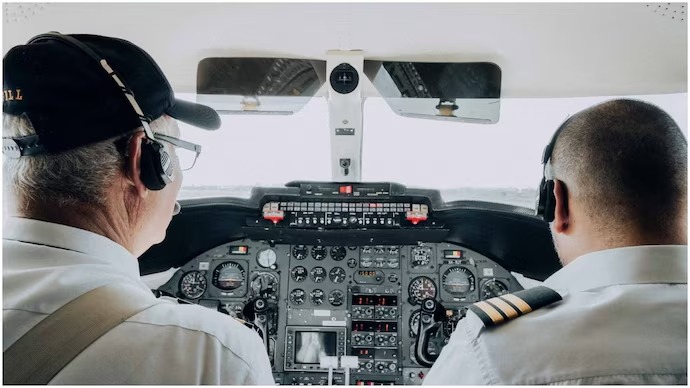
Flying thousands of feet above the ground sounds glamorous, but working there comes with some unusual occupational exposures. Pilots and cabin crew spend many hours at cruising altitude, work irregular schedules, cross multiple time zones, and sometimes sleep at unusual hours. Researchers have therefore spent years asking whether these conditions could affect long-term health, especially cancer risk.
Current evidence suggests that aircrew cancer risk can be higher for certain cancers compared with the general population, particularly skin cancer among aircrew and breast cancer among female flight attendants. However, that does not mean flying directly causes cancer in every pilot or cabin crew member. Several factors overlap, and researchers are still trying to separate workplace exposures from lifestyle and other personal risk factors.
Why Flying Changes Radiation Exposure
One major difference between airline workers and people working on the ground involves cosmic radiation. This radiation comes from outer space and reaches aircraft more strongly at cruising altitude because the atmosphere provides less shielding.
Passengers receive some exposure during flights, but pilots and cabin crew can accumulate considerably more over an entire career because they fly repeatedly. The CDC notes that aircrew are exposed to cosmic ionizing radiation during every flight, while the International Agency for Research on Cancer has reported typical annual exposure for many cabin crew members in the range of roughly 1–6 mSv.
Ionizing radiation matters because it can damage DNA, and DNA damage can contribute to cancer development. Still, the exposure from ordinary commercial flying is relatively low compared with medical or industrial radiation exposures, so the question is mainly about cumulative exposure over many years rather than one particular flight.
Cancer Risk Is Not Equal For Everyone
The research does not show one simple cancer pattern affecting every aviation worker. Different studies have found different results, and researchers have to consider factors such as age, sex, flight hours, routes, lifestyle, sun exposure, and years spent working in aviation.
The CDC currently says aircrew appear more likely to develop skin cancer and that female aircrew may have a higher likelihood of breast cancer compared with the general population. That evidence is important, but it does not establish that cosmic radiation alone is responsible for those increases.
For example, a large study involving more than 6,000 former US female flight attendants found breast cancer incidence was higher than expected compared with the general population. However, researchers did not find a clear association between breast cancer and estimated cumulative cosmic radiation exposure across the overall group.
Skin Cancer Raises Another Concern
Skin cancer is another area that has attracted considerable attention in aviation research. Aircrew spend substantial time at high altitude, where ultraviolet radiation is stronger than at ground level, although aircraft windows and windshields provide varying levels of protection.
Research has repeatedly observed higher rates of melanoma and other skin cancers among flight personnel. Older IARC reviews also noted a consistent pattern of increased melanoma and basal cell carcinoma among flight personnel, while suggesting that lifestyle factors such as sunbathing and sunburn history could also contribute.
This makes the situation more complicated than simply saying aircraft radiation causes skin cancer. Recreational sun exposure, previous sunburns, skin type, geography, and other personal factors can influence the overall risk.
Night Shifts May Matter Too
Radiation is not the only issue researchers are studying. Pilots and cabin crew frequently work during hours when most people would normally be sleeping, and international crews may cross several time zones during a single working period.
That creates circadian rhythm disruption, commonly experienced as jet lag and irregular sleep patterns. The IARC has examined night-shift work and cancer because long-term disruption of the body’s normal light-dark cycle may have biological effects. Aircrew are particularly interesting to researchers because shift work and cosmic radiation often occur together.
The difficult part is separating these exposures. Someone who flies long-haul international routes may receive more cosmic radiation while also experiencing more time-zone changes and disrupted sleep. Researchers therefore cannot always say which factor is responsible when an increased cancer rate appears in a particular group.
What Studies Say About Pilots
Pilots have also been included in long-term cancer studies, with some research identifying elevated risks for particular cancers. A study of nearly 6,000 former US commercial cockpit crew members found higher mortality from malignant melanoma, while mortality from central nervous system cancers increased with estimated cumulative radiation dose.
However, the same study found that overall cancer mortality was lower than expected compared with the general population. That may sound contradictory, but it demonstrates why occupational cancer research cannot be reduced to one headline figure.
A more recent IARC review also examined cockpit crew and found some concerning associations in specific analyses, while highlighting important limitations such as small numbers of cases and difficulties separating radiation exposure from circadian disruption.
Cabin Crew Have Their Own Pattern
Flight attendants spend more time inside the passenger cabin than pilots do, and many work rotating schedules involving early mornings, late nights, and international routes. Female cabin crew have received particular attention because several studies have reported higher breast cancer incidence.
One major US cohort study reported breast cancer incidence about 37 percent higher than the general population among female flight attendants. Yet researchers did not find that the increase was clearly explained by cumulative cosmic radiation or measured indicators of circadian disruption across the whole cohort.
That distinction is important. A higher observed cancer rate does not automatically prove an occupational exposure caused the disease. Researchers must account for reproductive history, lifestyle, family history, and other established breast cancer risk factors.
Newer Research Adds More Information
Research continues to examine workers in the aviation industry using large health databases. A Korean national registry study published in 2024 included more than 37,000 air transportation industry workers and investigated cancer incidence among these employees. The researchers specifically highlighted occupational cosmic radiation as one potential concern for flight attendants.
Large studies like this are useful because they can include thousands of workers over many years. Even then, researchers still face the same problem of separating workplace exposures from factors outside the aircraft.
This is why scientists generally describe the evidence as suggesting increased risks for certain cancers rather than claiming that every pilot or cabin crew member has a dangerous level of cancer risk.
How Aircrew Can Reduce Exposure
Aircrew cannot completely avoid cosmic radiation because flying is their occupation. Airlines and aviation authorities can instead manage exposure through flight scheduling, route planning, monitoring, and occupational safety practices.
For individual crew members, general cancer prevention measures still matter. Skin protection is especially relevant because ultraviolet exposure can contribute to skin cancer. The CDC recommends sun protection and notes that some ultraviolet radiation can pass through certain aircraft windows.
Maintaining healthy sleep habits whenever schedules allow may also be useful, particularly for workers regularly dealing with overnight duties and changing time zones. Regular medical checkups and following age-appropriate cancer screening recommendations remain important as well.
Should Frequent Flyers Be Worried?
For ordinary passengers, these findings should not create unnecessary fear about occasional air travel. Airline workers accumulate substantially more flight exposure because they may spend thousands of hours in aircraft during their careers.
The evidence is much more relevant to people who fly professionally for many years. Even there, increased risk for particular cancers does not mean that an individual worker will necessarily develop cancer.
Cancer is influenced by many interacting factors, including genetics, age, lifestyle, environmental exposure, and chance. Occupational exposure can be one piece of that picture without being the entire explanation.
The Bigger Picture For Aviation Workers
So, do pilots and cabin crew face a higher cancer risk because of flying? The most accurate answer is that some aviation workers appear to have higher rates of certain cancers, but scientists cannot attribute all of that increase directly to flying.
Cosmic ionizing radiation is a genuine occupational exposure, and researchers consider it biologically relevant because ionizing radiation can cause cancer. Circadian rhythm disruption from night work and time-zone changes is another possible contributor. Ultraviolet exposure and non-work-related factors can complicate the picture further.
The strongest evidence currently points toward increased concerns involving skin cancer among aircrew and breast cancer among female flight attendants. At the same time, individual studies have produced mixed findings, particularly when researchers try to connect specific cancers directly with radiation dose.
Conclusion: What The Evidence Really Means
The available research suggests that professional aircrew may face some additional cancer risks compared with people who rarely fly, particularly for skin cancer and, among female cabin crew, breast cancer. Cosmic radiation, irregular working hours, circadian disruption, and ultraviolet exposure are all being investigated as possible contributors. However, the evidence does not prove that flying itself directly causes cancer in every pilot or cabin crew member. Individual risk remains influenced by many factors outside the workplace as well. Aviation employers and workers should continue using occupational safety measures, appropriate health monitoring, and sensible cancer prevention practices. For more evidence-based information, keep following reliable aviation and public-health research rather than relying on alarming headlines.
Read More :- pixelperkes.com
 Streamline