
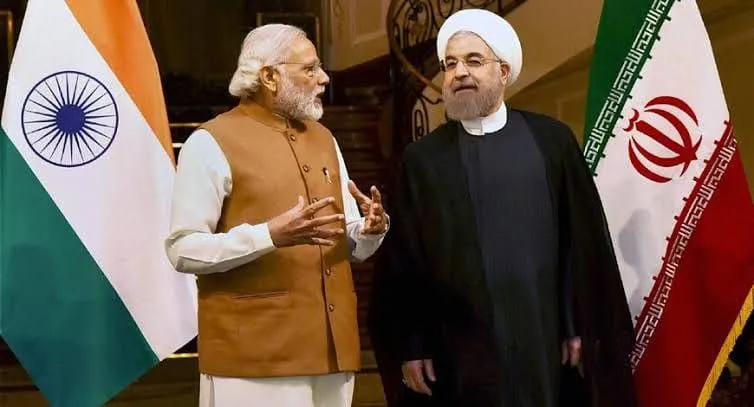
Prime Minister Narendra Modi held a bilateral meeting with Iranian President Masoud Pezeshkian on the sidelines of the 26th Shanghai Cooperation Organisation Summit in Bishkek, Kyrgyzstan. The interaction marked their first in-person engagement since the outbreak of conflict in West Asia earlier this year and provided an opportunity to review bilateral ties while addressing pressing regional concerns.
The meeting took place as leaders from SCO member states gathered in the Kyrgyz capital for discussions on security, connectivity, economic cooperation and international developments. Modi arrived in Bishkek after concluding a state visit to Uzbekistan, while Pezeshkian travelled from Tehran to participate in the summit and related events.
Reaffirming Long-Standing Friendship and Trade Goals
In a statement following the talks, Modi said he had reiterated India’s commitment to strengthening its long-standing friendship with Iran across diverse sectors. He expressed the desire to expand and diversify the bilateral trade basket in the coming period. The two leaders also discussed the prevailing situation in the region, with Modi affirming that India would continue to support all efforts aimed at ensuring lasting peace.
The conversation reflected the multi-dimensional nature of India-Iran relations, which rest on historical and civilisational connections as well as contemporary interests in energy, connectivity and regional stability. India has long viewed Iran as an important partner for access to Central Asia and Afghanistan through projects such as the Chabahar Port and the International North-South Transport Corridor. Maintaining and expanding practical cooperation remains a priority even amid complex geopolitical conditions.
Focus on Peace, Stability and Freedom of Navigation
A central element of the discussion was the need for continued efforts to ensure peace and stability in the region. Modi underlined the importance of safeguarding freedom of navigation and commerce, issues that have gained heightened relevance given disruptions and tensions affecting key maritime routes. The Strait of Hormuz, a critical artery for global energy supplies, has been a particular point of concern for energy-importing countries including India.
India has consistently advocated dialogue and diplomacy as the preferred means of resolving conflicts. The meeting allowed both sides to exchange views on the evolving situation in West Asia and to reaffirm shared interest in preventing further escalation. Previous telephone conversations between the two leaders during the conflict had already established a channel for such exchanges; the in-person meeting in Bishkek enabled a more detailed and direct assessment.
Broader Context of the SCO Summit
The 26th SCO Summit, hosted by Kyrgyzstan, marks 25 years of the organisation. The grouping brings together countries that collectively represent a significant share of the world’s population and economic activity. Agenda items typically include counter-terrorism, regional security, trade facilitation, energy cooperation and connectivity initiatives. Bilateral meetings on the sidelines often prove as consequential as the formal plenary sessions.
Modi’s presence in Bishkek formed part of a carefully sequenced diplomatic engagement in Central Asia. After elevating ties with Uzbekistan to a comprehensive strategic partnership, he turned to multilateral and bilateral interactions in Kyrgyzstan. In addition to the meeting with Pezeshkian, engagements with other leaders, including Russian President Vladimir Putin, were also on the programme. These conversations allow India to pursue its interests in strategic autonomy, energy security and regional connectivity while engaging with partners across different geopolitical alignments.
Continuity and Challenges in Bilateral Relations
India-Iran relations have demonstrated resilience despite external pressures and shifting global dynamics. Cooperation on Chabahar has provided India with an alternative route to Afghanistan and Central Asia, reducing dependence on traditional pathways. Discussions on trade diversification reflect recognition that the economic relationship has room to grow beyond traditional commodities into new areas.
At the same time, regional instability poses practical challenges. Disruptions to shipping, elevated insurance costs and uncertainty over energy supplies affect Indian interests directly. By emphasising freedom of navigation and commerce alongside the broader call for peace, Modi linked India’s immediate economic concerns with longer-term regional stability. Iran, for its part, has sought to maintain and expand partnerships that can help mitigate the impact of sanctions and conflict-related isolation.
The meeting also occurs against the backdrop of Iran’s fuller integration into frameworks such as the SCO and BRICS. India’s support for Iran’s participation in these groupings has been noted by Iranian leaders in the past, and continued engagement helps both countries pursue their respective interests within multilateral settings.
Significance for Regional Diplomacy
The Bishkek meeting illustrates the role of multilateral summits as platforms for bilateral diplomacy when direct visits or other formats face constraints. For India, maintaining open channels with Iran remains important for energy security, connectivity projects and the broader goal of a stable extended neighbourhood. For Iran, engagement with India offers a relationship that is not solely defined by the conflicts of West Asia and that retains economic and strategic substance.
By publicly reiterating support for lasting peace and the need to protect navigational freedoms, Modi signalled continuity in India’s approach: advocacy for de-escalation, protection of commercial interests and readiness to engage constructively with all parties. The discussion of trade diversification indicated that both sides continue to see value in practical economic cooperation even when the regional environment is unsettled.
As the SCO Summit proceeds, the Modi-Pezeshkian meeting stands as one of the more closely watched bilateral interactions. It reaffirmed the durability of the India-Iran relationship, highlighted shared concerns over regional stability, and kept open the possibility of further cooperation on connectivity and commerce. In a period marked by heightened tensions, the willingness of both leaders to meet and exchange views itself contributes to the diplomatic efforts required to manage complex challenges in West Asia and beyond.
Read more – quotewaala.com