
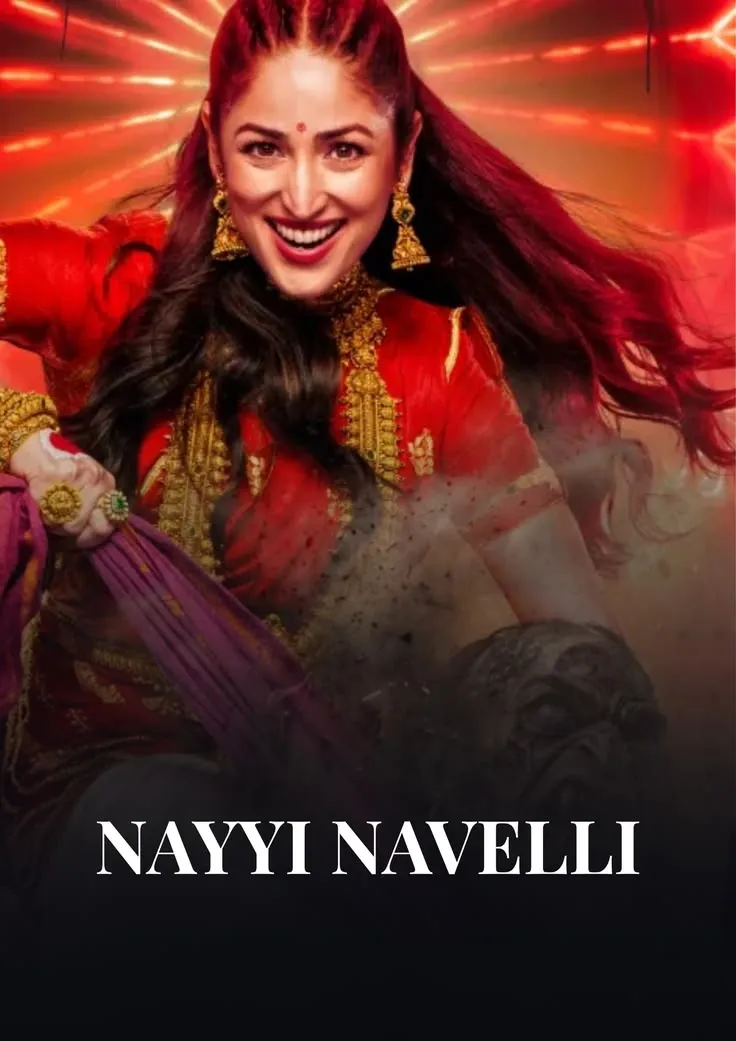
Nayyi Navelli arrives in theatres with an intriguing premise: a new bride enters a chaotic joint family in Meerut, brings unexpected harmony, and is soon accused by her brother-in-law of being a daayan. Directed by Balaji Mohan in his Hindi debut and produced by Aanand L. Rai and Himanshu Sharma, the film attempts to blend family comedy, supernatural mystery and elements of Indian mythology. The result is a mixed experience that shows early promise before losing its footing under the weight of its own ambitions.
An Engaging Setup
The story centres on Mohini, played by Yami Gautam Dhar, who marries Raja Awasthi and steps into a large, noisy household. Her presence appears to smooth over long-standing tensions. Marriages are arranged, problems are resolved, and the family begins to function with unusual ease. The only person unconvinced is Bantu, Raja’s brother, who grows increasingly certain that Mohini is not an ordinary woman. He claims to have witnessed her performing a forest ritual and begins collecting what he believes is evidence of her supernatural nature.
The first half leans into domestic chaos and suspicion. The family dynamics, the constant bickering, and Bantu’s growing paranoia create a lively, if familiar, atmosphere. There is a clear social undercurrent: a woman who is different, successful or simply not fully understood is quickly viewed with distrust. Yami Gautam’s composed, slightly enigmatic performance keeps the audience guessing. She projects both warmth and an otherworldly stillness that makes Bantu’s accusations feel plausible even when the family dismisses them.
When Mythology Takes Over
The film’s second half shifts direction sharply. What begins as a household comedy laced with supernatural suspicion expands into a larger mythological narrative involving an ancient stone, connections to the Ramayana, and a cosmic responsibility placed on Mohini. The story links her to a legacy of guardianship under divine guidance, turning the personal drama into a battle against forces of corruption that span ages.
This expansion is where the film struggles. The transition from intimate family suspicion to grand mythological conflict feels abrupt. The lighter tone of the early portions gives way to heavier exposition, elaborate backstory and a more solemn register. The humour becomes less organic, and the horror elements never fully develop into genuine tension or scares. Instead, the narrative leans on explanation and reverence, which slows the momentum and reduces the sense of playful discovery that the first half had begun to build.
Performances That Carry the Film
Yami Gautam remains the film’s strongest asset. As Mohini she balances everyday charm with an undercurrent of mystery and quiet power. Her screen presence holds attention even when the writing around her becomes uneven. Adinath Kothare as Raja offers a grounded, sincere counterpoint, portraying a husband caught between loyalty to his family and growing doubt about his wife. Anurag Thakur’s Bantu provides much of the comic energy, though some of the characterisation borders on the exaggerated.
The supporting ensemble, including Mita Vashisht and others in the extended family, adds colour to the household scenes. Their interactions supply the film’s most consistently entertaining moments, capturing the noise, interference and affection typical of large Indian joint families.
Tone and Execution
Nayyi Navelli sits uneasily between genres. It is not frightening enough to satisfy pure horror audiences, nor consistently funny enough to work as a broad comedy. The mythological layer, while culturally rooted, often feels imposed rather than organically integrated. Moments that could have been inventive or unsettling instead become explanatory. The film appears more concerned with establishing its spiritual credentials than with sustaining narrative tension or comic rhythm.
Technical aspects are functional. The production design captures the cluttered energy of the Meerut household effectively in the early sections. Once the story moves into more fantastical territory, the visual ambition increases, yet the staging and effects do not always match the scale of the ideas being presented. The music by G. V. Prakash Kumar attempts to bridge the domestic and the epic, with mixed success.
A Case of Wasted Potential
The core idea—a woman suspected of witchcraft inside a traditional family, set against a larger mythological backdrop—had the potential for sharp social observation and inventive genre play. The early sequences suggest a film interested in how communities treat those who do not fit expected roles. That thread is gradually overshadowed by the need to deliver a more conventional mythological resolution.
As a result, Nayyi Navelli feels like two films stitched together. The first is a lively, slightly dark family comedy with supernatural hints. The second is a more earnest, message-driven fantasy that prioritises scale and devotion over character and suspense. The shift leaves the stronger material of the opening half underdeveloped and the later sections overextended.
Final Assessment
Nayyi Navelli is not without merit. Yami Gautam’s committed performance, the energetic family interactions and the unusual premise make it watchable in parts. Viewers who enjoy light mythological entertainers with domestic humour may find enough to hold their interest. Those seeking a tightly constructed horror-comedy or a more daring exploration of its central suspicion will likely come away disappointed.
The film ultimately illustrates the difficulty of balancing genres and tones. When the domestic and the supernatural are allowed to coexist in a grounded, slightly mischievous register, the story has spark. When mythology is allowed to dominate without sufficient narrative discipline, that spark fades. Nayyi Navelli begins with witchful thinking and ends with a sense of opportunities left unexplored.
Read more – insurancesach.com
 Martin