
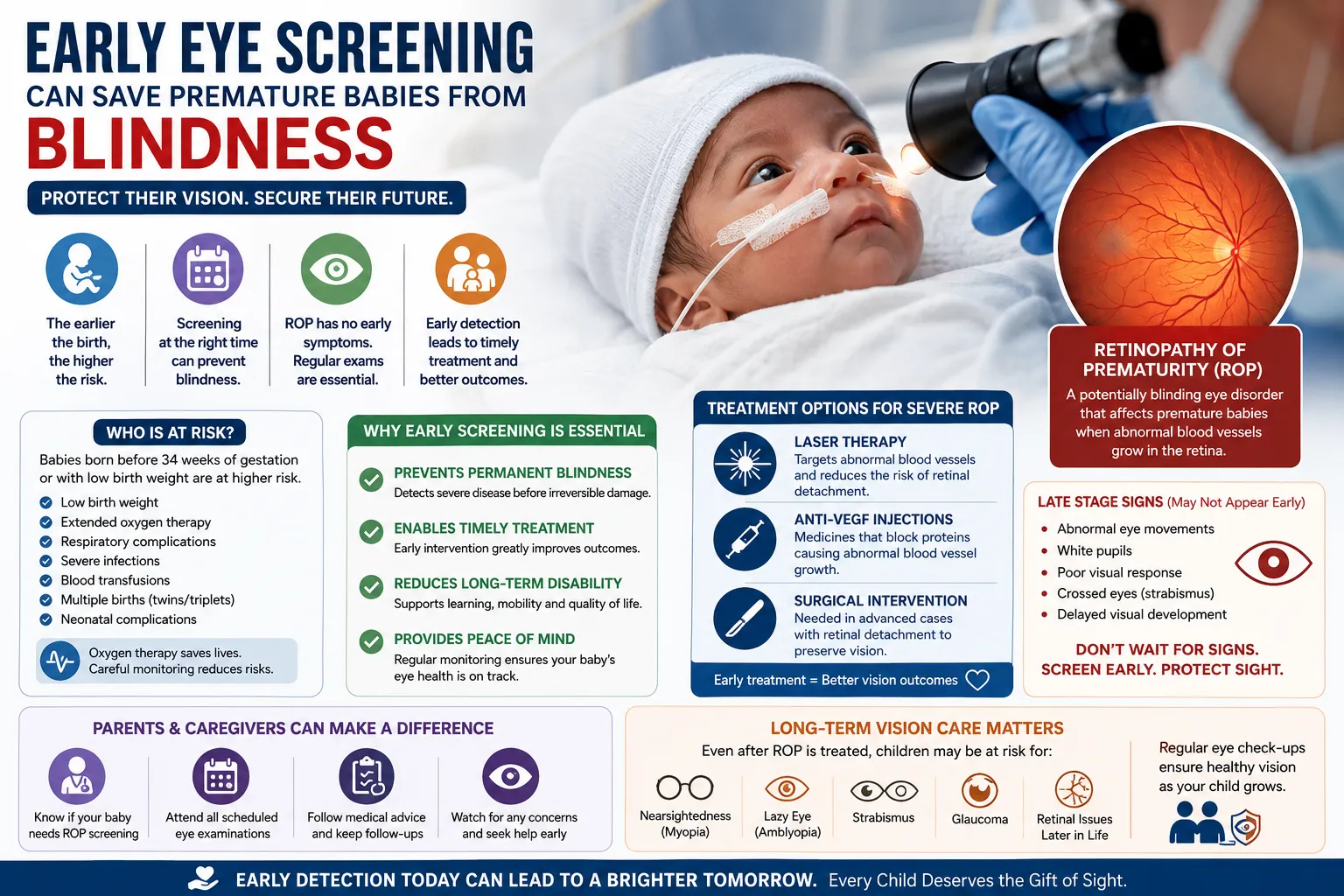
Advances in neonatal care have dramatically improved the survival rates of premature babies across the world. Medical innovations, better intensive care facilities, and improved treatment protocols now allow many infants born weeks before their due dates to survive and thrive. However, alongside these encouraging developments, healthcare experts are warning about a growing but often overlooked threat to the vision of premature infants—Retinopathy of Prematurity (ROP).
ROP is a potentially blinding eye disorder that primarily affects babies born prematurely or with very low birth weight. The condition develops when blood vessels in the retina, the light-sensitive tissue at the back of the eye, grow abnormally. If left undetected and untreated, ROP can lead to severe visual impairment and permanent blindness.
Medical specialists emphasize that early eye screening remains the most effective tool for identifying the disease before it causes irreversible damage. With timely diagnosis and treatment, the vast majority of severe ROP-related blindness cases can be prevented.
Understanding Retinopathy of Prematurity (ROP)
The retina plays a vital role in vision by converting light into signals that the brain interprets as images. During pregnancy, retinal blood vessels develop gradually and typically complete their growth near the end of a full-term pregnancy.
When a baby is born prematurely, this process is interrupted. As a result, the retinal blood vessels may not develop normally. In some cases, abnormal blood vessel growth occurs, which can cause scarring, retinal detachment, and vision loss.
ROP can affect one or both eyes and varies in severity. Mild cases often resolve on their own without treatment. However, severe cases require urgent medical intervention to prevent permanent damage.
The condition has become increasingly important because improvements in neonatal medicine have enabled more extremely premature babies to survive. While this represents a major achievement in healthcare, it also means that a larger number of infants are at risk of developing ROP.
Why Premature Babies Are More Vulnerable
Premature birth is the single most significant risk factor for ROP.
Babies born before 34 weeks of gestation or those with very low birth weight are particularly vulnerable. The earlier a baby is born, the greater the risk of abnormal retinal development.
Several additional factors may increase the likelihood of developing ROP, including:
- Low birth weight
- Extended oxygen therapy
- Respiratory complications
- Severe infections
- Blood transfusions
- Multiple births such as twins or triplets
- Neonatal health complications requiring intensive care
It is important to note that oxygen therapy itself does not directly cause ROP. Rather, fluctuations in oxygen levels can influence retinal blood vessel development in vulnerable infants. Modern neonatal units carefully monitor oxygen administration to minimize risks while ensuring adequate support for the baby’s survival.
The Silent Nature of the Disease
One of the greatest challenges associated with ROP is that it often develops without obvious symptoms.
Parents may not notice any signs during the early stages because infants cannot communicate vision problems. By the time visible symptoms appear, significant damage may already have occurred.
Possible late-stage signs include:
- Abnormal eye movements
- White pupils
- Poor visual response
- Crossed eyes (strabismus)
- Delayed visual development
However, relying on symptoms alone is dangerous because severe disease can progress rapidly without any visible warning signs.
This is why healthcare professionals stress the importance of scheduled eye examinations for all eligible premature infants.
Why Early Screening Is Essential
Early screening allows doctors to detect abnormal retinal changes before vision loss occurs.
Specialized eye examinations are usually performed by pediatric ophthalmologists or retinal specialists. During the screening process, the retina is carefully examined to assess blood vessel development and identify any signs of disease progression.
The timing of the first screening depends on the baby’s gestational age and birth weight. In most cases, examinations begin a few weeks after birth and continue at regular intervals until retinal development is complete or the risk period has passed.
Experts consistently emphasize that screening should never be delayed. Even a short postponement can increase the risk of missing the critical window for effective treatment.
Early detection provides several important benefits:
Prevents Permanent Blindness
The primary advantage of screening is the ability to identify severe disease before irreversible retinal damage occurs.
Enables Timely Treatment
When ROP is detected early, treatment can be initiated promptly, significantly improving outcomes.
Reduces Long-Term Disability
Preserving vision supports healthy childhood development, education, mobility, and overall quality of life.
Provides Peace of Mind
Regular monitoring reassures parents that their baby’s eye health is being closely evaluated.
Available Treatment Options
Modern medicine offers highly effective treatments for severe ROP when diagnosed at the appropriate stage.
Laser Therapy
Laser treatment remains one of the most widely used methods for managing advanced ROP. The procedure targets areas of the retina where abnormal blood vessel growth is occurring, reducing the risk of retinal detachment.
Anti-VEGF Injections
Certain medications can be injected into the eye to block proteins that stimulate abnormal blood vessel growth. These treatments have become increasingly important, particularly in specific forms of severe ROP.
Surgical Intervention
In advanced cases involving retinal detachment, surgery may be necessary to preserve as much vision as possible. However, outcomes are generally better when treatment occurs before retinal detachment develops.
The effectiveness of these treatments highlights the importance of early diagnosis. Delayed detection often limits treatment success and increases the likelihood of permanent vision loss.
The Growing Global Concern
ROP has emerged as a significant public health issue in many developing and middle-income countries.
As neonatal care improves and more premature infants survive, healthcare systems are witnessing an increase in ROP cases. Experts sometimes refer to this trend as the “third epidemic” of ROP, reflecting its growing impact in regions where neonatal survival rates have improved rapidly.
Countries with large populations and expanding neonatal services face unique challenges in ensuring that all at-risk infants receive timely eye examinations.
Limited awareness, shortages of trained specialists, and delayed referrals can create barriers to effective screening programs. Strengthening neonatal eye care services remains an important healthcare priority.
The Role of Parents and Caregivers
Parents play a crucial role in protecting their child’s vision.
Families of premature babies should actively discuss ROP screening schedules with their healthcare providers and ensure that follow-up appointments are not missed. Even if the baby appears healthy and shows no signs of vision problems, routine examinations remain essential.
Parents should:
- Understand whether their baby qualifies for ROP screening
- Attend all scheduled eye examinations
- Follow medical advice regarding follow-up visits
- Seek immediate attention if concerns arise about visual development
- Maintain regular pediatric and ophthalmic care
Awareness and vigilance can make a life-changing difference.
Long-Term Vision Care After ROP
Even when ROP resolves or is successfully treated, some children may remain at increased risk for future eye conditions.
These may include:
- Nearsightedness (myopia)
- Lazy eye (amblyopia)
- Strabismus
- Glaucoma
- Retinal complications later in life
For this reason, long-term ophthalmic monitoring is often recommended for children who have experienced ROP.
Regular eye examinations help ensure that any emerging issues are identified and managed early.
Conclusion
The remarkable progress in neonatal medicine has saved countless premature infants, giving them the opportunity to live healthy lives. Yet with increased survival comes the responsibility to address conditions such as Retinopathy of Prematurity, which remains a leading cause of preventable childhood blindness.
The encouraging reality is that most severe vision loss caused by ROP can be avoided through timely screening and appropriate treatment. Because the disease often develops without visible symptoms, early eye examinations are essential for every at-risk premature infant.
As awareness grows among healthcare providers, parents, and policymakers, stronger screening programs can help ensure that more children retain the gift of sight. In the fight against childhood blindness, early detection is not merely beneficial—it is lifesaving for vision and critical for a child’s future development and quality of life.
 Streamline