
In today’s digital landscape, where attention spans are short and content floods every platform, writing engaging articles is both an art and a skill. For beginners, the process can feel overwhelming, but with practical strategies, anyone can craft pieces that hook readers from the first sentence and keep them invested until the end. This guide distills essential tips drawn from proven writing practices to help novices produce professional, compelling content that resonates and drives results.
Understand Your Audience and Define a Clear Focus
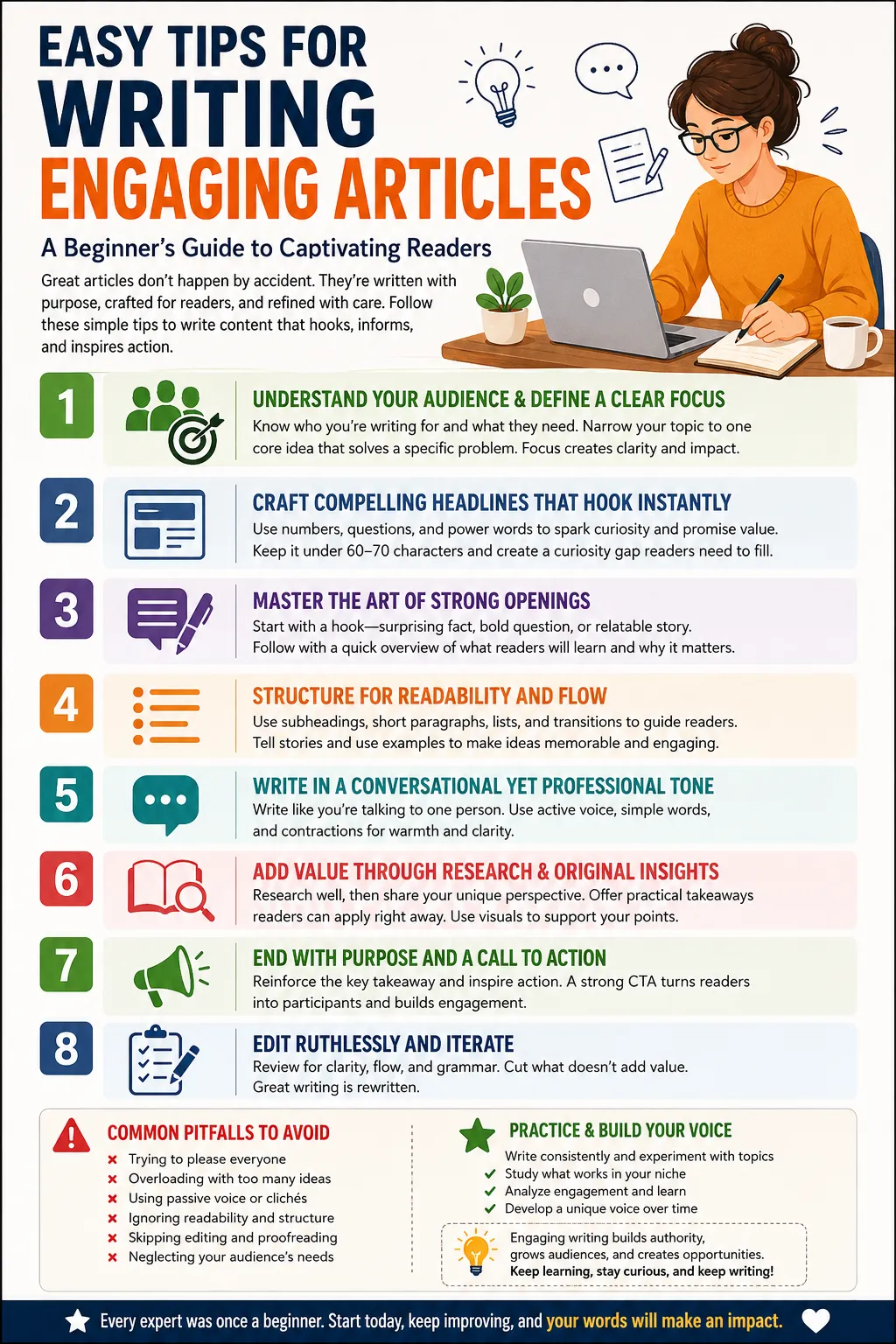
The foundation of any engaging article is knowing who you are writing for. Beginners often make the mistake of trying to appeal to everyone, resulting in vague or scattered content. Instead, define a specific audience—consider their age, interests, challenges, and goals. Ask: What problems do they face? What questions keep them up at night? Tailoring your message to solve their specific needs builds relevance and connection.
Once you know your readers, narrow your topic sharply. A common pitfall for new writers is cramming too many ideas into one piece, which dilutes impact. Focus on one core theme or angle. For instance, rather than writing broadly about “content marketing,” zero in on “how beginners can create their first viral social media post.” This focused approach makes your article more actionable and easier to follow, preventing readers from feeling overwhelmed.
Craft Compelling Headlines That Hook Instantly
Your headline is the gatekeeper. It determines whether readers click or scroll past. Effective headlines are specific, benefit-driven, and promise clear value. Use numbers, questions, or power words like “proven,” “essential,” or “simple” to spark curiosity. Examples include “7 Mistakes Beginners Make When Starting a Blog (And How to Fix Them)” or “How to Write Articles That Readers Can’t Stop Reading.”
Keep headlines under 60-70 characters for optimal display in search results and social shares. Test variations: one that highlights a benefit, another that poses a question, and one that uses a number. The goal is to create a curiosity gap—readers should feel they must continue to uncover the full story.
Master the Art of Strong Openings
The introduction, or lead, must grab attention immediately. Many beginners start with background information, losing readers right away. Instead, open with a hook: a surprising statistic, a relatable anecdote, a bold question, or a vivid scenario. For example, “Imagine pouring hours into an article only for it to gather digital dust—sound familiar?” This draws readers in by mirroring their experiences.
Follow the hook with a brief overview of what the article will cover and the benefits readers will gain. Keep the introduction concise—two to four paragraphs at most—to maintain momentum. A strong lead sets the conversational tone and signals that the piece will be worth their time.
Structure for Readability and Flow
Engaging articles are scannable. Use short paragraphs (3-5 sentences max), subheadings, bullet points, and numbered lists to break up text. Subheadings act as signposts, guiding readers through your logic and allowing them to jump to relevant sections.
Create a logical outline before drafting: introduction, 3-5 main points with supporting examples or anecdotes, and a conclusion. Transitions between sections are crucial—phrases like “Building on this idea…” or “Another key strategy involves…” create smooth flow. Vary sentence length: mix punchy, short sentences with longer, explanatory ones to maintain rhythm and prevent monotony.
Incorporate storytelling. Real-life examples, personal anecdotes, or case studies make abstract ideas concrete and memorable. They humanize your content, fostering emotional connection that keeps readers engaged longer than dry facts alone.
Write in a Conversational Yet Professional Tone
Write as if speaking directly to one person over coffee. Use active voice (“You can implement this tip today” instead of “This tip can be implemented today”) for energy and clarity. Avoid jargon unless your audience expects it, and explain terms when necessary. Contractions (you’re, it’s) add warmth without sacrificing professionalism.
Be concise. Eliminate filler words, redundant phrases, and unnecessary adverbs. Question every sentence: Does it add value? Strong verbs and specific details make writing more dynamic and impactful. For beginners, reading drafts aloud helps identify awkward phrasing or areas where the flow stumbles.
Add Value Through Research and Original Insights
Thorough research lends credibility. Gather facts, examples, and diverse perspectives, but synthesize them into your unique voice rather than regurgitating information. Beginners should aim to offer fresh angles or practical takeaways that readers can apply immediately.
Include visuals where appropriate—suggestions for images, infographics, or embedded examples enhance engagement. However, ensure they support the text rather than distract from it.
End with Purpose and a Call to Action
Conclusions should not merely summarize but reinforce the main takeaway and inspire action. Reiterate key benefits and leave readers with a memorable thought or question. A strong call to action (CTA) guides next steps: “Try one tip from this list in your next article and share your results in the comments,” or “Subscribe for more practical writing advice.”
This transforms passive reading into active engagement, building community and encouraging shares.
Edit Ruthlessly and Iterate
First drafts are rarely polished. Set the piece aside for a few hours or a day, then revise with fresh eyes. Check for clarity, grammar, flow, and consistency. Cut anything that doesn’t serve the core message. Tools like readability checkers can help ensure your content suits a general audience (aim for a 7th-8th grade reading level for broad appeal).
Seek feedback from trusted peers, but develop thick skin—constructive criticism improves your craft. Professional writers emphasize that great articles emerge through multiple revisions, not a single inspired session.
Common Pitfalls to Avoid as a Beginner
Many novices strive for perfection on the first try, leading to paralysis. Focus on completing a draft first, then refine. Avoid overusing passive voice, clichés, or telling instead of showing. Don’t neglect SEO entirely—naturally incorporate relevant keywords—but prioritize reader value over search engine tricks.
Another frequent error is inconsistency in tone or point of view. Choose one (first-person for personal essays, third-person for objective pieces) and maintain it. Overly long articles without breaks can deter readers; aim for 800-1500 words for most online pieces unless depth demands more.
Practice Consistently and Build Your Voice
Writing improves with regular practice. Set a schedule—perhaps one article per week—and experiment with different styles and topics. Over time, you’ll develop a distinctive voice that sets your work apart. Study well-performing content in your niche to understand what resonates, then adapt those elements authentically.
Engagement metrics like time on page, comments, and shares provide valuable feedback. Analyze what works and refine your approach accordingly.
The Long-Term Benefits of Engaging Writing
Mastering these tips does more than produce better articles—it builds authority, grows audiences, and opens opportunities in blogging, freelancing, marketing, and beyond. Readers return to writers who deliver consistent value in an enjoyable format. In a crowded content world, clarity, empathy, and usefulness stand out.
Beginners should remember that every skilled writer started somewhere. Embrace the learning curve, celebrate small wins, and stay curious about the craft. With dedication to audience focus, strong structure, vivid storytelling, and relentless editing, you’ll soon write articles that not only engage but inspire and inform.
 Streamline