
When comedian Samay Raina announced the second season of India’s Got Latent, the biggest surprise was not the show’s return but its dual-platform release. Episodes would premiere simultaneously on YouTube, where the first season had become a cultural phenomenon, and on Netflix. Viewers could watch the same content free with advertisements on YouTube or as part of a paid Netflix subscription. The unusual arrangement raised questions about streaming strategy in a market where free platforms still command enormous reach.
At a recent Express Adda conversation, Netflix Co-CEO Ted Sarandos addressed those questions directly. His comments offered a clear window into how the global streamer evaluates talent-driven content that originates outside traditional television or film pipelines.
YouTube as a Discovery Platform, Not a Rival
Sarandos framed YouTube less as competition and more as a source of discovery. He compared it to a film festival, a film school or an open casting call—places where exceptional creators and ideas surface before finding larger platforms. In the case of India’s Got Latent, he said the Netflix team was simply excited about the show.
That perspective reflects a pragmatic approach to the modern entertainment landscape. Many of today’s most talked-about voices and formats first gain traction on digital platforms that require no subscription. Rather than treating those platforms as threats, Netflix has increasingly looked to them for proven talent and ready-made audiences.
The Power of a Built-in Audience
The decisive factor, according to Sarandos, was the show’s existing popularity. “It came with a very big built-in audience and a very, very popular host,” he noted. Combined with the elements audiences already responded to, the project offered a clear opportunity. Netflix moved forward and expressed excitement about the collaboration.
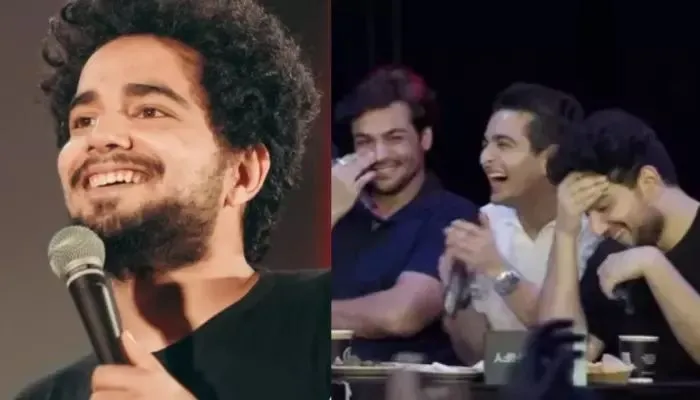
India’s Got Latent is a freewheeling comedy talent show hosted by Raina. Contestants present eccentric, often unconventional acts while the host and guests deliver unfiltered commentary. The first season built a large and loyal following on YouTube through its spontaneous energy and willingness to push boundaries. That same audience provided Netflix with an immediate base of interest when Season 2 launched.
The dual-release model was presented as a first-of-its-kind arrangement for this kind of Indian digital original. New episodes drop on both platforms on the same schedule, typically every two weeks, with identical runtime and format. Netflix viewers experience the show without advertisements or a public comment section, while YouTube maintains the free, interactive environment that helped build the brand.
Early Performance and Market Realities
Initial viewership numbers illustrated the continued strength of free platforms. The premiere episode of Season 2 attracted tens of millions of views on YouTube within days. On Netflix the figures were considerably lower yet still significant enough to place the title among the platform’s global top non-English shows during its early run. The disparity underscored a practical reality: large segments of the audience remain comfortable watching content with ads, especially when it is available at no extra cost.
For Netflix, the value of the deal extends beyond pure viewership metrics. Partnering with a host who already commands attention brings cultural conversation, social media momentum and potential cross-promotion opportunities. The streamer has also announced an exclusive comedy special with Raina that is currently in development, signalling a broader creative relationship rather than a one-off licensing arrangement.
Navigating Controversy and Creative Risk
India’s Got Latent has never been a conventional talent show. Its unfiltered style has generated both passionate fans and significant controversy. Season 1 faced backlash that led to episodes being made private and a temporary pause. The decision to revive the series on a major global platform therefore carried reputational considerations as well as commercial ones.
Sarandos’s comments suggest Netflix weighed the risks against the clear demand for the content and the host’s established connection with viewers. By keeping the show available on YouTube while adding a Netflix window, the company avoided forcing audiences to choose platforms and instead met them where they already were. The approach prioritises reach and cultural relevance over exclusivity in this particular case.
Implications for Creator-Driven Content
The collaboration reflects broader shifts in how streaming services source programming. Traditional development pipelines remain important, yet proven digital formats with dedicated communities offer a different kind of certainty. A “built-in audience” reduces some of the uncertainty that accompanies completely new original productions.
At the same time, the dual-release strategy tests assumptions about windowing and exclusivity. For years, streaming services emphasised exclusive content as a primary reason to subscribe. Here, Netflix has chosen to share the same episodes with a free platform, betting that the convenience, presentation quality and additional exclusive material (such as the forthcoming comedy special) will still hold value for its members.
Looking Ahead
Sarandos’s remarks at Express Adda were measured and consistent with Netflix’s wider philosophy of following audience interest. The company saw a popular host, a format that had already demonstrated strong engagement, and an opportunity to participate in a cultural conversation rather than sit outside it. Bringing India’s Got Latent onto the platform, even while it remained freely available elsewhere, was presented as a logical extension of that thinking.
For Indian creators, the deal offers a visible example of how digital-first success can translate into partnerships with global streamers without requiring the original platform to be abandoned. For Netflix, it represents another data point in understanding how free and paid ecosystems can coexist around the same title.
The second season continues to roll out on both platforms. Whether the dual model becomes more common will depend on future results and the willingness of creators and platforms to experiment with shared releases. What is already clear is that Netflix identified a sizable existing audience and a distinctive host, and chose to meet that audience on its own terms. In Sarandos’s words, the project simply had the elements people wanted—and the company was glad to bring it aboard.
Read more – medbrainmedia.com