
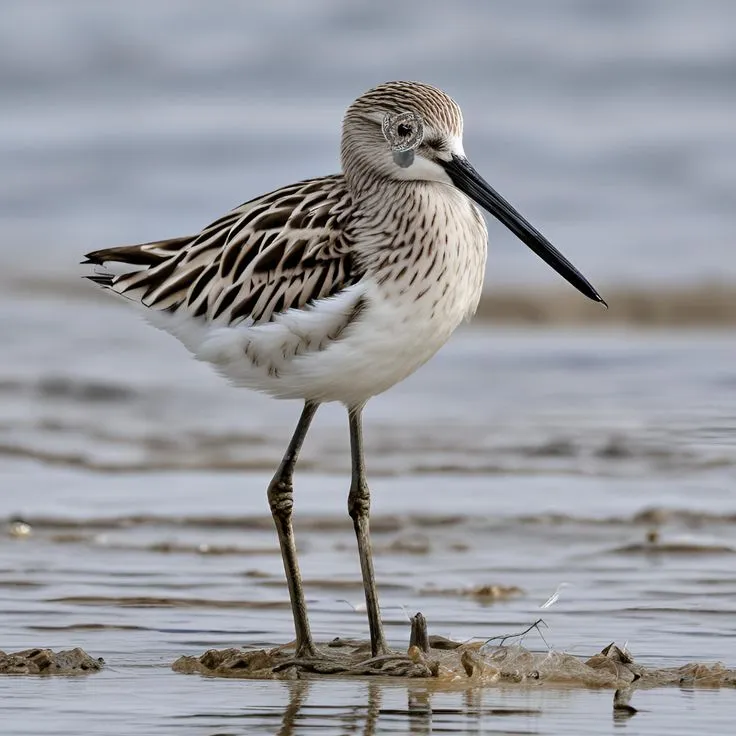
A rare Siberian shorebird, the Sharp-tailed Sandpiper, was recently recorded at Najafgarh Lake in the Delhi-NCR region. The sighting, documented by local birders on the Gurgaon side of the wetland, marks only the fifth confirmed record of the species in India in nearly 150 years. Its appearance has drawn attention both for its rarity and for what it reveals about the continuing ecological value of urban wetlands.
The Recent Sighting at Najafgarh
The bird was observed foraging in marshy fields and shallow wetland edges near villages such as Mankrola and Chandu. It was seen associating with more common waders, including Wood Sandpipers, Green Sandpipers and Common Sandpipers. Identification relied on distinctive features such as the bold white supercilium, rusty-brown scalloped upperparts and overall structure that separate it from similar species like the Pectoral Sandpiper.
The previous recorded sighting in the same broader landscape occurred in September 2019. Earlier Indian records are extremely sparse: a male in Gilgit in 1880, a female in Vandalur, Tamil Nadu, in 1915, an unconfirmed report from Chhattisgarh in 2004, and the 2019 Najafgarh individual. This scarcity underlines how unusual the latest observation is.
Breeding Grounds and Migration Route
The Sharp-tailed Sandpiper breeds in the high Arctic tundra of northern Siberia, in a range extending from the Lena River delta eastward toward the Kolyma region. After the short Arctic summer, the birds undertake one of the longer migrations among small shorebirds.
The primary route follows the East Asian–Australasian Flyway. Most individuals travel south through East Asia to spend the non-breeding season in Australia, with smaller numbers reaching New Zealand and other parts of the southwestern Pacific. Adults generally take a relatively direct path, while juveniles often make an eastward detour to western Alaska to build fat reserves before a long over-water flight.
India lies along the Central Asian Flyway rather than the main East Asian–Australasian corridor. As a result, the species occurs in the subcontinent only as a rare passage migrant or vagrant. Birds that appear here have likely been displaced by weather or navigational error during their long journey.
Conservation Status and Threats
The Sharp-tailed Sandpiper is listed as Vulnerable on the IUCN Red List. Its global population is estimated at between 60,000 and 120,000 mature individuals, with a best estimate around 73,000. Data from Australia, where more than 90 percent of the population spends the non-breeding season, indicate a decline of approximately 45 percent over three generations.
Major threats occur at multiple points along the flyway. In the Yellow Sea region, large-scale reclamation of intertidal mudflats for industry, aquaculture and infrastructure has removed critical stopover habitat. Reduced sediment flows caused by upstream dams and the effects of sea-level rise further degrade remaining sites. On the Australian wintering grounds, wetland drainage, pollution, drought and changing climate patterns limit foraging opportunities. Additional pressures include human disturbance, incidental capture and predation by introduced mammals.
Because the species concentrates in relatively few key sites during migration and the non-breeding season, habitat loss in those areas has a disproportionate impact on the whole population.
Why the Delhi Sighting Matters
The appearance of such a rare long-distance migrant at Najafgarh highlights the residual importance of wetlands in and around the capital. Even degraded or partially protected marshes can still function as temporary refuelling sites for birds travelling thousands of kilometres. The presence of a Siberian breeding species in a landscape dominated by urban expansion and agriculture demonstrates that ecological connectivity has not been completely severed.
Birders and ecologists note that repeated records of uncommon migrants often serve as indicators of wetland quality. When rare shorebirds continue to stop at a site, it suggests that food resources and suitable shallow-water or muddy habitats remain available, at least seasonally.
Delhi as a Bird-Diverse Capital
Beyond this single rarity, the Delhi-NCR region supports a surprisingly rich avian community for a major metropolitan area. The network of residual wetlands, riverine stretches, parks and peri-urban marshes attracts large numbers of winter visitors and passage migrants each year. Sites such as Najafgarh, the Yamuna floodplain and smaller waterbodies regularly host diverse assemblages of waterfowl, waders, raptors and passerines.
This diversity persists despite intense development pressure, pollution and fluctuating water levels. It reflects both the geographic position of the region on major migratory routes and the stubborn resilience of certain wetland patches. The Sharp-tailed Sandpiper sighting adds one more data point to a longer record of unexpected species appearing in the capital’s green and blue spaces.
Looking After Stopover Habitats
Protecting places like Najafgarh is not only about one rare sandpiper. These wetlands support numerous more regular migratory species that depend on them for rest and feeding. Maintaining hydrological flows, controlling encroachment, reducing pollution and limiting disturbance during peak migration periods all contribute to keeping such sites functional.
The latest record of the Sharp-tailed Sandpiper serves as a reminder that even highly modified urban landscapes can still play a role in global flyway networks. For a species already under pressure across its range, every viable stopover matters. The bird’s brief appearance in Delhi-NCR underscores both the fragility of long-distance migration and the continuing ecological significance of the capital’s remaining wetlands.
Read more – thenumberinfo.com