
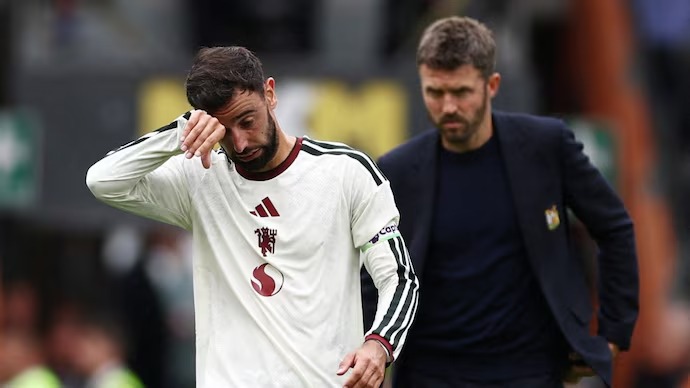
United Struggle From The Start
Manchester United suffered another frustrating evening after Hull City exposed serious weaknesses during a surprisingly one-sided Premier League contest. The result was particularly disappointing for United supporters because the team struggled to create any real rhythm throughout the match. Hull arrived with plenty of energy, confidence, and determination, while Manchester United looked disconnected across several areas of the pitch. The difference in intensity became increasingly obvious as the game developed.
United were expected to control possession and dictate the tempo from the opening whistle. Instead, their passing often lacked purpose, while several attacking moves broke down before reaching dangerous positions. Hull continued pressing aggressively and refused to allow United comfortable opportunities to build attacks from the back. That approach created problems that Manchester United never properly solved during the match.
Hull Bring Unexpected Energy
Hull City played with the kind of urgency that immediately made the contest uncomfortable for Manchester United. Their players competed strongly for loose balls and repeatedly challenged United whenever possession became available. There was little hesitation from Hull when moving forward, even against a side carrying considerably greater expectations.
The home side also benefited from keeping their defensive shape relatively compact throughout important periods. Manchester United frequently found themselves facing several Hull players behind the ball, leaving limited space around the attacking areas. Whenever United attempted to move through the middle, Hull responded quickly and forced them toward less dangerous positions.
That defensive discipline became important because United struggled to produce consistent movement around the final third. Their forwards were often isolated, while midfield players failed to provide enough support at crucial moments. Hull noticed the problem and continued targeting those spaces whenever possession changed hands.
Manchester United Lose Their Shape
The biggest concern for United was not simply the scoreline, but the lack of cohesion visible across the team. Players appeared unsure about their positioning during several phases, creating large gaps between midfield and attack. Those gaps allowed Hull to recover possession and launch attacks without facing immediate pressure.
Manchester United normally need their midfield to establish control before their forwards can become effective. On this occasion, that control was largely missing. Passes arrived too slowly, movements were predictable, and Hull repeatedly managed to interrupt promising sequences before they developed.
The defensive problems were also noticeable because United struggled to react quickly after losing possession. Hull found opportunities to exploit open spaces, particularly when United’s full-backs pushed forward. The recovery runs were not always convincing, leaving the backline exposed more often than expected.
Attacking Problems Become Obvious
United’s attacking performance offered very few reasons for optimism during the game. Their possession frequently looked harmless because the final pass was either delayed or poorly executed. Even when Manchester United moved into useful positions, they struggled to turn those moments into clear chances.
The forwards needed better service from midfield, but they also needed sharper movement without the ball. Hull’s defenders appeared comfortable dealing with several United attacks because the movement around them was limited. Without quick combinations or aggressive runs behind the defensive line, United became easier to contain.
This created a familiar problem for Manchester United. Having possession does not automatically mean creating danger, especially when the opposition remains organised and disciplined. Hull demonstrated that effectively by allowing United to have certain areas while protecting the spaces that mattered most.
Hull Punish United Mistakes
Hull’s biggest advantage came from their willingness to punish Manchester United whenever mistakes appeared. The hosts did not need endless opportunities because United repeatedly gave them situations where quick decisions could create danger. That efficiency made the difference between the two sides increasingly clear.
United’s defenders were forced into difficult situations because the midfield protection was inconsistent. Hull attackers used those moments intelligently, moving into spaces before United could reorganise. The pressure also appeared to affect United’s confidence, with several players choosing safer passes rather than attempting progressive options.
For Hull, this was exactly the kind of performance supporters wanted to see. The team looked hungry and committed, and every successful challenge seemed to increase their belief. Manchester United, meanwhile, looked increasingly uncomfortable as the match moved forward.
Midfield Battle Goes Wrong
The midfield contest was another area where Manchester United failed to establish authority. Hull consistently competed for second balls and prevented United from settling into a comfortable passing pattern. The visitors needed greater composure in that area, particularly when Hull increased their pressure.
A stronger midfield performance could have changed the entire flow of the match. United needed players capable of receiving possession under pressure and moving the ball forward quickly. Instead, too many attacks became slow sequences that gave Hull enough time to reset their defensive positions.
The lack of midfield control also created problems defensively. Once United lost possession, there was often too much ground for players to cover before they could challenge Hull’s attackers. That imbalance left the defence dealing with pressure that should have been reduced earlier in the sequence.
Supporters Left Frustrated
For Manchester United supporters, the result was difficult to accept because expectations remain high regardless of the opponent. Losing matches can happen in football, but performances without clear identity tend to create deeper concerns. This was one of those evenings where the result reflected wider problems rather than one isolated mistake.
Fans wanted to see stronger reactions when Hull gained momentum. Instead, United struggled to change the direction of the contest. There were moments when greater urgency might have shifted the balance, but Hull continued playing with confidence and refused to surrender control.
The frustration will naturally extend beyond this single Premier League fixture. Manchester United have spent significant periods trying to rebuild consistency, and performances like this raise questions about whether the team has genuinely solved its underlying problems.
Tactical Questions Remain
The match also leaves Manchester United with several tactical questions that cannot simply be ignored. The team needs better spacing between its lines, faster movement during attacks, and stronger reactions immediately after possession is lost. These are basic elements, yet they were not consistently visible against Hull.
Manchester United also need to become more flexible during difficult matches. When the original attacking plan stops working, the coaching staff must find alternatives quickly. Hull managed to disrupt United’s preferred approach, but United did not produce enough tactical variation to force a different contest.
That issue becomes even more important during a demanding Premier League campaign. Opponents will study weaknesses, target predictable patterns, and make matches uncomfortable whenever possible. United therefore need solutions that work beyond their strongest performances.
Hull Deserve Major Credit
While much of the attention will naturally focus on Manchester United, Hull City deserve significant credit for their performance. They played with courage and maintained their intensity even when facing a club with far greater global recognition.
Hull did not simply sit back and hope for mistakes. They actively competed, pressed when appropriate, attacked available spaces, and maintained their organisation. Their willingness to challenge United physically and tactically made the match far more difficult for the visitors.
The victory can provide Hull with considerable confidence going forward. Performances against major opposition can sometimes become defining moments during a season, particularly when players realise that their tactical approach can genuinely work against stronger teams.
What Manchester United Need Next
Manchester United now need a response rather than excuses after this disappointing Premier League result. The coaching staff must examine why the team struggled to maintain structure and why the attacking players received so little consistent support.
Training sessions will need to focus on quicker passing, positional discipline, defensive transitions, and more aggressive movement around the penalty area. Individual performances will also need careful assessment because collective problems can sometimes begin with players failing to execute their specific responsibilities.
The next few fixtures could therefore become important for United’s confidence. A strong response would not erase the problems seen against Hull, but it could demonstrate that the squad understands what went wrong and has the character to correct it.
A Warning United Cannot Ignore
The defeat against Hull City should be viewed as more than an embarrassing result for Manchester United. It highlighted several weaknesses that opponents can exploit when United fail to control matches from midfield and maintain their defensive structure.
Hull showed that energy, organisation, discipline, and confidence can cause serious problems even for a traditionally powerful Premier League side. Manchester United must now respond with greater consistency, clearer tactics, and stronger performances across the pitch.
The result will undoubtedly increase scrutiny around the squad and coaching setup, but that pressure can also become useful if it leads to meaningful improvement. Manchester United have enough quality to respond, yet quality alone will not solve problems caused by poor organisation and inconsistent intensity.
Final Takeaway For United
Manchester United’s defeat against Hull City exposed a worrying lack of cohesion, attacking sharpness, and midfield control during a match where they were expected to perform better. Hull deserved their praise for showing greater energy, discipline, and belief throughout the contest. For United, the priority now must be correcting the structural and tactical issues that became impossible to ignore. A stronger response in upcoming Premier League matches will be essential for rebuilding confidence among players and supporters. Manchester United must learn from this setback quickly and turn criticism into measurable improvement on the pitch.
Read More :- jayapokergacor.com