
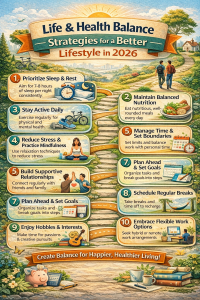
In 2026, balance between life and health is no longer a vague ideal — it’s a practical necessity. Experts increasingly emphasize that managing work, personal goals, relationships, physical health, mental wellness, and daily habits together leads to greater happiness, resilience, and longevity. A balanced life isn’t just about “doing more,” it’s about doing what matters well, in ways that support your overall well‑being and prevent burnout.
Achieving life and health balance means integrating healthy habits into your work life, personal routines, relationships, and long‑term goals. Research and lifestyle guidance show that small routines and intentional choices can compound into meaningful improvements over time. The strategies below provide a roadmap for a balanced, healthier, and more fulfilling life in 2026.
1. Establish a Consistent Sleep and Rest Routine
Sleep is a cornerstone of a balanced and healthy lifestyle. Experts recommend aiming for at least 7–8 hours of sleep per night as part of a consistent routine, because your body and brain repair and recharge during sleep. A predictable sleep and wake schedule helps regulate your internal clock, improves energy, supports mood stability, and boosts immunity.
In 2026, health professionals continue to stress quality sleep as vital for longevity and mental performance. Getting into bed and waking up at the same times daily — even on weekends — makes falling asleep easier and improves overall restfulness. Creating a sleep‑friendly environment, free of screens and late‑night stressors, further strengthens this foundation.
2. Maintain a Balanced Nutrition Pattern
Balanced nutrition is essential for both immediate energy and long‑term health. A nutrient‑rich diet that includes vegetables, lean proteins, whole grains, and healthy fats supports metabolic health, brain function, and physical endurance. Eating mindfully, rather than eating on autopilot, helps people tune into hunger cues and reduces overeating.
Adopting habits like regular meal times and incorporating a plant‑forward diet can support metabolic resilience and reduce the risk of chronic conditions over time. Food’s role isn’t just fuel — it also affects mood and cognitive clarity, making healthy choices a central part of life balance.
3. Prioritize Physical Activity Every Day
Physical activity isn’t just about fitness goals; it’s fundamental to health balance. Regular movement helps regulate blood sugar, supports cardiovascular health, boosts mood, and strengthens immune function. Experts recommend at least 150–300 minutes per week of moderate‑intensity activity, which can include walking, cycling, yoga, or strength training.
In 2026, the trend toward “snack‑sized workouts” — short bursts of activity throughout the day — is gaining popularity because it fits into busy schedules while still providing meaningful health benefits. Short daily movement sessions are easier to sustain than only long workouts, and cumulative activity adds up to better physical and mental balance.
4. Incorporate Mindfulness and Stress‑Reduction Techniques
Mindfulness and stress management are crucial strategies for life balance. Mindfulness — the practice of intentional present‑moment awareness — reduces stress, enhances emotional regulation, and improves resilience to daily challenges. Techniques such as meditation, deep breathing, journaling, or grounding exercises help individuals manage anxiety and improve cognitive focus.
Including brief mindfulness pauses in your day helps reduce mental overload and prevents the accumulation of stress that leads to burnout. These practices can also improve sleep quality and enrich emotional awareness, allowing you to respond to stressors more adaptively rather than reactively.
5. Develop Time‑Management and Personal Boundaries
Good time management and boundary setting provide structure and protect your capacity for rest and meaningful pursuits. Without boundaries, personal time can be consumed by work or other obligations, leaving little room for recovery or joy. Intentional scheduling of work time, personal activities, hobbies, and rest creates healthier rhythms in daily life.
Boundaries may include designated break times, limiting work communications after hours, and protecting personal plans from last‑minute changes. Prioritizing what matters — not just what is urgent — helps maintain balance between personal well‑being and professional commitments.
6. Plan Ahead and Break Goals Into Manageable Tasks
Planning ahead reduces stress and creates predictability in daily life. Setting clear goals — both short‑term and long‑term — helps you organize activities around what is meaningful, rather than reacting to circumstances as they arise. Breaking larger objectives into smaller, achievable tasks keeps progress steady and prevents overwhelm.
Using strategies like planning weekly schedules, organizing tasks by priority, and grouping similar activities into focused time blocks improves efficiency and balance. Planning also enables you to allocate personal time for relaxation, family, and holistic health habits without feeling rushed.
7. Schedule Regular Breaks and Time Off
Taking breaks throughout the day — and time off in longer intervals — is a practical strategy to maintain balance and prevent burnout. Micro‑breaks refresh both body and mind, improving focus and reducing mental fatigue. Longer breaks, such as vacations or days off, allow you to intentionally detach from work and replenish emotional reserves.
Accepting that rest is a productive part of a balanced life is a mindset shift many health professionals recommend. Viewing breaks as essential, not optional, helps maintain mental clarity, physical energy, and sustained motivation for work and personal activities.
8. Build Supportive Social Connections
Human beings are social creatures, and social support is a powerful pillar of life balance. Relationships with family, friends, and community provide emotional nourishment, a sense of belonging, and shared joy that enhance both mental and physical health. Strong social ties are linked with lower stress levels, increased longevity, and improved cognitive health as we age.
Intentional connection — such as scheduling time for loved ones, participating in group activities, or volunteering — not only enriches life but also creates a balanced lifestyle where work and personal relationships support one another.
9. Embrace Flexible Work Arrangements When Possible
Work flexibility has become a key component of life balance. Flexible work arrangements — including hybrid schedules, flexible hours, or remote work — empower individuals to tailor their work around personal commitments and health needs rather than forcing personal life to schedule around work demands.
This kind of autonomy can reduce stress and improve overall job satisfaction. By designing work schedules that respect individual rhythms and responsibilities, people are able to maintain higher energy for both their careers and personal goals, fostering a more fulfilling lifestyle.
10. Make Time for Hobbies and Personal Interests
Hobbies and personal interests play a critical role in life balance by bringing joy, relaxation, and creative fulfillment outside of work. Whether it’s art, music, gardening, reading, or learning new skills, engaging in personal passions improves emotional well‑being and prevents monotony.
Time spent on hobbies provides psychological benefits such as increased self‑esteem, reduced stress, and improved mood. It also encourages lifelong learning and curiosity, which contribute to overall life satisfaction that goes beyond routine tasks.
11. Practice Financial Health and Planning
Financial well‑being is an often‑overlooked aspect of life balance, but it significantly impacts overall stress and life satisfaction. Establishing healthy financial habits — such as budgeting, saving, and planning for long‑term goals — builds security and reduces anxiety about the future.
Being proactive about financial planning allows you to align fiscal responsibilities with personal values. Clear financial goals and strategies empower you to make choices without the weight of financial uncertainty, contributing to emotional peace and balanced daily life.
12. Emphasize Continuous Learning and Growth
Personal growth and continuous learning are integral to a balanced, meaningful life. Expanding your skill set through courses, workshops, reading, or professional development enhances confidence, adaptability, and purpose. Learning new things also keeps the brain active and engaged, adding depth to your routine.
This approach supports not only career advancement but also inner fulfillment. When you invest in your mind and interests, you cultivate resilience and a sense of progress that bolsters both mental health and life satisfaction.
13. Monitor and Adjust Balance Regularly
Achieving life and health balance is not a one‑time task — it’s an ongoing process that requires regular reflection and adjustment. Life circumstances, responsibilities, goals, and health needs constantly evolve, so periodically evaluating how well your routines serve you helps maintain alignment with what matters most.
Checking in with yourself through reflection, journaling, or honest conversations with loved ones helps you spot when balance is shifting and make necessary adjustments. A flexible, mindful approach ensures that balance is sustainable and responds to your changing needs.
Conclusion: Balanced Living as a Lifestyle — Not a Destination
Life and health balance strategies are most effective when viewed as part of a lifestyle, not a one‑time achievement. Small, intentional daily habits — such as consistent rest, physical activity, meaningful connections, mindful nutrition, and effective time management — create stability, resilience, and long‑term wellness.
In 2026, the emphasis on holistic health and lifestyle integration means balance is increasingly seen as harmony between physical, emotional, social, and professional spheres of life. Approach these strategies with patience and flexibility. A balanced life doesn’t mean perfection every day — it means making choices that support your well‑being, purpose, and joy, season after season.
 Streamline