
Climate change is increasingly being recognized as one of the greatest public health challenges of the 21st century. While the immediate dangers of rising temperatures—such as heat exhaustion, dehydration, and heat-related illnesses—are widely understood, scientists are uncovering evidence that the consequences may extend far beyond the individuals directly exposed to extreme weather. A recent study has revealed that exposure to high heat and humidity during pregnancy may significantly increase the risk of childhood stunting, potentially affecting millions of children across South Asia in the coming decades.
The findings highlight a concerning link between climate conditions during pregnancy and long-term child health outcomes. As temperatures continue to rise and humid heat events become more frequent, the research raises important questions about maternal health, child development, and the future impact of climate change on vulnerable populations.
Understanding Childhood Stunting
Childhood stunting is a condition in which children fail to achieve expected growth and height for their age due to chronic undernutrition, repeated infections, or adverse environmental conditions. It is more than simply being shorter than average. Stunting can have lifelong consequences, affecting physical development, cognitive abilities, educational achievement, productivity, and overall health.
According to global health experts, stunting remains one of the most significant challenges in many low- and middle-income countries. South Asia continues to account for a substantial share of the world’s stunted children despite progress in nutrition and healthcare over recent decades.
Because the condition often develops during the earliest stages of life—including pregnancy—it is particularly sensitive to environmental factors that affect maternal and fetal health.
What the Study Found
Researchers examined the effects of prenatal exposure to extreme heat and humidity on child growth across South Asia. Their analysis revealed that humid heat poses a much greater threat than high temperatures alone.
The study found that when pregnant women are exposed to extremely hot and humid conditions, their children face a significantly higher risk of stunting later in life. Importantly, the negative effects were substantially stronger when humidity was included in the analysis, suggesting that many previous assessments may have underestimated the true health risks associated with climate change.
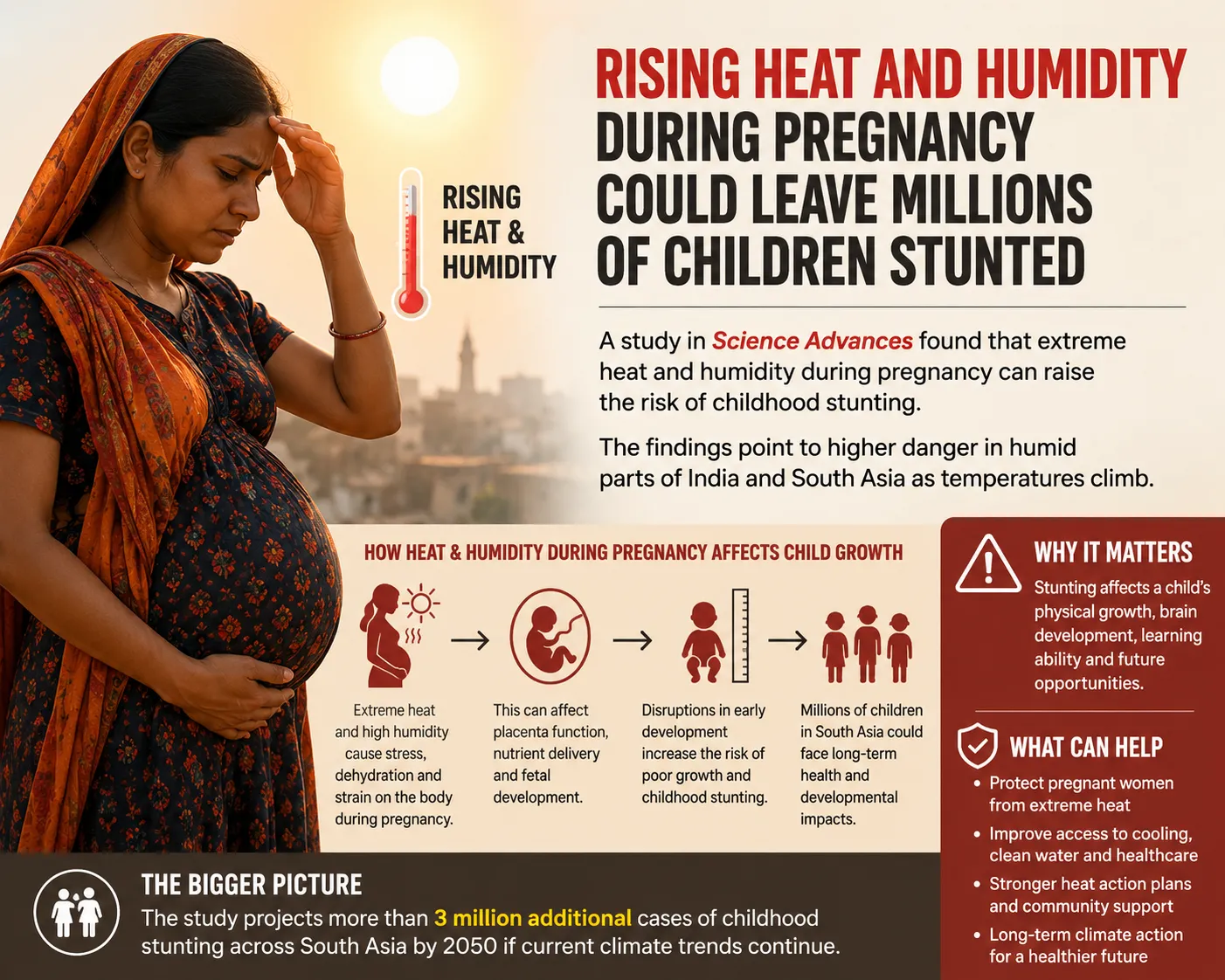
Scientists also projected future impacts under continued warming scenarios. Their estimates indicate that humid heat exposure during pregnancy could contribute to more than three million additional cases of childhood stunting across South Asia by the middle of this century if climate conditions continue to worsen.
These findings underscore the importance of considering both temperature and humidity when evaluating climate-related health risks.
Why Humidity Makes Heat More Dangerous
Many people focus primarily on air temperature when discussing heatwaves. However, humidity plays a critical role in determining how the human body responds to heat.
The body relies on sweating to cool itself. When humidity levels are high, sweat evaporates more slowly, making it harder for the body to release excess heat. As a result, core body temperature can rise more quickly, placing additional strain on vital organs and physiological systems.
Pregnant women are particularly vulnerable because pregnancy naturally increases metabolic heat production and places greater demands on the cardiovascular system. When exposed to prolonged periods of hot and humid weather, the body may struggle to maintain optimal conditions for fetal development.
Researchers believe this increased physiological stress may affect nutrient delivery, blood circulation, and other processes essential for healthy fetal growth.
The Impact on Fetal Development
Pregnancy is one of the most critical periods in human development. During this time, environmental conditions can influence a child’s health long before birth.
Extreme heat exposure has already been linked in previous studies to adverse pregnancy outcomes, including low birth weight, preterm birth, and pregnancy complications. The new research adds another important dimension by showing that the combined effect of heat and humidity may have lasting consequences on child growth.
Scientists suggest that prolonged exposure to humid heat could affect fetal development through several pathways. Maternal dehydration, increased physiological stress, reduced nutrient absorption, and changes in blood flow may all contribute to impaired growth during pregnancy.
Even relatively small disruptions during critical developmental stages can influence growth patterns that continue throughout childhood.
Why South Asia Faces Greater Risks
South Asia is particularly vulnerable to the impacts of humid heat due to a combination of climate, geography, and population factors.
Many regions across India, Bangladesh, Pakistan, and neighboring countries already experience intense heat during large portions of the year. Climate change is increasing both the frequency and severity of these heat events. At the same time, rising humidity levels in many areas are creating conditions that place additional strain on human health.
Large populations, rapid urbanization, limited access to cooling infrastructure, and socioeconomic challenges further increase vulnerability. Many pregnant women work outdoors, travel long distances, or live in homes without adequate ventilation or cooling systems.
Humid regions of eastern, coastal, and northeastern India may face particularly elevated risks as temperatures continue to climb.
Public Health Implications
The study’s findings have significant implications for healthcare systems and policymakers. Traditionally, climate adaptation strategies have focused on preventing heat-related deaths and illnesses. However, the new evidence suggests that protecting pregnant women from extreme heat should become a major public health priority.
Maternal health programs may need to incorporate climate-related risk assessments and provide guidance on avoiding prolonged exposure to hot and humid conditions. Healthcare providers could play a crucial role in educating expectant mothers about hydration, rest, nutrition, and heat safety measures.
Governments may also need to strengthen heat action plans, improve access to cooling centers, expand healthcare outreach, and develop targeted interventions for vulnerable populations.
Steps That Can Help Reduce Risk
Although climate change presents a growing challenge, several practical measures can help reduce exposure to dangerous heat during pregnancy.
Pregnant women should stay well hydrated, avoid outdoor activities during peak heat hours, wear lightweight clothing, and seek shaded or cooled environments whenever possible. Employers and communities can support maternal health by providing rest breaks, access to drinking water, and safer working conditions during periods of extreme heat.
Urban planning initiatives that increase green spaces, improve housing design, and reduce heat retention can also contribute to healthier environments for families.
Long-term solutions, however, will require broader efforts to address climate change and build resilience within healthcare and social support systems.
Looking Ahead
The emerging evidence linking prenatal heat exposure to childhood stunting highlights a new dimension of climate-related health risks. What happens during pregnancy can shape a child’s future health, development, and opportunities for years to come.
As global temperatures continue to rise, understanding the interaction between heat, humidity, and maternal health will become increasingly important. The latest research serves as a reminder that climate change is not only an environmental issue but also a human development challenge with consequences that can span generations.
Protecting pregnant women from extreme heat may prove essential not only for maternal well-being but also for ensuring healthier futures for millions of children across South Asia and beyond.
 Martin