
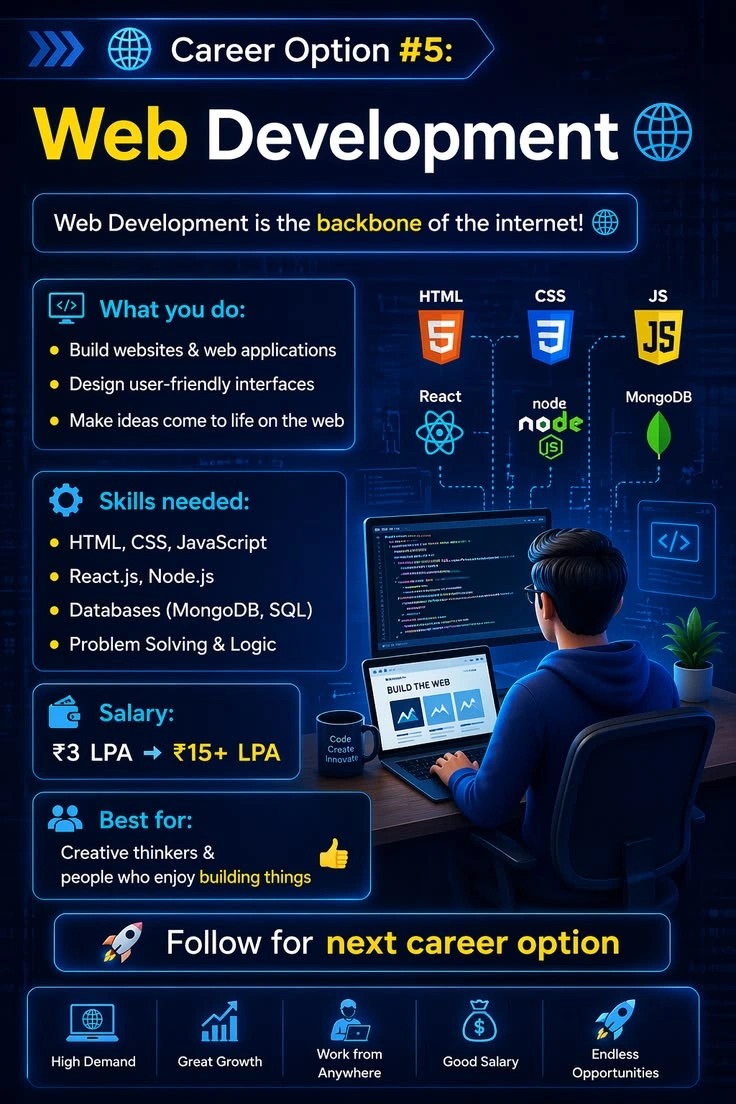
Web development remains one of the most accessible and rewarding career paths in technology in 2026. With the ongoing digital transformation, businesses continue to demand skilled professionals who can create functional, responsive, and user-friendly websites and applications. The good news is that you do not need a formal computer science degree to succeed. Many professionals enter the field through self-study, online courses, and practical projects. This guide provides a clear, step-by-step roadmap tailored for complete beginners.
Web developers build and maintain the online experiences people use daily. They work across three main specializations: front-end (what users see and interact with), back-end (server-side logic and data), and full-stack (both areas combined). Choosing a focus early helps streamline learning, though many start broad and specialize later.
Step 1: Understand the Fundamentals
Begin with the core building blocks of the web:
- HTML (HyperText Markup Language): Learn how to structure web pages. Spend 2–3 weeks mastering semantic tags, forms, and accessibility basics.
- CSS (Cascading Style Sheets): Focus on styling, layouts using Flexbox and Grid, responsive design, and animations. Dedicate 3–4 weeks here.
- JavaScript: This is the most critical foundational skill. Invest 2–3 months understanding variables, functions, DOM manipulation, events, ES6 features, and asynchronous programming.
Master these three before touching frameworks. Strong basics accelerate everything that follows and make debugging easier.
Step 2: Choose Your Path
Front-End Developer: Focus on user interfaces. After basics, learn a modern framework like React (most in-demand), Vue, or Angular. Add styling tools such as Tailwind CSS.
Back-End Developer: Work with servers, databases, and APIs. Learn a language like Node.js (with Express), Python (Django/Flask), or PHP. Study databases (SQL like PostgreSQL and NoSQL like MongoDB), RESTful APIs, and authentication.
Full-Stack Developer: Combine both. This path offers versatility and often higher earning potential but requires more time to master.
Start with front-end if you enjoy visual design, or back-end if you prefer logic and data.
Step 3: Learn Essential Tools and Technologies
- Version Control: Master Git and GitHub for collaboration and portfolio hosting.
- Development Environment: Use VS Code as your editor, along with extensions for productivity.
- Additional Skills: TypeScript for scalable JavaScript, responsive design principles, basic testing, and deployment platforms like Netlify or Vercel.
In 2026, familiarity with AI-assisted coding tools (such as GitHub Copilot) can boost efficiency, though understanding core concepts remains essential.
Step 4: Build Projects Consistently
Theory alone is insufficient. Apply knowledge through real projects:
- Beginner: Personal portfolio, landing page, to-do list app.
- Intermediate: Blog platform, e-commerce site, weather dashboard.
- Advanced: Full-stack application with user authentication, database integration, and deployment.
Build 5–10 projects of increasing complexity. Host them on GitHub and live demos. Focus on clean code, mobile responsiveness, and performance.
Step 5: Resources for Learning
Free and high-quality options abound:
- Interactive platforms like freeCodeCamp for hands-on certifications.
- MDN Web Docs for in-depth reference.
- YouTube channels and structured courses on platforms like Coursera or Codecademy.
- Official documentation for frameworks.
Dedicate 2–4 hours daily. Consistency matters more than intensity. Join online communities like Reddit’s r/learnprogramming for support and feedback.
Step 6: Create a Strong Portfolio and Personal Brand
Employers value demonstrated ability over degrees. Build a professional portfolio website showcasing projects with clear explanations of your role, challenges solved, and technologies used. Include a clean README on GitHub repositories. Contribute to open-source projects when ready.
Step 7: Gain Experience and Network
- Freelance on platforms for small gigs.
- Participate in hackathons or contribute to non-profits.
- Attend virtual meetups and tech events.
- Network on LinkedIn by sharing your learning journey.
Step 8: Prepare for Job Search
Tailor your resume to highlight skills and projects. Practice common interview questions on HTML/CSS, JavaScript algorithms, and system design. Prepare a portfolio walkthrough. Entry-level positions often value potential and problem-solving over years of experience.
Realistic timeline: With consistent effort, many beginners reach junior-level readiness in 9–12 months.
Common Challenges and How to Overcome Them
- Feeling overwhelmed: Focus on one topic at a time and avoid tutorial hell by building immediately after learning.
- Imposter syndrome: Remember every expert started as a beginner. Celebrate small wins.
- Staying updated: The field evolves, but fundamentals endure. Dedicate time weekly to new developments.
Career Outlook and Growth
Web development offers strong demand, competitive salaries, and remote opportunities. Continuous learning in areas like performance optimization, security, and modern architectures leads to senior roles, freelancing, or specialized positions.
Success requires patience, curiosity, and persistence. Start small, stay consistent, and focus on solving real problems through code. The journey from beginner to employed web developer is challenging but highly achievable in today’s accessible learning ecosystem.
Embrace the process, build regularly, and connect with the community. Your first website or application will mark the beginning of an exciting and fulfilling career in shaping the digital world.
Read more – updateprnews.com
 Streamline