
US President Donald Trump posted on Truth Social that 125 million people had voted in the first round of “India’s Presidential Election” and that the results were available the same day. The claim was incorrect on its face. The election he described matched the first round of Brazil’s presidential vote, held on Sunday, 4 October 2026. The numerical detail was broadly accurate for Brazil; the country name was not.
The post quickly drew attention for the mix-up and for the broader argument Trump attached to it. He contrasted the rapid reporting of results in the election he referenced with the time taken to finalise counts in American cities and states, including Detroit, Philadelphia and California. He wrote that results involving far smaller numbers often take weeks “to Rig, I mean, calculate,” and concluded with the declaration that “Voting in America is CORRUPT.”
What Actually Happened in Brazil
Brazil held the first round of its presidential election on 4 October. Roughly 124.5 to 125 million people cast ballots out of a registered electorate of nearly 159 million. Neither of the leading candidates secured more than 50 per cent of the valid votes, triggering a runoff scheduled for 25 October.
Senator Flávio Bolsonaro, son of former president Jair Bolsonaro, finished ahead with approximately 47 per cent. Incumbent President Luiz Inácio Lula da Silva followed closely with around 45 per cent. The outcome set up a competitive second-round contest between the right-wing challenger and the leftist incumbent. Trump’s figure of 125 million voters aligned closely with the Brazilian turnout; his attribution of the election to India did not.
Why the Reference to India Was Inaccurate
India does not elect its President through a direct nationwide popular vote. The Indian President is chosen by an electoral college consisting of elected members of both houses of Parliament and the elected members of the state legislative assemblies. The process uses a system of proportional representation by means of the single transferable vote and is conducted by secret ballot. There was no Indian presidential election underway on 4 October 2026, nor does the country hold the kind of first-round popular presidential contest Trump described.
The error therefore involved both the wrong country and a misunderstanding of India’s constitutional method of selecting its head of state. The numerical coincidence with Brazil’s turnout made the intended reference clear even though the text named India.
The Larger Point Trump Sought to Make
Beyond the factual slip, the post continued a familiar theme in Trump’s commentary on elections. He has repeatedly argued that American vote-counting processes are slower and less trustworthy than those in other democracies that produce rapid results. By highlighting an election in which large numbers of ballots were counted and results reported on the same day, he sought to contrast that efficiency with the multi-day or multi-week timelines sometimes seen in US jurisdictions.
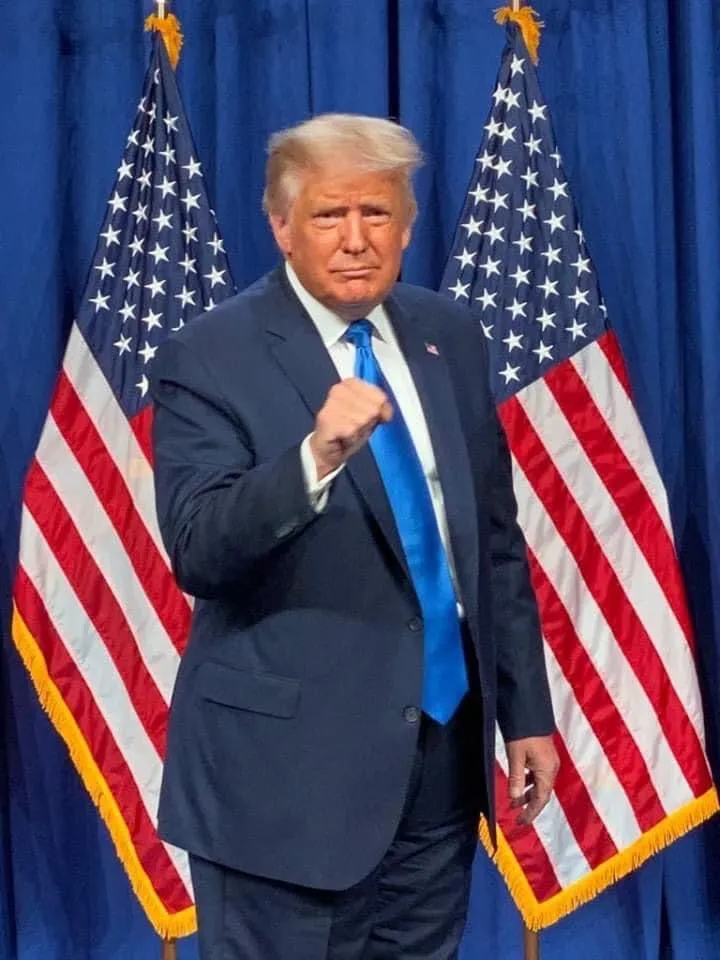
The self-correction visible in the post—“to Rig, I mean, calculate”—underscored the accusatory framing. Trump presented the speed of the foreign count as evidence that slower American processes are inherently suspect. Critics of such claims note that differences in electoral systems, the use of paper ballots versus electronic methods, the scale of absentee and mail voting, and legal requirements for verification all affect counting timelines. Supporters of Trump’s view treat rapid finalisation itself as a benchmark of integrity.
Public and Online Reaction
The post circulated widely and prompted immediate corrections. Users pointed out that Brazil, not India, had voted that day and that India’s presidential election system does not involve a direct popular first round of the kind described. Some treated the error as a simple slip; others saw it as another example of imprecision in high-profile political communication. The official White House rapid-response account reportedly amplified the original post, extending its reach.
In Brazil the political focus remained on the runoff between Lula and Flávio Bolsonaro. In India the episode registered mainly as an oddity—an American president invoking an election that had not occurred and a system that does not exist in the form described.
Context of Recurring Electoral Commentary
Trump has long made election administration a central theme of his public messaging. Claims about delayed counts, urban centres and alleged irregularities have featured repeatedly since 2020. The Truth Social post fits that pattern: an international example is used to reinforce a domestic critique. The accidental substitution of India for Brazil did not alter the underlying argument, but it did supply an easily verifiable factual error that dominated initial coverage of the message.
A Simple Error with Clear Origins
The most straightforward explanation is a momentary confusion between two large democracies that had recently been in the news. Brazil’s election produced a high turnout figure that matched the number Trump cited. India, a frequent subject of comparative political discussion, was named instead. The rest of the post—praise for same-day results and criticism of American counting—followed the established template of his election-related commentary.
The episode illustrates how quickly a single misstatement can overshadow the intended political point. It also highlights the importance of basic accuracy when public figures draw international comparisons. Brazil held a consequential presidential first round on 4 October; India did not. Approximately 125 million people voted in the former. The results were reported promptly. Those facts stand independently of the country name that appeared in the post.
For observers the takeaway is twofold. First, the Brazilian election produced a tight contest heading to a runoff. Second, a high-profile American political message about electoral integrity began with an incorrect identification of the very election being praised. In the crowded information environment of contemporary politics, such errors travel as far as the arguments they accompany.
Read more – carandbikejunction.com
 Martin