
Blogging remains one of the most powerful ways to share ideas, build authority, and generate income online — even in 2026. Despite rapid changes in technology and increasing competition from AI and social media, a blog can still be a long-term business asset when approached strategically. However, success now demands higher quality, clear differentiation, and diversified revenue streams. Here’s an in-depth guide to get you started and make your blog truly profitable.
Table of Contents
Toggle1. Choose Your Niche Carefully
The foundation of a successful blog begins with choosing the right niche — the specific topic or theme you will focus on consistently.
A niche matters because it defines your target audience and shapes your content strategy. Choose something you’re knowledgeable about and that has demonstrable audience demand. Tools like Google Trends or keyword research tools help identify topics people are actively searching for, while competitive analysis reveals where there’s room to stand out. In 2026, niches such as personal finance, health & wellness, technology tools, and specialized professional skills often offer strong traffic and monetization potential. The more specific and targeted your niche, the easier it is to build authority and engage a loyal audience.
2. Plan Your Brand and Domain Name
Choosing a memorable brand and domain name is a key early step in establishing your blog’s identity.
Your blog name should be short, easy to spell, and ideally reflect what your content is about. Including a relevant keyword can help with search visibility, but clarity and brandability matter most. A .com domain is globally recognized and often preferred, but country-specific domains like .in work well too, especially if your audience is primarily in India. Once you have an idea, check available names on domain registrars and secure the domain before someone else does. This becomes the cornerstone of your online presence and influences all your future branding efforts.
3. Select the Right Blogging Platform
Your blogging platform determines how you build and manage your website.
For most professional bloggers in 2026, self-hosted WordPress (WordPress.org) is the preferred choice due to its flexibility, plugin ecosystem, and scalability. Other platforms like Wix, Squarespace, or Substack can work well depending on your goals — Wix and Squarespace offer user-friendly builders while Substack is great for newsletter-centric blogging. Choosing the right platform early saves time and prevents costly migrations later as your audience grows.
4. Set Up Web Hosting and Install WordPress
Hosting is essentially the online space where your blog lives — so quality hosting is critical.
Reliable hosting ensures your site loads fast, stays secure, and doesn’t go offline frequently. Many beginner bloggers choose affordable shared hosting plans that include a free domain, SSL certificates, and one-click WordPress installation. Hosting services optimized for WordPress simplify the entire setup process, letting you focus on content rather than technical details. Make sure your hosting provider offers strong uptime guarantees and responsive customer support, as this directly affects user experience and search rankings.
5. Design Your Blog for Your Audience
First impressions matter — your blog’s design impacts credibility and user engagement.
Pick a clean, responsive theme that works well on both desktop and mobile devices. A clutter-free layout with intuitive navigation makes it easier for readers to find information and stay longer on your site. Use consistent branding elements like colors, fonts, and a simple logo. Essential pages such as About, Contact, and Privacy Policy should be included from the start. Good design doesn’t require perfection, but it should reflect professionalism and clarity to build visitor trust.
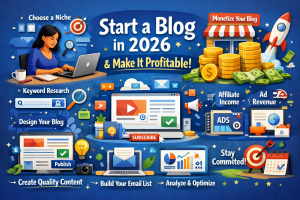
6. Learn Keyword Research and SEO Fundamentals
Search engine optimization (SEO) is one of the most important skills for long-term blog success.
Keyword research helps you understand what your target audience is searching for and guides your content creation. Tools like Google Keyword Planner, Ahrefs, or UberSuggest reveal search volume and competition levels, helping you choose topics that are both relevant and attainable. You also need to master on-page SEO — integrating target keywords into titles, headers, URLs, and meta descriptions, while always keeping content readable and natural. Good SEO increases your blog’s chances of appearing in search results, driving organic traffic without paid promotion.
7. Create High-Quality, Helpful Content
Content is the heart of your blog and the reason people will return again and again.
Focus on producing well-researched, informative, and engaging posts rather than just posting for the sake of it. Aim for clarity, depth, and original insight that solves real problems for your audience. Incorporate visuals like images or infographics to improve readability and engagement. Consistency matters — set a publishing schedule that you can maintain, whether that’s once or multiple times a week. Higher quality content builds authority, encourages sharing, and ultimately increases your chances of monetization.
8. Promote Your Blog Effectively
Great content alone isn’t enough; you must also promote your blog so people find it.
Share each post on social media platforms where your audience is active. Platforms like Pinterest can drive significant referral traffic when pins are optimized and designed well. Participate in relevant online communities and answer niche-related questions on forums like Reddit or Quora, linking back to your blog where relevant. Building an email list from the start ensures you can re-engage your most loyal readers directly and avoid relying solely on search traffic.
9. Build an Email List
Email marketing remains one of the most powerful ways to connect with your audience.
Unlike social media platforms, you own your email list — which means direct communication without algorithm dependence. Offer incentives like free eBooks, templates, or checklists to encourage visitors to subscribe. Use a reliable email marketing service to manage your list and nurture subscribers with regular newsletters. This not only boosts engagement but also creates opportunities for product promotions and repeat traffic to new posts.
10. Start Monetizing Strategically
Once you have consistent traffic and engaged readers, you can begin monetizing your blog.
There are multiple income streams to explore. Display advertising (like Google AdSense) is often the first method bloggers try, earning money based on ad impressions or clicks. Affiliate marketing, where you recommend products and earn commissions on sales, is typically more lucrative as your audience grows. You can also sell digital products like eBooks, courses, or templates; offer services, such as consulting; or secure sponsored content deals as your influence increases. Diversifying your revenue streams helps create a stable, long-term income model and prevents dependency on a single source.
11. Use Analytics to Improve Over Time
Understanding how your blog performs is essential to growth.
Google Analytics or similar tracking tools provide insights into what content resonates most with your readers, where traffic comes from, and how long visitors stay on your pages. Use this data to refine your strategy — for example, updating older posts that still receive traffic or expanding topics that perform well. Analytics also helps you test new ideas and make data-driven decisions rather than guessing what might work.
12. Stay Committed and Evolve
Blogging success doesn’t happen overnight — it’s often a long-term process.
Traffic and earnings typically grow gradually as you publish more quality content, optimize your SEO, and build an audience. Emerging technologies and consumer preferences will continue to shift, so stay informed and adaptable. Learning from analytics, experimenting with new formats like video or newsletters, and continuing to refine your monetization approach are key to maintaining momentum. A blog viewed as a business asset — not just a hobby — has a much greater chance of turning into a profitable platform in 2026 and beyond.
Closing Thoughts
Starting a blog and turning it into a profitable platform in 2026 is absolutely achievable with the right strategy, tools, and persistence. While changes like increased competition and AI-driven content exist, these trends also create new opportunities for bloggers who offer genuine value and authentic insights. By focusing on niche selection, high-quality content, smart monetization, and continuous learning, your blog can grow into a reliable and rewarding business asset — one that earns income, influences readers, and reflects your unique voice and expertise.
 Streamline