
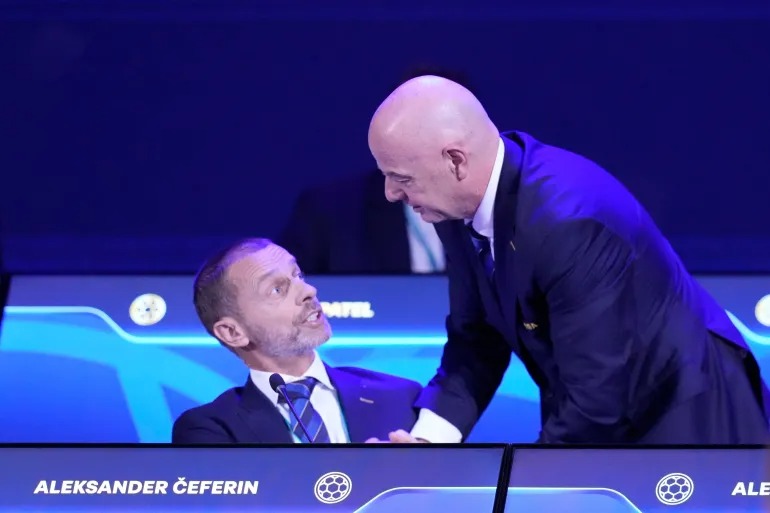
Growing Tension Between FIFA and UEFA
Football has always been full of rivalries, but this one is happening far away from the pitch. The latest disagreement between FIFA and UEFA has become one of the biggest governance stories in world football. Discussions about a possible boycott have caught attention because they involve two organizations responsible for shaping the sport across every continent. While nothing has officially happened yet, the public debate has become louder than ever. Fans are asking whether Europe’s biggest football nations could really refuse to participate in FIFA competitions. That possibility alone shows how serious the current disagreement has become.
The center of the debate is FIFA president Gianni Infantino and his long-term vision for expanding international tournaments. UEFA believes some of those plans may push football beyond reasonable limits. Clubs, players, coaches, and even broadcasters have started discussing whether the calendar can handle even more major competitions.
Infantino’s Expanding World Cup Strategy
Gianni Infantino has never hidden his ambition to make FIFA competitions larger and more global. During his presidency, several tournaments have already expanded. The men’s FIFA World Cup has increased to forty-eight teams, creating more matches and giving additional nations the chance to qualify. FIFA also introduced a much larger Club World Cup format, hoping it would become another major international event.
Supporters believe expansion creates opportunities for developing football nations that previously struggled to compete on the biggest stage. More countries can experience World Cup football, attract investment, and inspire future generations. That sounds attractive from a global development perspective.
Critics, however, see another side of the story. They argue that every expansion creates additional pressure on players who already compete almost year-round without meaningful recovery periods.
Why UEFA Is Becoming More Frustrated
UEFA’s concerns are not based on one tournament alone. Officials believe FIFA has continued adding competitions without properly coordinating with domestic leagues, continental competitions, or player representatives. European football already has packed schedules including domestic leagues, national cups, Champions League matches, European Championship qualifiers, and international friendlies.
Adding more FIFA tournaments forces clubs to release players more frequently. Coaches lose valuable preparation time while players spend longer periods traveling across continents instead of recovering physically. Medical experts have repeatedly warned about growing injury risks caused by overloaded schedules.
UEFA believes football should grow carefully instead of expanding simply because additional tournaments generate more commercial value. That difference in philosophy has slowly created friction between both organizations.
The Club World Cup Controversy
One major reason behind current disagreements is FIFA’s redesigned Club World Cup. Instead of remaining a relatively small annual competition, the tournament now includes many more clubs and significantly more matches. FIFA hopes the competition will eventually become one of football’s biggest commercial events.
European clubs already participate in demanding domestic competitions alongside UEFA Champions League campaigns. Many club executives question whether another large tournament is necessary. Some fear player fatigue could damage both performance levels and long-term careers.
Several managers have openly mentioned that modern football players rarely receive genuine off-season breaks anymore. Recovery time continues shrinking while competitive matches continue increasing every single year.
Could UEFA Really Boycott FIFA?
The word “boycott” attracts headlines very quickly, but reality is more complicated. UEFA has not officially confirmed plans to withdraw from FIFA competitions. Instead, reports suggest some European football leaders have discussed stronger responses if FIFA continues making major scheduling decisions without wider agreement.
A complete boycott would create enormous consequences for football worldwide. European nations have historically dominated FIFA World Cups, producing many champions and supplying hundreds of elite players. Removing those teams would dramatically reduce the tournament’s competitive quality and global appeal.
Financially, broadcasters, sponsors, and commercial partners would also face major uncertainty. Nobody benefits from such a scenario, making negotiations far more likely than outright separation.
Players Are Caught In The Middle
Football fans often focus on administrators, but players carry the biggest burden. Elite footballers already compete in domestic leagues, continental tournaments, international qualifiers, national team camps, preseason tours, and commercial events throughout almost the entire calendar year.
Many stars have publicly discussed mental exhaustion alongside physical fatigue. Continuous travel across multiple continents leaves little opportunity for complete recovery. Sports scientists increasingly recommend reducing workloads rather than increasing them.
Even supporters notice declining performance levels near the end of long seasons. Injuries become more frequent, while managers regularly rotate squads because key players simply cannot maintain peak fitness throughout endless competitions.
Money Plays A Bigger Role Than Ever
It would be unrealistic to ignore financial motivations behind modern football expansion. Every additional tournament creates broadcasting opportunities, sponsorship agreements, ticket revenue, digital content, and worldwide marketing partnerships. FIFA believes expanding competitions strengthens football’s economy while supporting development programs across smaller football nations.
UEFA also generates substantial revenue through its own competitions, particularly the UEFA Champions League. Naturally, scheduling conflicts become sensitive because every organization wants its tournaments to receive maximum attention from audiences worldwide.
Critics argue commercial interests sometimes appear more important than player welfare. FIFA strongly disagrees with that criticism, insisting expansion benefits football globally instead of serving financial objectives alone.
Different Visions For Football’s Future
The disagreement reflects two very different ideas about football’s future. FIFA wants a broader international game where more countries and clubs participate in prestigious tournaments. Expansion fits naturally within that objective because it increases worldwide representation.
UEFA focuses more heavily on maintaining competitive quality while protecting existing competitions. European football leaders believe constant growth eventually reaches practical limits. Players cannot perform indefinitely without proper recovery, regardless of commercial opportunities.
Neither side completely rejects football development. Instead, they disagree about how quickly expansion should happen and how crowded the international calendar should become before serious problems emerge.
What Could Happen Next
Most experts expect continued negotiations rather than dramatic action. FIFA and UEFA understand global football functions best when major governing bodies cooperate instead of competing against each other. Fans, clubs, players, sponsors, broadcasters, and national associations all benefit from stability.
Future scheduling compromises remain possible. FIFA may adjust tournament timing, while UEFA could accept carefully managed expansion under specific conditions. Discussions involving player unions and domestic leagues will likely become increasingly important before any major calendar decisions receive final approval.
Although boycott headlines create excitement, football history usually shows that difficult negotiations eventually produce workable agreements instead of permanent division.
Why Fans Should Pay Attention
Many supporters assume governance debates never affect everyday football, but these decisions shape future seasons directly. Tournament formats influence club schedules, transfer activity, television coverage, ticket availability, player fitness, and even the quality of matches watched every weekend.
If football continues expanding without careful planning, fixture congestion could become even more noticeable. On the other hand, balanced reforms could create opportunities for emerging football nations while protecting elite competitions already loved by millions.
That balance remains the biggest challenge facing football administrators over the coming years.
Conclusion
The discussion surrounding a possible UEFA boycott of FIFA reflects much more than political disagreement. It highlights growing concerns about football’s crowded calendar, expanding competitions, player welfare, and commercial priorities. Gianni Infantino’s World Cup vision aims to make football more global and inclusive, while UEFA believes expansion must happen responsibly without overwhelming clubs or players. Both organizations ultimately want football to thrive, yet their approaches remain very different. The coming months will likely involve continued negotiations instead of immediate confrontation. Football supporters should follow these developments closely because today’s governance decisions will shape tomorrow’s tournaments, competitive balance, and the overall future of the world’s most popular sport.
Read More :-
 Streamline