
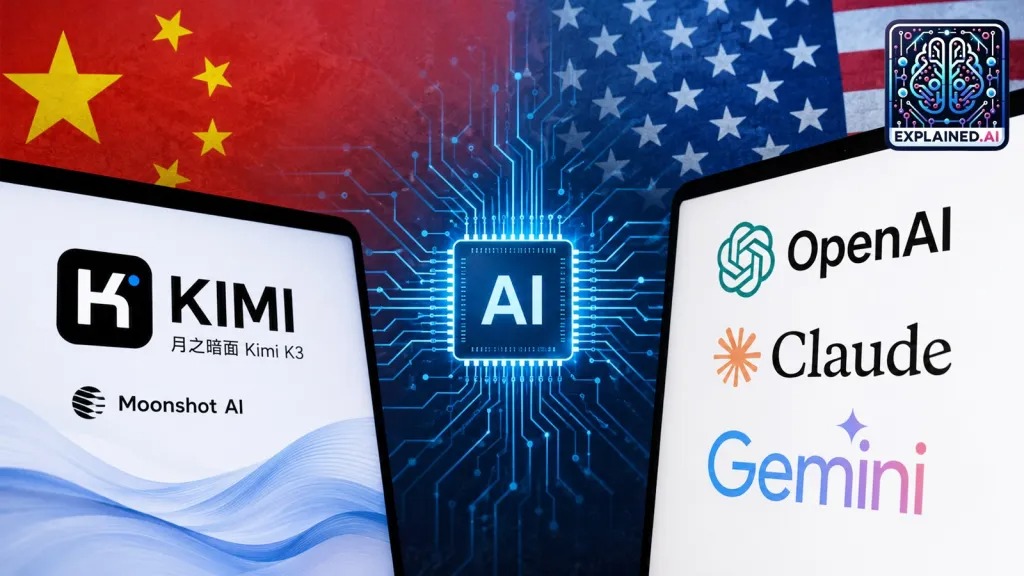
Artificial intelligence has become one of the biggest technology battles happening anywhere today. Every few weeks another company launches a smarter model, faster system, or surprisingly useful feature. People usually focus on American companies because they have dominated headlines for years. Then something different happened. Kimi AI arrived with impressive performance, and suddenly many experts started paying closer attention to China’s growing AI industry. That shift was not just about another chatbot appearing online. It represented something much larger inside the global technology race.
Kimi AI Changes Expectations
Kimi AI surprised many observers because it demonstrated capabilities that people normally expected only from larger international competitors. The model gained attention for handling long documents, understanding detailed instructions, and producing answers that felt reliable across different tasks. Many users appreciated the practical experience instead of simply looking at benchmark numbers. That combination created excitement because everyday usefulness often matters more than technical marketing claims.
Success in artificial intelligence rarely comes from one feature alone. Companies need strong research teams, efficient infrastructure, quality datasets, and continuous product improvement. Kimi AI showed that Chinese developers are becoming stronger across several of those areas instead of improving only one specific capability.
China’s AI Industry Looks More Confident
The discussion around Chinese artificial intelligence has changed noticeably during recent years. Earlier conversations often focused on whether Chinese companies could catch American leaders. Today the discussion feels different because several Chinese firms are releasing competitive products instead of only promising future innovation.
Kimi AI became part of that broader story. Rather than representing a single successful chatbot, it reflected an ecosystem where research institutions, startups, cloud providers, and investors are working together. That environment creates momentum which becomes difficult for competitors to ignore after enough progress appears publicly.
American Leadership Still Matters
The United States continues holding significant advantages across advanced AI research and commercial deployment. Companies including OpenAI, Google, Anthropic, Meta, and others continue introducing influential language models while investing billions into future development. Their ecosystems also benefit from experienced researchers, strong venture capital, and massive computing infrastructure.
Even with those strengths, competition has become more balanced than many people expected several years ago. Kimi AI reminds observers that leadership cannot remain permanent without continuous improvement. Technology moves extremely fast, and today’s advantage can become much smaller after only a few product releases.
Open Source Creates New Pressure
One interesting trend shaping this competition involves open-source artificial intelligence. More organizations now release models that developers can study, modify, and improve independently. That approach accelerates innovation because thousands of engineers contribute ideas instead of waiting for updates from one company.
Chinese developers have increasingly participated in this movement while adapting open research into practical commercial products. Kimi AI benefits from an environment where shared knowledge spreads rapidly across universities, research groups, and technology companies. Innovation becomes faster when useful discoveries travel quickly between different organizations.
Computing Power Remains Essential
Artificial intelligence depends heavily on advanced computing hardware. Powerful graphics processing units, specialized AI chips, and massive cloud infrastructure determine how quickly companies can train increasingly capable models. This remains one of the biggest competitive factors between the United States and China.
Restrictions surrounding advanced semiconductor exports have created additional challenges for Chinese companies. Despite those limitations, firms continue exploring alternative hardware strategies, software optimization, and domestic chip development. Kimi AI demonstrates that software innovation sometimes compensates for hardware limitations more effectively than outsiders initially expect.
Users Care More About Performance
Most people never compare technical research papers before choosing an AI assistant. They simply want accurate answers, helpful writing, quick responses, and fewer mistakes. That reality changes how success should be measured across the artificial intelligence market.
Kimi AI attracted attention because users reported positive experiences during real tasks instead of only laboratory testing. Practical performance often spreads through recommendations, social media discussions, and workplace adoption much faster than benchmark scores shared during product announcements.
Government Support Influences Innovation
Government policy continues shaping artificial intelligence development across both countries. China has invested heavily in AI research, education, computing infrastructure, and technology startups. Those long-term investments provide companies with resources needed to compete internationally.
Meanwhile, the United States continues encouraging innovation through private investment, university research, and partnerships between government agencies and technology companies. Different approaches exist, yet both nations recognize artificial intelligence as strategically important for future economic growth and national competitiveness.
Global Businesses Watch Carefully
International companies increasingly evaluate artificial intelligence tools regardless of where they originate. Businesses usually prioritize reliability, security, affordability, and productivity improvements above political headlines. If an AI model solves practical problems effectively, organizations naturally become interested.
Kimi AI entering global conversations means procurement teams, developers, and technology consultants may consider additional options beyond traditional American providers. More competition generally encourages faster innovation while pushing companies toward better pricing and improved features.
Innovation Is Becoming Faster
Artificial intelligence development feels dramatically faster than traditional software industries experienced years ago. New capabilities appear monthly instead of annually. Features that seemed impossible one season become standard expectations during the next product cycle.
That rapid pace benefits companies capable of adapting quickly regardless of geographic location. Kimi AI reflects this acceleration because successful models no longer require decades to establish credibility. Strong products can gain worldwide attention surprisingly fast when performance exceeds expectations.
Talent Will Shape Future Leadership
Artificial intelligence ultimately depends on talented researchers, engineers, product designers, and data scientists. Countries investing consistently in education and technical skills usually strengthen their long-term innovation capacity. Recruiting experienced professionals has become almost as important as purchasing advanced computing hardware.
China continues producing increasing numbers of engineering graduates while expanding research opportunities inside domestic technology companies. American organizations remain highly attractive because of their research culture and entrepreneurial environment. The competition for skilled talent may become even more important than competition between individual AI models.
Businesses Need Flexible AI Strategies
Organizations adopting artificial intelligence should avoid assuming one provider will dominate forever. Market leadership changes frequently as technology evolves. Companies building flexible AI strategies can evaluate multiple models depending on cost, accuracy, privacy requirements, and industry-specific needs.
Kimi AI reinforces this lesson because unexpected competitors can emerge quickly with compelling capabilities. Enterprises benefiting from diversified AI strategies often respond better when new technologies appear or existing platforms change significantly.
The Race Is About More Than Chatbots
Many headlines reduce artificial intelligence competition into chatbot comparisons. Reality looks much broader than conversational interfaces alone. AI increasingly supports healthcare research, financial analysis, manufacturing optimization, cybersecurity, education, logistics, and scientific discovery.
Success across these industries depends upon reliable models integrated into practical business workflows. Kimi AI’s growing reputation suggests Chinese companies want influence across those broader commercial opportunities instead of competing only inside consumer chatbot markets.
Future Competition Will Become More Complex
The next phase of the US-China artificial intelligence race probably will not produce one permanent winner. Instead, different companies may lead different categories depending on specialized strengths, regional markets, regulatory environments, and technological priorities. Competition could become more distributed rather than concentrated around only a handful of global names.
Kimi AI represents an important signal because it proves innovation continues emerging from unexpected directions. That reality encourages every technology company to improve continuously instead of relying on previous achievements. Healthy competition usually accelerates research while creating better tools for businesses, developers, and everyday users worldwide.
Conclusion
Kimi AI has become more than another language model entering an already crowded marketplace. Its growing success highlights how rapidly China’s artificial intelligence ecosystem continues evolving while challenging assumptions about long-term American dominance. The United States still maintains remarkable strengths across research, infrastructure, and commercial innovation, yet the competitive landscape is becoming far more balanced than before. The coming years will likely reward companies that innovate consistently, adapt quickly, and deliver genuine value instead of chasing publicity. Stay informed about global AI developments because understanding these shifts today can help businesses, professionals, and technology enthusiasts make smarter decisions for tomorrow’s rapidly changing digital world.
Read More :-
 Streamline