
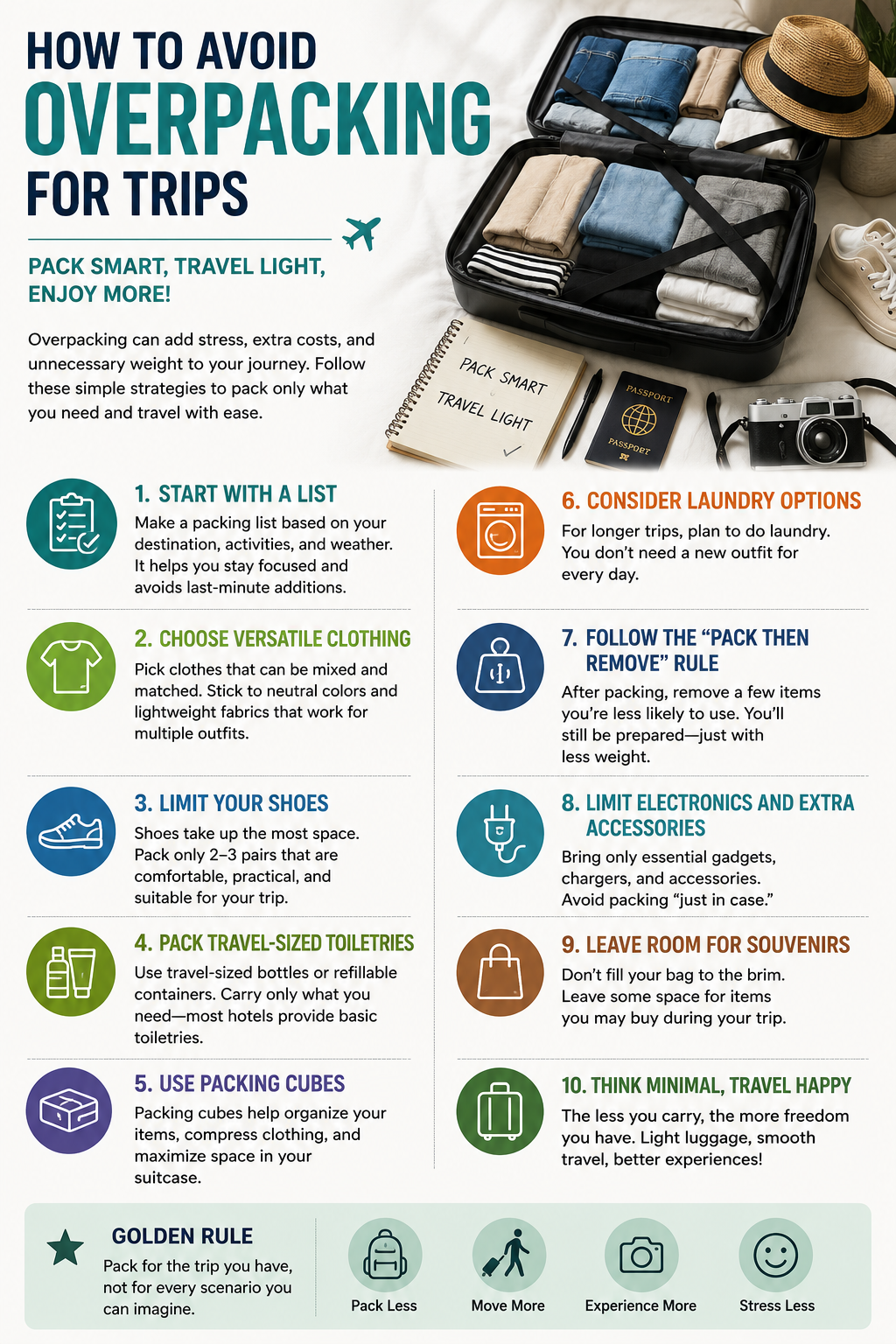
Packing is one of the most important parts of travel preparation, yet it is also where many travelers make mistakes. Whether you’re heading out for a weekend getaway, a business trip, or an international vacation, overpacking can quickly turn an exciting journey into a stressful experience. Heavy luggage can lead to extra baggage fees, difficulty moving around, misplaced items, and unnecessary travel fatigue.
Travel experts consistently recommend packing lighter and smarter rather than carrying everything you think you might need. The goal is not to pack less for the sake of it, but to pack efficiently while ensuring comfort and convenience throughout the trip.
Fortunately, avoiding overpacking is easier than most people think. With proper planning, organization, and a few practical strategies, travelers can carry only what they truly need without sacrificing comfort.
Why Overpacking Is a Common Travel Mistake
Many travelers overpack because they prepare for every possible scenario. The fear of forgetting something often leads people to add extra clothing, multiple pairs of shoes, unnecessary gadgets, and backup items that never get used. Emotional attachment to certain belongings can also contribute to overpacking. Additionally, travelers sometimes underestimate how often they can wash clothes or purchase necessities at their destination. The result is luggage that becomes heavier, harder to manage, and less organized. Overpacked bags can increase travel stress, especially during airport transfers, train journeys, or city exploration. Understanding the reasons behind overpacking is the first step toward developing smarter packing habits.
The Hidden Costs of Carrying Too Much
Overpacking affects more than just luggage weight. Heavy bags can result in airline baggage fees, increased physical strain, and reduced mobility during travel. Travelers often spend more time searching for items in cluttered suitcases, which can cause frustration and delays. Excess baggage may also limit flexibility when using public transportation or changing accommodations. In some cases, travelers return home realizing they used only a fraction of what they packed. By recognizing these hidden costs, travelers become more motivated to adopt a lighter and more practical packing approach.
Start With a Detailed Packing List
One of the most effective ways to prevent overpacking is creating a packing list before placing anything into a suitcase. A list helps travelers focus on essentials while avoiding impulse packing. Instead of throwing items into a bag at the last minute, a planned checklist encourages thoughtful decision-making. Travel experts recommend dividing lists into categories such as clothing, toiletries, electronics, travel documents, medications, and accessories. This organized approach ensures important items are not forgotten while reducing the temptation to pack unnecessary extras. A packing list also makes it easier to review and remove non-essential items before departure.
Why Planning Saves Space
Planning allows travelers to pack according to their actual itinerary rather than hypothetical situations. Knowing the activities, weather conditions, and duration of the trip helps determine exactly what is needed. Without a plan, people often pack additional items “just in case,” which quickly consumes valuable luggage space. Careful preparation ensures every item serves a purpose. It also reduces last-minute anxiety, which is a common cause of overpacking. Travelers who plan ahead typically pack lighter, stay more organized, and enjoy a smoother travel experience overall.
Choose Versatile Clothing Options
Clothing usually occupies the largest portion of a suitcase, making it one of the biggest contributors to overpacking. Travel experts recommend selecting versatile pieces that can be mixed and matched to create multiple outfits. Neutral colors, lightweight fabrics, and layering options provide flexibility without requiring a large wardrobe. A few carefully chosen items can often meet a variety of travel needs. Packing versatile clothing allows travelers to maintain comfort and style while minimizing luggage volume. The key is focusing on functionality rather than quantity.
Build a Capsule Travel Wardrobe
A capsule travel wardrobe consists of a limited number of clothing items that coordinate well together. This strategy simplifies packing while maximizing outfit combinations. Travelers can create multiple looks using fewer pieces by selecting complementary colors and styles. Lightweight jackets, comfortable pants, and adaptable tops are excellent additions to a capsule wardrobe. This approach not only reduces luggage weight but also makes daily outfit selection easier during the trip. A well-planned capsule wardrobe provides practicality without sacrificing personal style.
Limit Shoes to the Essentials
Shoes are often among the heaviest and bulkiest items travelers pack. Many people bring multiple pairs for different occasions, only to discover they wear the same pair most of the time. Travel specialists recommend limiting footwear to two or three versatile pairs whenever possible. Comfortable walking shoes, casual footwear, and one pair suitable for special occasions are usually sufficient. Choosing shoes that coordinate with multiple outfits further reduces packing requirements. Limiting footwear can free up significant suitcase space while making luggage lighter and easier to manage.
How to Choose the Right Travel Shoes
The best travel shoes combine comfort, durability, and versatility. Since travelers often spend long hours walking, comfort should be the top priority. Neutral-colored shoes tend to match a wider range of clothing options, making them more practical. Weather conditions and planned activities should also influence footwear choices. By carefully evaluating actual travel needs, individuals can avoid packing unnecessary pairs that consume valuable luggage space without adding meaningful benefits.
Use Packing Cubes and Organization Tools
Packing cubes have become one of the most popular travel organization tools in recent years. These lightweight organizers help separate clothing, accessories, and other belongings into manageable sections. Packing cubes maximize suitcase space by compressing items and reducing clutter. They also make it easier to locate specific belongings without unpacking the entire suitcase. Organized luggage often feels less crowded, helping travelers recognize when they have packed enough. Efficient organization supports lighter packing by encouraging intentional use of available space.
Benefits of Staying Organized
An organized suitcase improves both packing efficiency and travel convenience. Travelers can access essential items quickly, maintain neat luggage throughout the trip, and avoid unnecessary duplication of belongings. Organization also helps prevent overpacking because it creates clear visibility into what has already been packed. When every item has a designated place, travelers are less likely to add unnecessary extras. Good organization transforms packing from a stressful task into a streamlined process.
Pack Travel-Sized Toiletries
Full-sized toiletries take up considerable space and often exceed what is needed for most trips. Travel-sized products provide sufficient quantities while significantly reducing luggage weight and bulk. Many accommodations also provide basic toiletries, further decreasing the need to carry large bottles. Refillable travel containers offer a cost-effective and environmentally friendly solution. Packing smaller quantities encourages efficiency and prevents wasted space. Travelers should review airline liquid restrictions and trip duration when selecting toiletries to ensure they pack appropriately.
Avoid Duplicating Everyday Items
Many travelers pack multiple versions of the same product out of habit. Duplicate toiletries, extra chargers, and backup accessories can quickly accumulate and increase luggage volume. Reviewing each item carefully helps identify unnecessary duplicates. Unless traveling to a remote destination, most forgotten essentials can be purchased locally if needed. Adopting this mindset reduces anxiety and encourages more practical packing decisions.
Follow the “Pack Then Remove” Rule
A popular strategy recommended by experienced travelers is the “pack then remove” rule. After completing packing, travelers should review their luggage and remove several non-essential items. This exercise often reveals clothing, accessories, or gadgets that are unlikely to be used. Many people discover they can comfortably eliminate a significant portion of their original packing list without affecting their travel experience. The rule encourages critical evaluation and helps prevent emotional packing decisions.
Why Less Often Means More
Travelers frequently report that lighter luggage improves overall trip satisfaction. Less baggage means easier transportation, quicker airport navigation, and greater flexibility during travel. Carrying fewer belongings also reduces stress and allows individuals to focus more on experiences rather than managing luggage. In many cases, simplicity enhances convenience and freedom throughout the journey.
Consider Laundry Options During Longer Trips
For extended travel, packing enough clothing for every day is usually unnecessary. Many hotels, vacation rentals, and laundromats offer laundry facilities that allow travelers to wash clothes during their trip. Packing for approximately one week and planning occasional laundry sessions often eliminates the need for oversized suitcases. This approach significantly reduces luggage weight while maintaining access to clean clothing throughout the journey.
Smart Packing for Extended Travel
Long-term travelers often rely on layering, versatile clothing, and laundry access rather than carrying large quantities of garments. Strategic packing allows individuals to travel comfortably with fewer belongings while remaining prepared for various situations. The result is a more manageable and enjoyable travel experience.
Conclusion
Avoiding overpacking is not about sacrificing comfort or convenience; it is about making thoughtful choices. By creating detailed packing lists, choosing versatile clothing, limiting shoes, using organizational tools, packing travel-sized toiletries, and embracing minimalist travel principles, travelers can significantly reduce unnecessary luggage.
Smart packing leads to easier transportation, lower travel costs, improved organization, and a more enjoyable overall experience. The most successful travelers understand that carrying less often allows them to enjoy more. By focusing on essentials and eliminating unnecessary items, anyone can travel lighter, smarter, and with greater confidence on every journey.
 Martin