
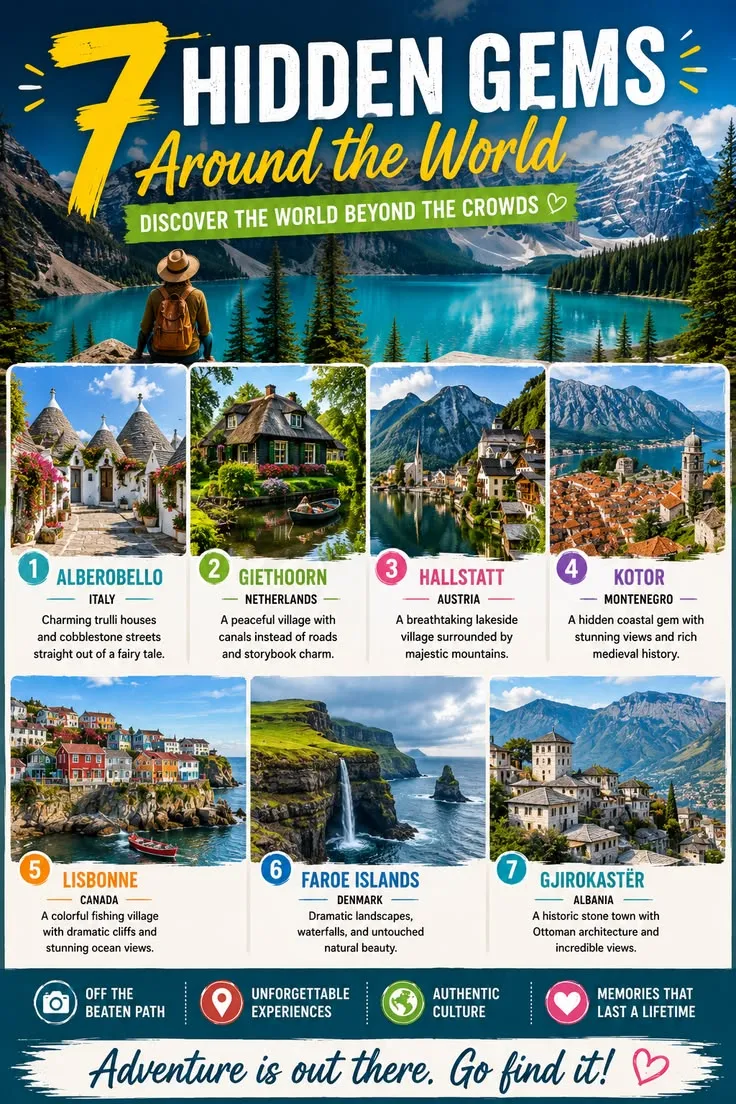
The phrase “hidden gem” once suggested a place of quiet beauty known mainly to locals or dedicated travellers. Today it often signals a location on the verge of transformation. A single well-composed photograph or enthusiastic post can send thousands of visitors toward a previously low-key beach, waterfall, village, or viewpoint. The resulting tension is real: sharing can accelerate overtourism and environmental strain, while keeping quiet may deny local communities economic opportunity and feel unnecessarily possessive. There is no perfect answer, but there are more responsible ways to navigate the dilemma.
How Social Media Changes Places
Visual platforms reward striking images and the language of discovery. When a location is labelled a hidden gem, it gains an aura of exclusivity that many travellers find irresistible. Within a short time, visitor numbers can rise sharply. Paths erode, litter increases, prices for accommodation and food climb, and the atmosphere that made the place special begins to disappear. Residents who once enjoyed relative calm may face congestion, noise, and pressure on water, waste, and transport systems.
This pattern has repeated in coastal towns, mountain villages, and natural sites around the world. The speed of change is what distinguishes the social media era. Information that once spread slowly through guidebooks or word of mouth now travels instantly and globally.
The Economic Side of Visibility
Silence is not neutral. Many communities depend on tourism revenue. Guesthouse owners, guides, drivers, craftspeople, and small restaurants benefit when visitors arrive. For places with limited alternative industries, thoughtful tourism can support livelihoods, fund conservation, and give younger residents reasons to stay. Completely withholding information about a destination can therefore reduce income for people who have few other options.
The challenge is that the type of tourism generated by viral posts is often high-volume and low-duration. Day-trippers who arrive, take photographs, and leave quickly may contribute less to the local economy than travellers who stay longer, hire local services, and spend on meals and experiences. Volume without corresponding benefit is a common complaint in affected communities.
The Limits of Secrecy
True secrecy is difficult to maintain. Persistent travellers can reverse-image search photographs, study maps, or piece together clues from captions. Once a place reaches a certain level of online attention, complete concealment becomes impractical. Attempts to gatekeep locations can also raise questions of fairness: who decides which travellers are entitled to know about a public or semi-public place?
At the same time, deliberate non-disclosure of precise coordinates or access details can slow the rush. Many experienced travellers and some content creators now avoid exact geotags, use broader regional names, or omit identifying landmarks. This modest friction gives destinations slightly more time to prepare and may deter purely impulsive visits.
Toward More Responsible Sharing
A binary choice between total secrecy and unrestricted promotion is rarely helpful. Intermediate approaches exist. One is to share experiences while emphasising the responsibilities that come with visiting. Posts can highlight the importance of staying on marked paths, carrying out rubbish, respecting local customs, supporting locally owned businesses, and visiting during less crowded seasons or times of day.
Another approach is to shift attention toward places that actively welcome visitors and have infrastructure to manage them. Highlighting communities that have developed tourism plans, trained guides, or conservation fees directs interest where it can be absorbed more sustainably. Some creators focus on the cultural or ecological context rather than pure aesthetics, encouraging deeper engagement instead of checklist tourism.
Travellers themselves hold influence. Before visiting a newly popular site, it is worth researching current conditions, resident perspectives, and any official guidance. Choosing to stay longer, travel in smaller groups, and spend money with local providers increases the chance that tourism benefits the destination rather than overwhelming it. Avoiding peak hours and peak seasons further reduces pressure.
The Role of Platforms and Policy
Individual behaviour matters, yet systemic factors also shape outcomes. Platforms that amplify visually dramatic content without regard for destination capacity contribute to the cycle. Some destinations have responded with visitor limits, timed entry systems, higher access fees, or marketing that spreads demand across wider regions. These measures work best when designed with local input and enforced consistently.
Education remains essential. Many visitors do not intend harm; they simply follow recommendations without understanding the cumulative impact. Clear information about fragile ecosystems, cultural sensitivities, and practical etiquette can improve behaviour even when numbers rise.
Finding a Practical Balance
The dilemma will not disappear. People will continue to seek beautiful and less crowded places, and social media will continue to accelerate discovery. Complete silence risks economic exclusion and is often ineffective. Uncritical sharing risks damaging the very qualities that made a place worth visiting.
A more constructive stance combines restraint with responsibility. Share selectively, omit precise locations when a site is clearly fragile or already under strain, and pair any recommendation with practical guidance on low-impact visiting. Support destinations that demonstrate good management. As a visitor, prioritise depth over novelty and contribution over extraction.
Travel at its best creates mutual benefit: meaningful experiences for guests and sustainable livelihoods and conservation support for hosts. Social media can either undermine or advance that ideal, depending on how it is used. The choice is not simply whether to post, but how to post—and whether the act of sharing is accompanied by genuine care for the places and people involved. In that more thoughtful approach lies the closest practical solution to an otherwise difficult double bind.
Read more – GadgetsMonk.com
 Martin