
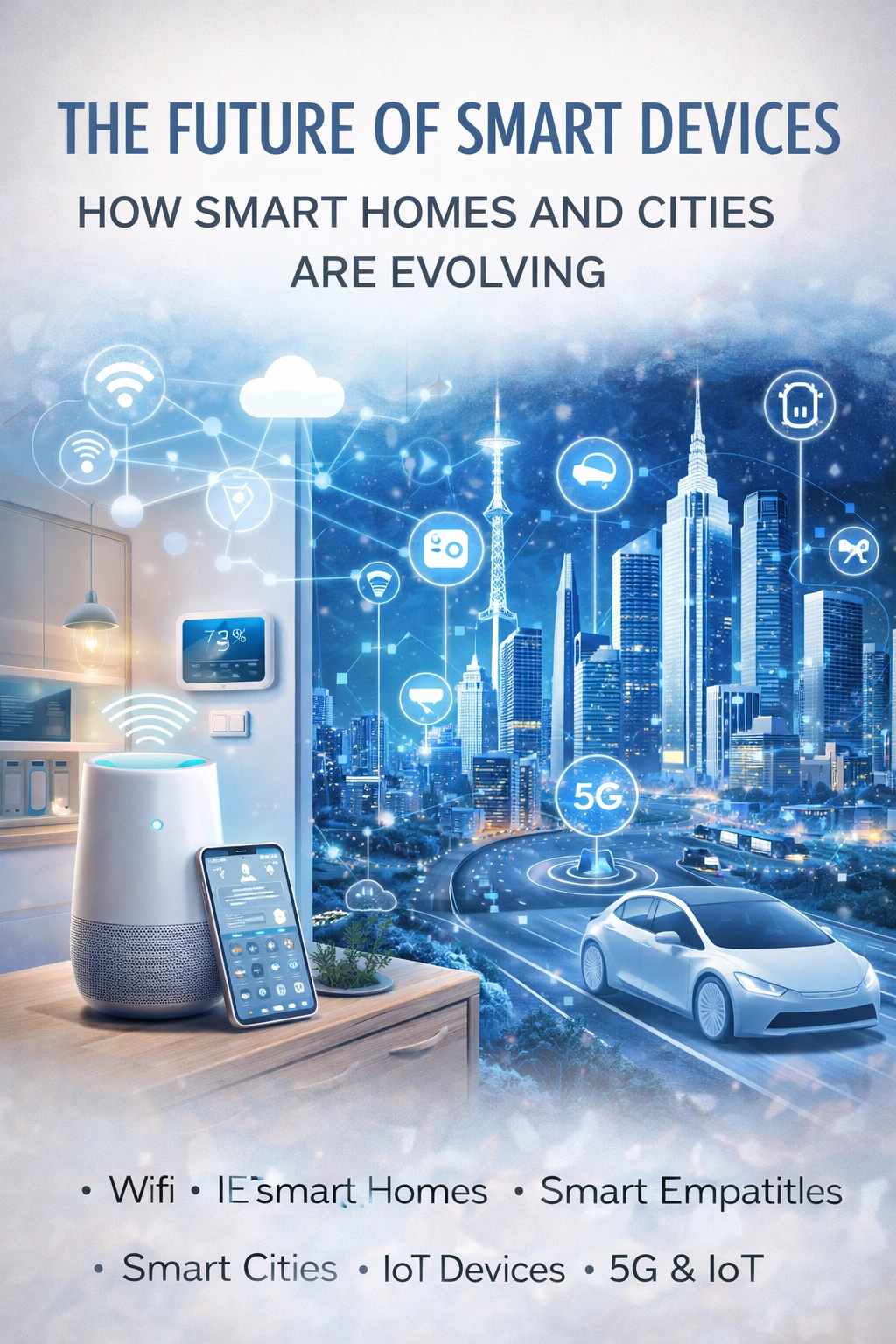
The rapid advancement of technology has led to the widespread adoption of smart devices, transforming the way people live, work, and interact with their surroundings. From voice-controlled home assistants to intelligent traffic management systems, smart devices are becoming an integral part of modern life. These devices use technologies such as the Internet of Things (IoT), artificial intelligence (AI), and data analytics to operate efficiently and respond to user needs in real time.
As connectivity continues to improve and innovation accelerates, the future of smart devices is expected to extend far beyond individual homes into entire cities. This article explores how smart devices are shaping the future, from personal living spaces to large-scale urban environments.
Understanding Smart Devices and Their Evolution
Smart devices are electronic gadgets that can connect to the internet, collect data, and perform tasks autonomously or with minimal human intervention. Early examples included smartphones and basic home automation systems, but the technology has since evolved into more advanced and interconnected systems.
The development of IoT has played a crucial role in this evolution, enabling devices to communicate with each other and share data seamlessly. Over time, smart devices have become more intuitive, incorporating AI to learn user behavior and improve performance. This progression has laid the foundation for a future where technology is deeply integrated into everyday life, making environments more responsive and efficient.
Smart Homes: Enhancing Comfort and Efficiency
Smart homes represent one of the most visible applications of smart device technology. These homes use interconnected devices such as smart thermostats, lighting systems, security cameras, and voice assistants to create a more convenient and energy-efficient living environment.
Users can control multiple aspects of their home through smartphones or voice commands, allowing for greater flexibility and ease of use. Smart devices can learn user preferences, automatically adjusting settings to optimize comfort and reduce energy consumption. For example, thermostats can regulate temperature based on occupancy patterns, while lighting systems can adapt to natural light levels.
In addition to convenience, smart homes also enhance security through features like motion detection, real-time alerts, and remote monitoring. As technology advances, smart homes are expected to become even more intelligent, offering predictive capabilities and deeper integration with daily routines.
Wearable Smart Devices and Personal Health
Wearable smart devices, such as fitness trackers and smartwatches, are playing an increasingly important role in personal health and wellness. These devices monitor various health metrics, including heart rate, physical activity, sleep patterns, and even stress levels.
By collecting and analyzing this data, wearable devices provide users with valuable insights into their health and lifestyle. They can encourage healthier habits by setting goals, tracking progress, and offering personalized recommendations. In some cases, these devices can detect irregularities and alert users to potential health issues, enabling early intervention.
The future of wearable technology is likely to include more advanced sensors and integration with healthcare systems, allowing for continuous monitoring and improved medical outcomes. This shift highlights the growing importance of technology in preventive healthcare and personal well-being.
Smart Cities: Transforming Urban Living
Smart cities represent the next stage in the evolution of smart devices, where technology is used to improve urban infrastructure and enhance the quality of life for residents. These cities rely on interconnected systems to manage resources more efficiently and address challenges such as traffic congestion, pollution, and energy consumption.
Smart devices are used in various aspects of city management, including intelligent traffic systems that optimize traffic flow and reduce delays. Sensors can monitor air quality, waste levels, and water usage, enabling authorities to make data-driven decisions. Public services, such as transportation and emergency response, can also be improved through real-time data and automation.
The integration of smart technologies in cities aims to create more sustainable, efficient, and livable urban environments. As urban populations continue to grow, smart cities will play a crucial role in managing resources and improving infrastructure.
The Role of Connectivity and 5G Technology
The future of smart devices heavily depends on reliable and high-speed connectivity. The introduction of 5G technology is expected to significantly enhance the performance and capabilities of smart devices by providing faster data transfer, lower latency, and greater network capacity.
With 5G, devices can communicate more efficiently, enabling real-time responses and seamless integration across systems. This is particularly important for applications such as autonomous vehicles, remote healthcare, and smart city infrastructure, where delays can have serious consequences.
Improved connectivity also supports the growth of IoT networks, allowing more devices to be connected simultaneously without compromising performance. As 5G technology becomes more widespread, it will serve as a foundation for the next generation of smart devices and applications.
Challenges and Security Concerns
Despite the many benefits of smart devices, there are several challenges that need to be addressed. One of the primary concerns is data security and privacy. Since smart devices collect and transmit large amounts of personal and sensitive information, they can become targets for cyberattacks if not properly secured.
Another challenge is interoperability, as devices from different manufacturers may not always work seamlessly together. This can limit the effectiveness of smart systems and create complications for users. Additionally, the cost of implementing and maintaining smart technologies can be a barrier for widespread adoption, particularly in developing regions.
Addressing these challenges requires collaboration between governments, technology companies, and consumers to establish standards, improve security measures, and ensure responsible use of technology.
Sustainability and Environmental Impact
Smart devices have the potential to contribute significantly to environmental sustainability. By optimizing energy usage and reducing waste, these technologies can help minimize the environmental impact of human activities.
For example, smart energy systems can monitor and adjust electricity consumption, reducing unnecessary usage and lowering carbon emissions. Smart water management systems can detect leaks and promote efficient usage, conserving valuable resources. In urban settings, smart transportation systems can reduce traffic congestion and emissions, contributing to cleaner air.
However, the production and disposal of electronic devices also pose environmental challenges. It is important to develop sustainable manufacturing practices and recycling solutions to ensure that the benefits of smart devices outweigh their environmental impact.
The Future Outlook of Smart Devices
The future of smart devices is expected to be characterized by greater integration, intelligence, and accessibility. As technology continues to evolve, devices will become more capable of understanding and anticipating user needs. This will lead to more personalized and efficient experiences across various aspects of life.
Advancements in AI, IoT, and connectivity will drive innovation, enabling new applications and improving existing systems. Smart devices will not only enhance individual lifestyles but also contribute to the development of smarter and more sustainable cities.
In the coming years, the line between physical and digital environments will continue to blur, creating a more interconnected and responsive world. This transformation will redefine how people interact with technology and their surroundings.
Conclusion
Smart devices are reshaping the modern world, offering unprecedented levels of convenience, efficiency, and connectivity. From smart homes and wearable devices to large-scale smart city initiatives, these technologies are transforming everyday life and urban living.
While challenges such as security, interoperability, and environmental impact remain, ongoing advancements and responsible practices can address these issues. The future of smart devices holds immense potential, promising a more connected, sustainable, and intelligent world. As technology continues to evolve, it will play an increasingly important role in shaping the future of both homes and cities.
 Martin
  Streamline