
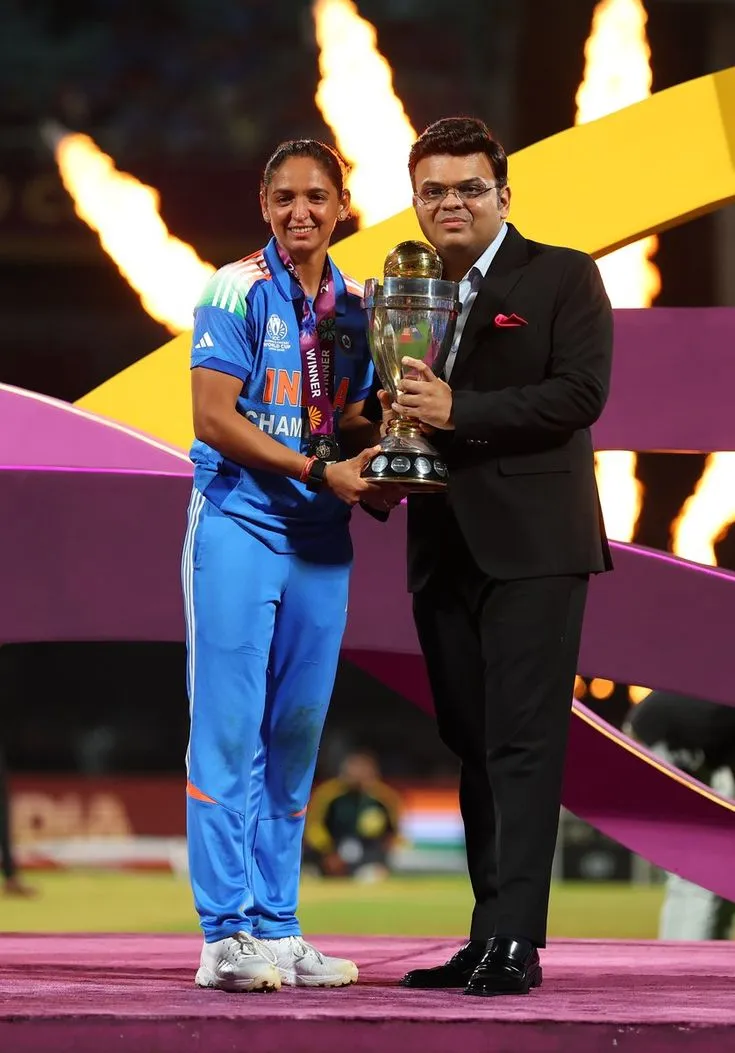
India’s women cricketers completed a dominant campaign by defeating Sri Lanka by 72 runs in the Asia Cup final in Dubai, securing a record-extending eighth title. Yet the post-match presentation became the focal point of discussion when the team declined to receive the trophy from Asian Cricket Council president Mohsin Naqvi. The Board of Control for Cricket in India later confirmed that this position had been communicated to the ACC in advance, framing the decision as a deliberate institutional choice rather than a spontaneous reaction.
A Pre-Communicated Institutional Stance
BCCI secretary Devajit Saikia stated that the board had informed the ACC before the final that the Indian team would not participate in the trophy presentation under the prevailing circumstances if Naqvi were involved. The decision was described as conscious and institutional, reflecting broader national sentiments and the board’s consistent position. It was not directed at the players, the tournament or the sport itself, Saikia emphasised.
This advance notice indicates that the outcome of the presentation was anticipated. When India won, the team followed the pre-decided course. The presentation ceremony was delayed, Naqvi handed over the runners-up awards to Sri Lanka, and the Indian side did not collect the trophy from him. Reports also noted that India had been open to receiving the trophy from the ACC deputy chairman instead, but that arrangement did not materialise.
Continuity with the Men’s Team’s Position
The women’s team’s action closely mirrored the stance taken by India’s men after they won the Asia Cup in 2025 at the same venue. On that occasion, the side led by Suryakumar Yadav had also declined to accept the trophy from Naqvi. Saikia linked the women’s decision to solidarity with that earlier position and to the unresolved status of the men’s trophy, which the BCCI has continued to pursue.
The continuity of approach underscores that the board views the matter as a matter of principle rather than an isolated incident. By maintaining the same line across both the men’s and women’s events, the BCCI sought to avoid any perception of inconsistency.
Context of Bilateral Tensions
Saikia placed the decision within the wider context of India-Pakistan relations. He referred to the change in circumstances following the Pahalgam terror attack in April 2025 and the subsequent public sentiment that relations with Pakistan should be limited. At the same time, he acknowledged the Indian government’s policy that the national teams must participate against all countries in multinational tournaments.
Participation in such events, he argued, does not require acceptance of every associated condition. Receiving the trophy from a Pakistani political figure who also holds the ACC presidency was deemed inappropriate given the ongoing sensitivities. Naqvi serves as Pakistan’s interior minister in addition to his roles as PCB chairman and ACC president, a combination that has made his presence at presentation ceremonies particularly charged.
On-Field Dominance and Off-Field Message
The sporting achievement itself was emphatic. India remained unbeaten through the tournament and produced a comprehensive performance in the final. Coach Amol Muzumdar later stressed that the team regarded itself as champions regardless of the presentation formalities. The focus, he indicated, had already shifted toward future assignments, including the Asian Games.
The episode therefore separated the competitive success from the ceremonial dispute. The players’ performance stood on its own, while the board’s institutional decision governed the optics of the trophy handover. This distinction allowed the BCCI to celebrate the sporting result while upholding its stated principles on the presentation.
Broader Implications for Asian Cricket
Repeated friction around trophy presentations highlights the difficulty of insulating cricket administration from geopolitical realities in the region. The ACC, as a continental body, includes both India and Pakistan and relies on cooperation for the smooth conduct of its events. When the president of that body is also a senior political figure from one of the member nations, ceremonial moments become potential flashpoints.
The BCCI’s advance communication to the ACC suggests an attempt to manage the situation predictably rather than create an on-field confrontation. Whether this approach leads to revised protocols for future presentations remains to be seen. What is clear is that the board is prepared to prioritise consistency with its earlier position and alignment with domestic public sentiment even when it produces awkward optics at the conclusion of a major tournament.
Looking Ahead
India’s women have reinforced their status as the leading side in Asian cricket with an eighth title. The manner of the victory—comprehensive and clinical—provides a strong platform heading into larger global assignments. At the same time, the trophy episode serves as a reminder that cricket between India and Pakistan, even in multilateral settings, continues to operate under political constraints that extend beyond the boundary.
The BCCI’s clarification that the stance was conveyed in advance and rooted in institutional considerations helps frame the refusal as a policy decision rather than a last-minute gesture. For the players, the priority remains on-field performance. For the board, the priority has been to maintain a consistent line that it regards as reflective of national circumstances. Both objectives were pursued simultaneously in Dubai, resulting in a title win accompanied by a familiar ceremonial standoff.
Read more – huggymonster.com